





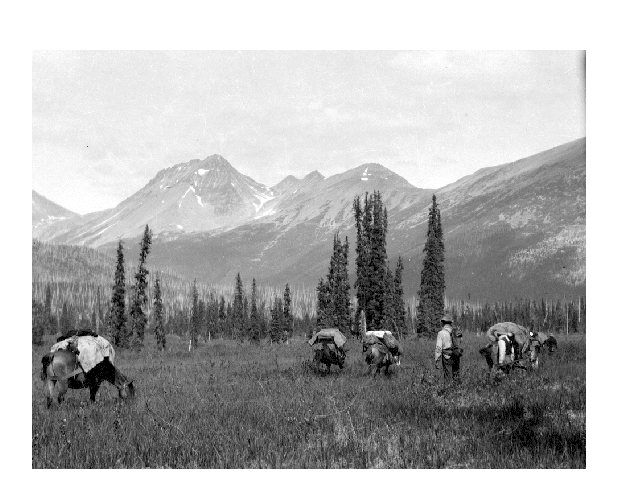
 While my heart will ever belong to early nineteenth century England, I’ve had a lot of fun the last few years delving into nineteenth century history closer to home. Those of you who have followed the Frontier Bachelors series will remember Levi, the youngest fellow in the Wallin clan, and his penchant for getting into trouble. It will come as no surprise that, once he reached manhood, he chafed under family rules and headed out to seek his fortune. Alas, the timeline of the story precluded him from being a 49er (he was born in 1849) or rushing to the Klondike (he would be 47 in 1896). Instead, I had to find another location that would have drawn him for (what he thinks are) easy riches.
I decided upon Omineca.
If you haven’t heard of it, don’t feel bad. (In fact, I can think of one of our loyal readers who might recognize the name. We’ll see if she comments.) The area is in the mountains of a quiet little corner of British Columbia, and the strike was kept relatively quiet compared to other gold rushes. But the location and timing made it possible for Levi to both hear of it and reach it from frontier Seattle.
In 1869, the Peace River Prospecting Party, organized with funding from the colonial government and local businessmen, discovered gold in a bubbling creek in the area. They named the spot Vital Creek after one of the party leaders, Vital LaForce, and vowed to return without alerting any rivals. Unfortunately, between their rush to return to the site in the dead of winter, when most prospectors headed into town, and LaForce’s lavish spending, word leaked out, and papers in towns nearest the strike urged everyone to drop what they were doing and go strike it rich.
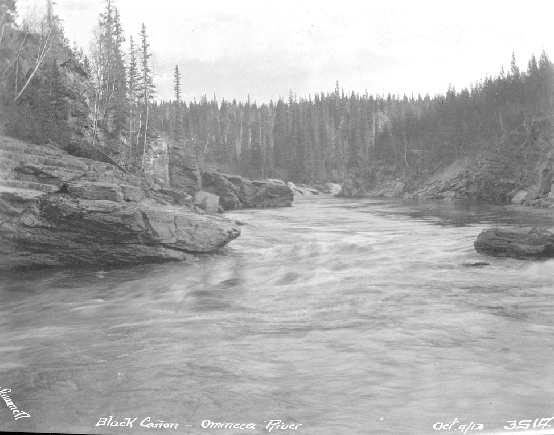 Soon about 250 people had claims in the area. The colonial government improved roads, laid more rail track to get closer. As the town swelled to 400, industrious types built a bakery, salon, and coffee house. One of these was Twelve-Foot Davis, a legend of a man, who gained his nickname from finding gold on no more than 12 feet of riverbank.
The introduction of sluice boxes increased the daily yield of gold, until nearly everyone was doing rather well. Estimates put peak population at 1,200, and peak gold earnings at $400,000 a year (and I wasn’t clear if that was in today’s dollars or at the time).
Gold continued to be discovered at various creeks and tributaries in the area, and the miners moved on. By the late-1870s, only a handful remained. Even though mining continues to this day, the town of Vital Creek decayed until there was nothing left.
Levi left before then, for he heard another call. More on that in His Frontier Christmas Family, which is available now for preorder and releases December 5.


