
Showing posts with label weird history stories. Show all posts

Tuesday, May 16, 2023

Retro Blast: The Peace of Amiens, or All Major Credit Cards Accepted

Tomorrow marks the 220th anniversary of the end of the Peace of Amiens, that strange interlude in the nearly twenty-five years of war between England and France. So I thought it might be interesting to revisit this post from 2016 and see what it was all about...

* * *

It’s 1802. Great Britain and France have been at war since 1793, when the brand new French republic went on the warpath as surrounding European kingdoms, hoping to nip this republic idea in the bud, sent troops to help restore the Bourbon monarchy. They failed despite various alliances and coalitions and, to everyone’s surprise, France started expanding its borders, thanks in no small part to a certain up-and-coming young Corsican artillery officer.

By 1801 that artillery officer, one Napoleon Bonaparte, is First Consul of the French Republic. British Prime Minister William Pitt,  a resolute foe of Napoleon, is forced out of office in February and a less hawkish PM takes his place. Austria, Russia, and the Kingdom of Naples had all sued for peace a few years before.  And both France and England agree that some peace might be nice for a change.

After much negotiating, wheeling, dealing, and making of secret clauses over the summer and into the fall of 1801 the two countries reach a preliminary agreement at the end of September. In November the Marquis Cornwallis (yes, the same one who surrendered at Yorktown) is sent to the French town of Amiens to negotiate the final terms with Napoleon’s brother Joseph and Talleyrand. Though it takes months and is unsatisfactory in many ways to the British (they in particular are unhappy over the ambiguous disposition of Malta) a final agreement is signed on March 25, 1802 and in October King George officially declares peace.

And Britain goes shopping. 

Before you snort, "yeah, right," think about it: for much of the 18th century, France had been the center of European culture...and Paris had been its apotheosis. French fashions, French art, French food, French manners, all had been admired and imitated; an upper class young man’s education was not considered complete until he’d spent a year or so wandering the Continent—especially France. But for the last ten years, Britain and France had been at war, which meant no visiting most places on the continent.

Now the war was over thanks to the Peace of Amiens, and the English descended on France to satisfy their craving for all things French.They flocked to the Palais Royal for expensive souvenirs and to the modistes and milliners for Paris gowns. They ordered jewelry and sets of china, and went to the galleries to buy art. Artists arrived in droves, not only from England but from all over Europe to visit the Louvre and see not only the latest art but also the Roman and Egyptian sculpture brought back by Napoleon. They visited sidewalk cafes, strolled in the parcs (though Paris was, alas, looking rather shabby after the depredations of the Revolution and ten years of war.) Even scientists came, among them astronomer William Herschel to visit the Paris Observatoire. And politicians came, both for all of the above reasons and, if they could, to catch a glimpse of the First Consul. Napoleon very obligingly received several of them, most notably Charles James Fox (who took the occasion of this trip to France to formally present his heretofore secret wife, former courtesan Mrs. Armistead.) And expatriates took the opportunity to visit their homeland, from which they'd been cut off for so long.

Unfortunately, this amicable state of affairs did not last long. The tensions and discontents created in the Treaty of Amiens were its undoing, along with Napoleon's efforts in other arenas to exclude Britain as much as possible from European affairs. Britain again declared war in May 1803, rather to France's and everyone else's surprise--in fact, over a thousand British tourists ended up imprisoned in France until 1814, when Napoleon was sent to Elba. I hope the shopping had been worth it!

Tuesday, February 7, 2023

A Lot of Gas…or Was It?


My dear nephew (thanks, Ian!) sent me the following item, which first appeared in the Northampton Mercury on July 23, 1808, and again on the blog of the website britishnewpaperarchive.co.uk roughly two hundred years later. I cannot vouch for its veracity (one of the principals being named "Monsieur Le Pique" does ring a few quiet BS-o-meter alarms in my head), but by gosh, what a story!

I’ll let you be the judge:

Novel Duel.—A very novel species of duel has lately taken place at Paris. M. Grandpree and M. Le Pique having quarreled about Mademoiselle Tirevit, a celebrated opera dancer, who was kept by the former, but was discovered in an intrigue with the latter, a challenge ensued. Being both men of elevated minds, they agreed to fight in balloons, and in order to give time for their preparation, it was determined that the duel should take place on that day month. Accordingly on the 3rd of May the parties met in a field adjoining the Tuilleries [sic], where their respective balloons were ready to receive them. Each, attended by his second, ascended his car, loaded with blunderbusses, as pistols could not be expected to be efficient in their probable situations. A multitude attended, hearing of the balloons, but little dreaming of the purpose: the Parisians merely looked for the novelty of a balloon race. At nine o’clock the cords were cut, and the balloons ascended majestically amidst the shouts of the spectators. The wind was moderate, blowing from the north north west, and they kept, as far as could be judged, within about 80 yards of each other. When they had mounted to the height of about 900 yards, M. Le Pique fired his piece ineffectually; almost immediately after the fire was returned by M. Grandpree, and penetrated his adversary’s balloon; the consequence of which was its rapid descent, and M. Le Pique and his second were both dashed to pieces on a house-top, over which the balloon fell. The victorious Grandpree then mounted aloft in the grandest style, and descended safe, with his second, about seven leagues from the spot of ascension.

See the original post here: https://blog.britishnewspaperarchive.co.uk/2012/08/24/the-first-duel-fought-in-hot-air-balloons-paris-1808/

What do you think? Did it really happen, or did an editor at the Northampton Mercury think that the July 23 issue needed a little sprucing up and concocted the tale out of whole cloth, journalistic rigor not yet having the importance it does in modern times?

Whether it did or not, dear readers, this is what makes studying history so much fun!

Tuesday, March 8, 2022

The Soup That Never Was

This post was inspired by a social media post I recently ran across that I found fascinating, and had to share with you. It’s about a soup that never was.

Yes, that’s right: a historical soup that never seems to have existed in real life.

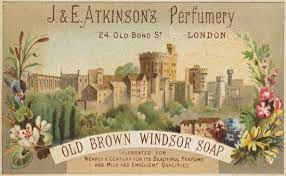
Brown Windsor Soup appears in all sorts of modern cookbooks as an historical recipe, a Victorian staple, and even as Queen Victoria’s favorite soup. In my copy of Jane Garmey’s Great British Cooking*, it’s called a “hearty beef soup, once extremely fashionable…. For many years, a particularly unappetizing version was continually served by British Railways in their dining cars, which may explain its present demise.” It appears in the Unofficial Downton Abbey Cookbook and several other modern volumes of Victorian cookery.

There’s only one problem: were you to go back in time to the Victorian era and, say, try to order it in a restaurant, they wouldn’t know what you’re talking about. Brown Windsor Soup didn’t actually exist, according to food scholar Glyn Hughes, author of The Lost Foods of England (which is totally on my to-buy list!)

When Hughes was beginning research on his book documenting English gastronomy, Brown Windsor Soup seemed like an easy topic to start with; everyone knew what it was, and even had memories of the dreadful version served on trains (see Jane Garmey’s comment above.) But when he started consulting Victorian cookbooks, he could find no mention of itanywhere. Intrigued, he pored through the British Newspaper Archive and even paid researchers to comb through the records of the National Railway Museum. There was nary a single mention of it in Victoria’s reign. Certainly recipes for hearty beef soups existed, but not under this name. Not until the 1920s did it begin to appear in cafeterias and cafes (and likely railway stations dining rooms) as a filling, if dubious and dreary, menu item.

So where did the legend of Brown Windsor Soup as a Victorian staple come from?

Hughes points to a few things, among them toiletries and radio.

It seems that there was a Windsor Soup, or potage à la Windsor, on her majesty’s menus. It was the creation of Charles Francatelli, one of the queen’s chefs whom we’ve met before. But Francatelli’s Windsor Soup was a creamy white soup made with rice, not brown and beefy...and while it’s not known to have been a particular favorite of her majesty, Francatelli’s cookbook was a staple in Victorian households for decades. Other Victorian cooks created their own Windsor soups, but again, most borrowed heavily from Francatellis recipe, and were decidedly white.


But there was Brown Windsor Soap—a toiletry that was well known as a favorite of Queen Victoria (and Napoleon!), complete with a picture of Windsor Castle on its packaging (and still available today.)

And then there was The Goon Show. This popular (and very goofy) radio show of the 1950s (featuring Peter Sellars in his pre-Inspector Clouseau/Pink Panther days—if you ever have a chance to hear them, do!) latched onto “Brown Windsor Soup” as a recurring comedic gag, a stand-in for all stodgy English cuisine (and, by extension, stodgy Britishness.)

Might all of these—a real Windsor soup, a very popular product with a similar name, and the hilarity of radio—have mixed themselves up with a twentieth century invention into a sort of cultural pseudo-memory? Hughes thinks so—and is astonished by the resistance to his research by people who are convinced to this day that they used to eat Brown Windsor soup on trains.

* * * * *


Not imaginary or Victorian is that there is currently a giveaway for The Forgery Furore, the first installment in my new Regency fantasy series The Ladies of Almack’s, on Goodreads. You can enter it here; entries are open till March 20. Good luck!


*Amazon affiliate links are used in this post.

Friday, October 25, 2019

Tall Tales of Smugglers, and Napoleon


File:Smugglers-resting-1833-smal.jpgI’m researching smuggling along the Dorset coast of England in the early 1800s. (Lovely, lovely research!) My next self-published series will be set in the area in the days leading up to the Battle of Trafalgar. If you’re interested in the subject, I recommend Smuggling in Hampshire and Dorset 1700 to 1850 by Geoffrey Morley. Fascinating stories! I expected to find tales about secret tunnels and midnight raids, but some of the stories are so amazing, I couldn’t wait to share them with you.

Legend has it, Isaac Gulliver, called by some the King of the Smugglers, once covered his face with the white chalk of the Dorset soil and laid in a coffin to hide from the Excise Men. But legend also has it he foiled a plot to assassinate King George III, who praised him and vowed to let him smuggle all he liked. Smuggling increased dramatically in the area of Weymouth whenever the King came to visit.

Another story tells of two Preventers, as the Customs Officers were known, who were caught spying on a smuggling gang. The gang hung them by their feet over the edge of a cliff, then proceeded to unload their cargo in full view. When the smugglers were finished, they hauled up the officers and dumped them bound in a nearby field, where their colleagues would eventually find and release them.

And then there’s the story about a Dorset farmer’s wife, who happened to be French. She vowed she’d seen Napoleon standing on the headland not far from her home in 1803, studying the English defenses. This was at a time when England’s fear of invasion from across the Channel was at its highest. According to the legend, Napoleon looked down the coast, compared what he saw to a map in his hands, rolled up the map, uttered the word, “Impossible,” and was never seen again.

That one’s going in my book. 😊

Tuesday, August 28, 2018

Blast from the Past: Lawn Ornaments, Garden Furniture, and Hermits

It's a busy couple of weeks here in NineteenTeen East, what with winding down the summer and helping assorted offspring launch new ventures for the fall. So to follow up on Regina's bothy boys (and my upcoming posts on the very picturesque Iceland), here is a revisit with The Picturesque Hermit. Both Regina and I will be taking next week off to enjoy the last gasp of summer, and are looking forward to regular posting as September gathers up steam. Look for a new report from Carriage & Driver on the latest model year vehicles, continuing eye candy fashion posts, and more!


As our 19th century young lady tourists meandered about the country, guidebooks in hand as they visited scenic vistas and stately homes surrounded by artfully planned “natural” landscapes, they might pause to admire a grotto here, a ruined temple there, an obelisk raised on an artificial hill…or they might stop to check out the resident hermit.

Yes, really.

Just as the wealthy landowners of the 18th century rebuilt their houses into magnificent country seats, so they hired landscape gardeners to design what was really an outdoor set of “rooms”. All those fake ruins and follies and grottoes and medieval herb gardens and Chinese bridges and sylvan groves and statue gardens were the outdoor equivalent of the libraries, music rooms, dining rooms, drawing rooms, and salons indoors—spaces made to impress, to inspire admiration. The outdoor features, beside being “picturesque”, also carried picturesque meanings: a ruined temple symbolized man’s creations overtaken by the forces of nature, for example. And if a ruined temple or nymph’s grotto was “interesting”, how much more so would be if it contained a resident?

But since authentic nymphs were not always easy to find, some wealthy landowners built hermitages—picturesque (of course) dwellings which would be occupied by hermits. And just as ruins had a meaning, so too did hermitages--they symbolized the idea of man's return to nature.

Hermitages ranged from the very rustic--a single room, perhaps made out of wattle and thatch woven into the roots of an overturned tree--to the rather grand--a temple or miniature cathedral (the image above is of the hermitage at Frogmore, from an 1823 issue of Ackermann's Repository). The hermits themselves differed as well. Some were men (sorry, no female hermits--just think of the scandal!) genuinely interested in living a secluded, humble life dedicated to work and prayer…while others were cheerful types willing to appear suitably ragged and “natural” in order to entertain his lordship’s guests out for a stroll in the grounds.

Some landowners had very specific ideas on how their hermits should behave, demanding their potential hermits sign contracts stating that they weren't to speak, or to cut their hair or toenails. Others were more relaxed and invited their resident hermits to mingle with guests as a form of rustic entertainment.

So what do you think? Is there a spare garden shed in your yard? Why not be 19th century and install a hermit in it?

Tuesday, August 14, 2018

Blast from the Past: A Bandalore by Any Other Name

I'm off wandering the wilds of Iceland with my DH and will be back next week to report on our travels. In the meanwhile, here's a Blast from the Past about a different type of pastime. See you soon!

It is a truth universally acknowledged that historical research is probably the most fun you can have with your corset on.

I was doing research on Eton in the early nineteenth century a week or so ago, and was on the website Open Library reading a book called “A History of Eton College 1440-1910” by Sir H. C. Maxwell Lyte, and happened to skim over this passage:

Among the minor games popular at Eton at this period and for some time afterwards was that of bandalores. A bandalore was a disc of box-wood, with a deep groove in its outer edge, round which a string was coiled, and the art was to send it flying through the air, unwinding the string as it went, and by giving a jerk at a particular moment to bring the disc back again to the hand, recoiling the string on its return journey. Michael Hicks Beach writing to his mother in his sixteenth year says:— “I have three excellent bandylores and did throw one of them out (which has a string about four feet and a half long), one hundred and fifty-nine times without missing.”

I thought about that for a moment, trying to picture just what this bandalore “game” was...and then it hit me.

It was a yo-yo. They were playing with yo-yos in the late 18th century!

So I did a little more digging...and found this image, from a French fashion plate from 1791, along with the following information: The most common French word for Yo-yo at the time was "Emigrette", but it is called the "Joujou de Normandie" in a caption to a version of this image which was included in Albert Charles Auguste Racinet's Le Costume Historique (1888), a monumental six-volume work on costume (alas, the cheapest set I could find on-line was in the $3000 range!) "Joujou", by the way, means "toy", and has nothing to do with the etymology of the word "yo-yo", which is from a Philippine language...but it's an interesting coincidence, isn't it?

So there you go. Who knew that one of the hot toys for both boys and girls in 1790s Europe was the yo-yo?

Historical research rocks!

Tuesday, May 31, 2016

1810, What a Year It Was Part 3: The Duke and the Valet


True crime fans, take note. This post is for you...and is probably the strangest of the events of 1810 we’ll be looking at. Ready?

George III’s fifth son Ernest, Duke of Cumberland, was one of the least popular of the king’s unpopular sons. Unlike most of his brothers who were on the plump side, Ernest took after his mother and was rail-thin; a saber cut down one side of his face, received when he fought the French in Holland at the Battle of Tournai, gave him a rather sinister appearance despite his handsome features. And unlike all his brothers, he was an avowed Tory and never dabbled in Whiggism or any liberal causes, being particularly opposed to Catholic Emancipation. He had an unpleasant reputation from his Army days as being a savage disciplinarian, and rumors about his personal life were rife.

But those rumors were nothing compared to the gossip that ricocheted around London after the wee hours of May 31, 1810--206 years ago this very day.

According to the Duke, he went to bed around one a.m. in his apartments at St. James Palace after attending a concert earlier in the evening. He stated that he was awakened by two blows to his head, then quickly received four other blows and a saber cut to his thigh as he tried to flee to the room of one of his valets, Neale, calling out that he had been murdered. Though a small lamp burned in his room, he said he saw no one.  The valet dashed to his master’s defense, waving a poker about, until he tripped over a sword—the Duke’s own, covered with a considerable amount of blood. While Neale tended to his master, the Duke requested that his other valet, Joseph Sellis, a native of Corsica, be summoned as well. When the servants went to Sellis’s room, they found the door was locked. After various backing and forthing involving doors that should have been locked but weren’t, Sellis’s room was finally gained—and Sellis himself found with his throat slit by a razor. There was no sign of a struggle.

Ew.

So what had actually happened?


The jury called to hear the incident's inquest found, on weighing the extensive testimony and physical evidence, that Sellis had attacked his master and then committed suicide. Based on the accounts given by all the servants, that was probably what happened, though we’ll never know what inspired the attack.

But public opinion whispered otherwise—remember how disliked the Duke was? It was rumored that the Duke had seduced Sellis’s wife, and murdered Sellis when the valet threatened to go public with his knowledge, then arranged matters to look as though he had been attacked instead. Other rumors postulated an affair between the Duke and Sellis, and that the Duke had murdered him when he threatened blackmail, while others favored the theory that Sellis had discovered an affair between the Duke and his other valet, and was murdered by the Duke in order to keep the affair secret. Some who accepted that Sellis had indeed attempted to murder his master suggested that he had done so in revenge for the Duke’s seduction of his wife. Others guessed that he was tired of the Duke’s constant stream of anti-Catholic jokes and mockery (Sellis was Catholic) and had simply had enough.

The Duke survived, though it took months for him to recover (his brain could actually be seen through one of the wounds in his head, and his thumb had nearly been severed by the sabre.) His reputation, however, never recovered, and he would go on to be accused of even worse things, such as being the father of his own sister’s illegitimate child and of scheming to bring about the death of his niece Victoria, who until she had children was all that stood between the Duke and the crown.

Makes the royal scandals of today look pretty tame, doesn’t it?

(Image "SELLIS/ The Italian Assassin Attempting to Murder H.R.H. The Duke of Cumberland" by George Cruikshank, from the Rosenbach Collection of the Free Library of Philadelphia)


Tuesday, April 5, 2016

History in the News

So I was all set with another post in my 1810 series when I ran across three awesome historical news stories that I just had to share...so instead of the Duke of Cumberland, today you’re getting ancient Egyptian tailoring, Henry VIII's head injuries, and Sir Walter Scott’s sock puppetry. Ready?

The world’s oldest dress:  Archaeologists have carbon-dated this linen dress (yes, it looks like a shirt but the bottom half is missing, based on other younger examples that have been found) with elegant pleated yoke and sleeves and a v-neck found in an Egyptian tomb to somewhere between 5,100 and 5,400 years old, making it the oldest known piece of tailored, sewn clothing. The garment’s story is a fascinating one: originally found in a tomb at the cemetery at Tarkhan, it was sent to the Petrie Museum at the University College of London entwined in a bunch of rags and ignored for decades...until conservators got around to examining it in 1977.  Hmm...now if only there were fashion magazines from ancient Egypt. Ahkenaton’s Repository, anyone?  ☺ (photo Petrie Museum of Egyptian Archaeology, University College London)

Henry VIII needed better head gear:  Dr. Arash Salardini and colleagues at Yale’s School of Medicine have speculated in an article in the Journal of Clinical Neuroscience that Henry VIII’s famously bad temper and tyrannical behavior in his later years may have been due to repeated traumatic brain injuries in his youth.

Famously fit and athletic as a young man, Henry was an avid jouster among other things, and suffered some spectacular falls and plenty of being thumped about as a result...just like today’s football players. In his later years, Henry went from being the ideal Renaissance prince, cultured and courtly, to a cruel, capricious tyrant, suffering blinding headaches and sudden, unexplained rages. Historians have attributed this change to many things: tertiary syphilis, chronic infection, diabetes, and kidney disease...but this new diagnosis makes bunches more sense.

Oh Sir Walter, you tricksy fellow: It seems that sock puppetry is not a modern phenomenon. Two hundred years ago, a well-known author was engaging in practices that today would have gotten him banned by Amazon.

Sir Walter Scott, whose poems and books helped birth the Highland Revival, was also an important writer and reviewer for the Quarterly Review, an important and widely read journal of the day. His reviews of such books as Mary Shelley’s Frankenstein, Jane Austen’s Emma, and Byron’s Childe Harold’s Pilgrimage helped launch their popularity. But he also used his position as a respected reviewer to thoroughly (and anonymously) lambaste one of his own books, a short story collection called Tales of My Landlord, which he’d published under the pseudonym Jedediah Cleishbotham.  But he didn’t stop there; after calling the work unoriginal and lame, he speculated about the identity of the author of the Tales, going so far as to suggest not only himself ("the author of Waverley"), but his own brother Thomas.  The result? Huge sales, because everyone wanted to see just how bad the book was and if they could guess who the author was. 

Naughty, naughty! ☺

Tuesday, March 8, 2016

The Peace of Amiens, or, All Major Credit Cards Accepted

It’s 1802. Great Britain and France have been at war since 1793, when the brand new French republic went on the warpath as surrounding European kingdoms, hoping to nip this republic idea in the bud, sent troops to help restore the Bourbon monarchy. They failed despite various alliances and coalitions and, to everyone’s surprise, France started expanding its borders, thanks in no small part to a certain up-and-coming young Corsican artillery officer.

By 1801 that artillery officer, one Napoleon Bonaparte, is First Consul of the French Republic. British Prime Minister William Pitt,  a resolute foe of Napoleon, is forced out of office in February and a less hawkish PM takes his place.  Austria, Russia, and the Kingdom of Naples had all sued for peace a few years before.  And both France and England agree that some peace might be nice for a change. After much negotiating, wheeling, dealing, and making of secret clauses over the summer and into the fall of 1801 the two countries reach a preliminary agreement at the end of September. In November the Marquis Cornwallis (yes, the same one who surrendered at Yorktown) is sent to the French town of Amiens to negotiate the final terms with Napoleon’s brother Joseph and Talleyrand. Though it takes months and is unsatisfactory in many ways to the British (they in particular are unhappy over the ambiguous disposition of Malta) a final agreement is signed on March 25, 1802 and in October King George officially declares peace.

And Britain goes shopping.

Before you snort, "yeah, right," think about it: for much of the 18th century, France had been the center of European culture...and Paris had been its apotheosis. French fashions, French art, French food, French manners, all had been admired and imitated; an upper class young man’s education was not considered complete until he’d spent a year or so wandering the Continent—especially France. But for the last ten years, Britain and France had been at war, which meant no visiting most places on the continent. Now the war was over thanks to the Peace of Amiens, and the English descended on France to satisfy their craving for all things French.

They flocked to the Palais Royal for expensive souvenirs and to the modistes and milliners for Paris gowns. They ordered jewelry and sets of china, and went to the galleries to buy art. Artists arrived in droves, not only from England but from all over Europe to visit the Louvre and see not only the latest art but also the Roman and Egyptian sculpture brought back by Napoleon. They visited sidewalk cafes, strolled in the parcs (though Paris was, alas, looking rather shabby after the depredations of the Revolution and ten years of war.) Even scientists came, among them astronomer William Herschel to visit the Paris Observatoire. And politicians came, both for all of the above reasons and, if they could, to catch a glimpse of the First Consul. Napoleon very obligingly received several of them, most notably Charles James Fox (who took the occasion of this trip to France to formally present his heretofore secret wife, former courtesan Mrs. Armistead.) And expatriates took the opportunity to visit their homeland, from which they'd been cut off for so long.

Unfortunately, this amicable state of affairs did not last long. The tensions and discontents created in the Treaty of Amiens were its undoing, along with Napoleon's efforts in other arenas to exclude Britain as much as possible from European affairs. Britain again declared war in May 1803, rather to France's and everyone else's surprise--in fact, over a thousand British tourists ended up imprisoned in France until 1814, when Napoleon was sent to Elba. I hope the shopping had been worth it!

Tuesday, February 16, 2016

1810, What a Year It Was, Part 2: The Lady of the Lake and the Hughland Revival


Just in case you think that media having a profound effect on popular culture is a modern phenomenon, I have five words for you: The Lady of the Lake.

In 1810 a Scottish lawyer named Walter Scott who had been slowly building a name for himself as a poet writing about Scottish history and lore published his third narrative poem, called The Lady of the Lake. His previous efforts, The Lay of the Last Minstrel (1805) and Marmion (1808) had seen moderate popular success. But for some reason, the May release of The Lady of the Lake turned Scott into a household name, selling 25,000 copies that year alone.

The poem’s story is a dramatic one, with three suitors vying for the hand of the fair Ellen Douglas, a disguised king reconciling with an estranged old friend and supporter (who happens to be the father of the aforementioned Ellen), and war between the king and his Lowland Scots versus the Highland Clans led by one of the (also) aforementioned suitors. There are bards and druidic prophets and old feuds affecting the present and one-on-one combat and lots and lots and lots of description of the wild beauties of Scotland...and the origins of the song we now know as “Hail to the Chief”!

So, popular book, sold lots of copies, blah blah blah. But The Lady of the Lake also sparked something known as the Highland Revival, a sort of craze for Scottish history and culture (or at least what people thought was Scottish culture). Don't forget that Scotland had been in eclipse through most of the 18th century, ever since the last Stuart uprising in 1745 had led to the horrible slaughter of the Battle of Culloden, decades of sanctions against the Scots, and widespread emigration to America. Scotland as a topic was ripe for romanticization and exploitation; it had already begun with the publication in 1760 of what purported to be epic poems by an ancient Scottish bard, Ossian, by one James Mcpherson. They were an international sensation: people from Thomas Jefferson to Napoleon counted them as favorites. Alas, it turned out that they were not ancient, but Macpherson's own work. Still, the seed had been planted, fertilized by the passion of the late 18th and early 19th centuries for the wild and picturesque. 

Scott knew a good thing when he saw it; he followed up the success of  with a series of historical novels set in Scotland, and the craze only grew. The Prince Regent was an enthusiastic subscriber; he invited Scott to dinner in 1815 after reading his novel Waverley, published the previous year, and ended up visiting Scotland in 1822, the first reigning monarch to do so since 1650. He also had his portrait painted wearing a kilt to commemorate the visit.  The Highland Revival would eventually find its apotheosis in Queen Victoria’s buying a house in the Scottish Highlands, decorating it from cellar to attic in tartans and deer antlers, and trying to spend as much time there as possible, much to the dismay of her ministers.  And long-time NineteenTeen readers may recall my poking gentle fun at the Scottish craze in an April Fool’s Day  post a while back.
And it all more or less started in 1810. ☺

Tuesday, February 2, 2016

1810--What a Year It Was

I promised you a new series, didn’t I? Well, today it begins...but first, a little background.

I’ve had an idea for an adult Regency story for years...but some ideas take a long time to marinate. I jokingly say that the girls in the back room had to think about it for a while...and in 2015, they let me know they were ready to get started. The story has turned into a serial, told in novella-length episodes that are complete stories in themselves but include an overarching plot (and developing romance, of course!) that interweaves with the events of the individual stories.

The story takes place over the course of 1810 and will end in 1811, which means I’ve been doing a lot of research about that one year...and it was a pretty interesting one. So I thought it might be fun to examine some of those events that inspired my serial, because we’re all about weird history stories here at NineteenTeen, right?

So what was going on around the world in 1810?  Although my serial of course will focus on England and its concerns, there was a lot of interesting stuff happening elsewhere...
  • Napoleon divorces his Josephine in order to marry Marie Louise of Austria, and adds Holland and the German kingdom of Westphalia to the empire, but French forces under Marshal Masséna are expelled from Portugal
  • Beethoven composes Für Elise
  • Lord Byron, sojourning in Greece, swims the Hellespont 
  •  General Bernadotte, one of Napoleon’s marshals, is elected Crown Prince and heir to the throne of Sweden.
  • Frédéric Chopin, composer and pianist, is born, as were Robert Schumann, English novelist Elizabeth Gaskell (who wrote the wonderful Cranford, among others), and P.T. Barnum.
  • Argentina, Mexico, Venezuela, Colombia, and Chile take varying steps toward independence from Spain.
  • The first steamboat on the Ohio River begins operation . 
  • King George III is declared insane (again.)
  • And for you Regency boxing fans, the great 40-round match between Cribb and Molineaux takes place.
Stay tuned for the first post soon!

Tuesday, October 21, 2014

A Bandalore by Any Other Name

It is a truth universally acknowledged that historical research is probably the most fun you can have with your corset on.

I was doing research on Eton in the early nineteenth century a week or so ago, and was on the website Open Library reading a book called “A History of Eton College 1440-1910” by Sir H. C. Maxwell Lyte, and happened to skim over this passage:

Among the minor games popular at Eton at this period and for some time afterwards was that of bandalores. A bandalore was a disc of box-wood, with a deep groove in its outer edge, round which a string was coiled, and the art was to send it flying through the air, unwinding the string as it went, and by giving a jerk at a particular moment to bring the disc back again to the hand, recoiling the string on its return journey. Michael Hicks Beach writing to his mother in his sixteenth year says:— “I have three excellent bandylores and did throw one of them out (which has a string about four feet and a half long), one hundred and fifty-nine times without missing.”

I thought about that for a moment, trying to picture just what this bandalore “game” was...and then it hit me.

It was a yo-yo. They were playing with yo-yos in the late 18th century!

So I did a little more digging...and found this image, from a French fashion plate from 1791, along with the following information: The most common French word for Yo-yo at the time was "Emigrette", but it is called the "Joujou de Normandie" in a caption to a version of this image which was included in Albert Charles Auguste Racinet's Le Costume Historique (1888), a monumental six-volume work on costume (alas, the cheapest set I could find on-line was in the $3000 range!) "Joujou", by the way, means "toy", and has nothing to do with the etymology of the word "yo-yo", which is from a Philippine language...but it's an interesting coincidence, isn't it?

So there you go. Who knew that one of the hot toys for both boys and girls in 1790s Europe was the yo-yo?

Historical research rocks!

Tuesday, August 9, 2011

Lawn Ornaments, Garden Furniture, and Hermits

As our 19th century young lady tourists meandered about the country, guidebooks in hand as they visited scenic vistas and stately homes surrounded by artfully planned “natural” landscapes, they might pause to admire a grotto here, a ruined temple there, an obelisk raised on an artificial hill…or they might stop to check out the resident hermit.

Yes, really.

Just as the wealthy landowners of the 18th century rebuilt their houses into magnificent country seats, so they hired landscape gardeners to design what was really an outdoor set of “rooms”. All those fake ruins and follies and grottoes and medieval herb gardens and Chinese bridges and sylvan groves and statue gardens were the outdoor equivalent of the libraries, music rooms, dining rooms, drawing rooms, and salons indoors—spaces made to impress, to inspire admiration. The outdoor features, beside being “picturesque”, also carried picturesque meanings: a ruined temple symbolized man’s creations overtaken by the forces of nature, for example. And if a ruined temple or nymph’s grotto was “interesting”, how much more so would be if it contained a resident?

But since authentic nymphs were not always easy to find, some wealthy landowners built hermitages—picturesque (of course) dwellings which would be occupied by hermits. And just as ruins had a meaning, so too did hermitages--they symbolized the idea of man's return to nature.

Hermitages ranged from the very rustic--a single room, perhaps made out of wattle and thatch woven into the roots of an overturned tree--to the rather grand--a temple or miniature cathedral (the image above is of the hermitage at Frogmore, from an 1823 issue of Ackermann's Repository). The hermits themselves differed as well. Some were men (sorry, no female hermits--just think of the scandal!) genuinely interested in living a secluded, humble life dedicated to work and prayer…while others were cheerful types willing to appear suitably ragged and “natural” in order to entertain his lordship’s guests out for a stroll in the grounds.

Some landowners had very specific ideas on how their hermits should behave, demanding their potential hermits sign contracts stating that they weren't to speak, or to cut their hair or toenails. Others were more relaxed and invited their resident hermits to mingle with guests as a form of rustic entertainment.

So what do you think? Is there a spare garden shed in your yard? Why not be 19th century and install a hermit in it?

Tuesday, August 2, 2011

What I Did on My Summer Vacation, Part 4: Fonthill Abbey

As Regina mentioned in Part 3, a popular vacation pastime for 18th and early 19th century people was the visiting of the large country estates of the rich and famous. Though it seems odd to us today, back then it was considered perfectly permissible. A lot of those houses are still open for viewing today…but today we’re going to visit a popular stately home that alas no longer exists, yet was quite famous in its day for its sheer…well, over-the-top-ness.

The Beckford family of Wiltshire was a fabulously wealthy one, thanks to its extensive plantation holdings in the West Indies which gave it a preeminent place in the sugar import market. Young William, heir of the family, got nothing but the best growing up—piano lessons from the young Mozart, for example—so when he came of age in 1781, he threw himself a party that cost ₤40,000. Um, wow.

However, scandals within a very few years drove him from England and his popular place in society. Despite his vast wealth, his life was not a happy one. He lost his young wife in childbirth while in exile on the continent, and spent the next several years traveling, writing (among his works was a well-known Gothic novel, Vathek) and collecting art. In 1796, much to everyone’s surprise, he decided to return to England and build himself a new house to house his art collection…in the form of a Gothic cathedral. He had the former Beckford home, Fonthill Splendens, torn down, and hired the brilliant but troubled architect James Wyatt to build it for him.

What emerged was one of the largest private homes in England. Fonthill Abbey featured 50 foot high windows, three-hundred foot corridors, staircases of enormous height and width…and a 50 foot table in the dining room, which seemed odd as no one would visit or even speak to Beckford (remember that scandalous past?) Yet alongside this excess, most of the bedrooms were small, stark, and bare, and over a dozen of them didn’t even have windows. Up to five hundred men were at work on the enormous house at any given time, and due to Wyatt’s frequent absences (he was notoriously unreliable, and often disappeared for months at a time on alcoholic sprees), Beckford himself did much of the directing of the building and landscaping of his monstrous home.

The process did not run smoothly. The main tower, planned to be three hundred feet tall, collapsed twice before finally staying put. The house was finally completed in 1813…which year also saw Wyatt’s death in a carriage accident.

Beckford lived alone in the gloomy splendor of his house for the next ten years, only entertaining once when Lord Nelson and Emma Hamilton spent Christmas with him. Unfortunately, the outrageous cost of his building (not only the Abbey itself but a twelve foot high wall extending for twelve miles around his lands) combined with a drop in the price of sugar and the loss of some of his Jamaican plantations led to his needing to sell his white elephant abbey…which he did in 1823, amazingly enough, for the tidy sum of ₤300,000.

The new owner of Fonthill Abbey, gunpowder magnate John Farquhar, rarely visited his new acquisition, but happened to be there at Christmas 1825 when, for the third and final time, the 300-foot tower of the Abbey collapsed, demolishing about a third of the house with it. Farquhar himself died the following year, having neglected to write a will, and none of the relations arguing over his fortune was interested in taking on Fonthill. It was torn down, and only the gatehouse and a small portion of the once enormous house remain.

And Beckford? He took his money and moved to Bath, erecting a shorter (only 120 feet tall) and much more solidly built tower in which to house some of his art treasures. Though Fonthill is long gone, you can still visit his Lansdown Tower today…just as inquiring young ladies might once have done.

Tuesday, February 22, 2011

The Prince Regent, Part 4: The Most Accomplished Blackguard?

When we last left our Prinny, he was happily settled with Mrs. Fitzherbert…but as I hinted, this happy state of affairs did not last long. George’s eye was, alas, prone to wandering, and his attention was at best erratic. While Mrs. Fitzherbert was always gracious, amiable, and discreet, even she couldn’t help being upset when George publicly denied their marriage to Parliament in 1787, and their relationship suffered. George eventually resumed his partying ways much to her disapproval, having a short dalliance with an actress named Mrs. Crouch in 1788. 1788 was a difficult year in other ways; late that year saw King George III’s first period of incapacity. Prinny agitated hard for a Regency—perhaps a little too hard, as many felt his behavior unfilial. The problem was solved when in 1789 the King regained his faculties, but it cast a shadow on Prinny’s relationship with his father.

Life trickled along; while most of England watched the Revolution across the Channel in France with growing horror, George continued in his path of being a patron of the arts and the nation’s “First Consumer”, racking up further outrageous debt. Then in 1794 a more serious breach occurred between him and Mrs. Fitzherbert, thanks to a 41-year-old grandmother.

Lady Frances Jersey set out very deliberately to ensnare the Prince, and succeeded. She played on his feelings of impatience and resentment at the quiet life Mrs. Fitzherbert preferred to lead, and seems to have been one of the leading proponents of the idea that the Prince should marry.

Yes, marry. Remember that according to English law, George was still a single man. Lady Jersey suggested that he find a compliant German princess to marry in order to guarantee the succession…doing so would mean that Parliament would probably vote him sufficient funds to pay off his debts and raise his annual allowance. She even had a suggestion in mind: George’s cousin, Caroline of Brunswick, eldest daughter of the King’s sister and her husband, the Duke of Brunswick. Lady Jersey did not plan to step aside after the marriage, however; instead, she got herself appointed the new Princess’s chief lady-in-waiting.

Caroline of Brunswick probably couldn’t have been a worse choice for George. Gauche and uneducated and boisterous, she was also reportedly not fond of bathing and already had a less-than-spotless reputation when it came to modesty. On their meeting George is reported to have demanded a stiff drink, and spent his wedding day (and night) extremely inebriated. Caroline herself was not terribly impressed by him either—his chubbiness and drunkenness were probably just as off-putting. The marriage seemed—and was—doomed from the start, just as Lady Jersey had foreseen. And to top it off, George did not get all the money he’d expected from Parliament.

However, he managed to maintain sufficiently cordial relations with his new wife that they produced an heir—or heiress—to the throne exactly nine months after their wedding (see my posts on Princess Charlotte). After this, things between them broke down irretrievably, and Lady Jersey remained in power…sort of. By 1796 George was writing desperate letters to Mrs. Fitzherbert asking her to forgive him and take him back. Maria had been appalled at his treatment of Caroline, and held him off…but again, persistence paid off. Once again George threatened that he would die unless his Maria came back to him, and by 1800 they were once again together.

Maria called the next eleven years the happiest of their lives: George was happy, and even the King and Queen began to regard her with approbation because of the good effect she had on George. But (you knew that was coming, didn’t you?) these happy years would not last.

Tuesday, February 8, 2011

The Prince Regent, Part 3: Mrs. Fitzherbert

Now in his early 20s, George was ripe for…for something. He’d tried partying, drag-racing…er, phaeton-racing, partying, womanizing, partying, amateur theatricals, partying, clothes shopping, partying, house decoration, and partying. King George refused to give him any role in government to start preparing for his inevitable future as king. Like any energetic, intelligent person, he needed something to do, something to look forward to besides the inevitable partying. However, like any romantic, impulsive person, he had a tendency to fall rapidly in love—remember Perdita Robinson, whom he adored after seeing her on the stage?

After the Perdita affair, George launched on a series of love affairs, some more serious (at least in consequences) than others. He developed a fondness for older women, and his name was linked with several: Lady Melbourne (mother of Queen Victoria’s first prime minister), the Duchess of Devonshire, the wife of a Hanoverian diplomat.

Then in 1783, he fell in love—really in love, it seems—with a lady named Maria Fitzherbert.

Mrs. Fitzherbert was six years older than the 21-year-old George, and had already been twice widowed. She was not a ravishing beauty but had a beautiful complexion, a fine figure, and an expression of extraordinary sweetness that reflected her inner nature. And while she was tremendously flattered and seems to have been genuinely fond of him, she was no stage actress of easy virtue: gently, regretfully, she held the smitten young man at arms’ length for many months.

She might as well have tried dousing a lamp with kerosene; George only became more determined in his pursuit. In July 1784 his determination culminated in an extraordinary scene: Mrs. Fitzherbert was shocked when the distraught royal surgeon appeared on her doorstep, begging her to come with him. It seemed that in his extremity of passion for her, George had stabbed himself and swore he would die unless she came to see him. After an initial refusal, she consented to see him if the Duchess of Devonshire went with her.

It’s thought that the scene was probably staged, but George was a convincing actor…and the result was that he made the distraught Maria promise to marry him. However, the following morning, she fled the country to evade him.

Why? Two reasons; first, Mrs. Fitzherbert was a devout Roman Catholic, and by English law the heir to the throne was barred from marrying a Catholic. Second, George’s father had passed the Royal Marriages Act after dealing with his brothers’ marital vagaries; it stated that no member of the royal family could marry without the king’s consent, unless he waited until the age of 25 and gave the Privy Council a year’s notice (unless Parliament in the meanwhile forbade the marriage.) It also made it a crime for anyone to aid a member of the family in making an illegal marriage. In short, there were a lot of obstacles in the way of a marriage between Maria and George, no matter what their feelings were for each other.

But George would not be deterred. He tried to follow Maria to the continent, but was forbidden by his father to leave the country, so he had to be satisfied with a series of passionate letters sent to her over the next year. Evidently his steadfastness and eloquence over such a long time had their effect, for in the fall of 1785, Maria at last consented to come home and marry him in secret. They were married at her London house by an Anglican priest George bailed out of Fleet Street Prison, with only Maria’s brother and one other man as witnesses.

In the eyes of both the Catholic and Anglican churches, the marriage was valid; by English law, it wasn’t. The couple could not live openly together, but spent as much time as possible together, and for a few years, George was a changed man. But their idyll—and George’s improved behavior—did not last long.

Stay tuned for the next installment: The Prince Regent, Part 4: The Most Accomplished Blackguard?

Tuesday, October 21, 2008

Princess Charlotte, Part III: Till Death Do Us Part

As you could probably guess from the title, poor Princess Charlotte’s story does not have a happily-ever-after ending. But I’m getting ahead of myself…

Despite her suitor William’s less-than-suave behavior at her father’s party, Charlotte was tentatively willing to consider marrying him. Anything that would allow her to escape from being caught between her parents and their eternal battles —even marriage with the aptly nick-named Slender Billy—had to be a good thing, right?

But Charlotte was very aware of her position as future Queen of England…and when she learned that William would expect her to spend at least a few months of the year with him in Holland, she balked. Leave England for Holland? Never! Furthermore, William’s family and her mother’s did not get along, and William would not allow Charlotte’s mother to visit them in Holland.

So with her resolve stiffened by the sympathetic visiting Tsar of Russia and his sister, Charlotte decisively broke her tentative engagement with William, thereby enraging her father. She herself had since fallen in love with a charming but highly unsuitable prince of Prussia named August…and at about this time, she just happened to meet a dazzlingly handsome young protegee of the Tsar, a product of one of the many little German duchies and principalities named Prince Leopold of Saxe-Coburg-Saalfield.

Over the next weeks Charlotte and Leopold got to know each other during “accidental” meetings while riding in Hyde Park…but Charlotte’s father had not given up his goal of marrying Charlotte to Slender Billy. He attempted to imprison Charlotte in a small house at Windsor until she gave in, but Charlotte managed to give him the slip and ran out into Pall Mall, caught a hackney cab with the help of a sympathetic passer-by, and escaped to her mother’s house. After a long night of negotiations among the Prince, his estranged wife, a couple of royal dukes, several prominent politicians and lawyers, and a Bishop or two for good measure, Charlotte capitulated and agreed to return to her father…but she still wouldn’t marry William.

More than a year passed, and Charlotte remained more or less a prisoner of her father. But Leopold continued to write to her faithfully (via a friend of Charlotte’s who smuggled in his letters) long after her other suitor, Prince August, had given up. Gradually enough excellent reports of Leopold’s intelligence, bravery and skill as a soldier, and high principles reached the Prince Regent that he slowly softened his attitude…and at last, after Napoleon was safely exiled to St. Helena and Europe was once more at peace, Charlotte and Leopold were allowed to marry.

What started out as something of a marriage of convenience for both—Charlotte escaping from her family and Leopold escaping penury as a younger son of minor royalty—quickly turned into an honest-to-goodness love match. The pair had a golden year and a half together, and in November 1817 were expecting their first child…a pregnancy that tragically ended in the birth of a still-born son and, a few hours later, the death of Charlotte herself.

Poor Leopold—and all England with him (this mourning dress appeared in Ackermann’s Repository in January 1818)—was devastated. And even though he went on some years later to be made King of Belgium and marry another princess with whom he would raise a healthy family, Leopold never fell out of love with Charlotte, as he told Charlotte’s young cousin (and his niece)—Queen Victoria.

Tuesday, October 14, 2008

Princess Charlotte, Part II: The Tarnished Tiara

Back before our birthday celebrations we had left Princess Charlotte, only child of the Prince Regent and second in line to the British throne, living in her own household…no parents or other relatives, only servants and those appointed to live with her as companions or tutors. Not a very secure atmosphere for a child to grow up in…and matters were worsened by her father’s occasional capricious hirings and firings, not to mention the fact that some of the people he hired had drinking problems or loose morals.

Charlotte grew to be a self-described tomboy, temperamental and mischievous, swaggering and coltish, a mixture of naivete and self-awareness of her high position. She was often naughty, especially towards a few particular staff whom she disliked, but just as often was contrite and apologetic for misbehavior. Her favorite subject was mathematics, and her favorite pastime was riding; she was a fearless horsewoman. At fifteen she was described as being, “…tall and very graceful….” but also “forward, dogmatic on all subjects, buckish about horses, and full of exclamations very like swearing.” Charming and natural, perhaps, but not very princess-like.

Her father as a young man had been a supporter of the Whig party and announced that the princess would be educated according to liberal Whig principles. But once he was made Prince Regent by the Tory government to rule in his mad father’s place, his Whig days came to an abrupt end and he became a supporter of the Tories’ conservative outlook. The fact that his estranged wife Caroline of Brunswick, Charlotte’s mother, was supported by the Whigs only strengthened his new Toryism.

And so Charlotte unwittingly became a political football, kicked about by her parents and their supporters to suit their political purposes. Charlotte in time came to understand how she was being manipulated when private conversations she had with them at different times appeared in print in London newspapers. The Prince was doing his best to discredit her mother (she was indeed under parliamentary investigation for her reputed gross immorality) and Caroline returned the favor, trying to paint the Prince as an unnatural, unfeeling scoundrel who wanted to separate mother and daughter. But Caroline went one further, encouraging the impulsive, romantic Charlotte to flirt with an army officer (one of her illegitimate cousins, in fact!), going so far as to lock them in her room together—alone.

Is it any wonder that when a suitor appeared for her hand when she was seventeen, Charlotte sat up and took notice?

The suitor in question was William, Prince of Orange, a confirmed Anglophile but even more delighted by the idea of ruling both Holland AND Britain. His family was disliked by her mother, but Charlotte was willing to overlook that fact if she decided she liked him. Unfortunately, their first public meeting—at the Prince Regent’s birthday party—was a disaster: every single male member of the royal party apart from Charlotte’s favorite uncle got so drunk that all ended up, quite literally, under the table. Indeed, the last to fall, the Duke of York, pulled the tablecloth and everything with it down on top of him as he fell.

Hardly a prepossessing start to a courtship!

Next week: Princess Charlotte, Part III: Till Death Do Us Part

Tuesday, September 9, 2008

Princess Charlotte, Part 1: The Orphan with Two Parents

So you’ve probably figured out by now that I’m a just a little obsessed with Queen Victoria (and no, I’m not done with her yet—another installment of her story awaits.) Do you remember the peculiar story of her birth, with her father and all the other middle-aged male members of the royal family haring off to find brides so that they could have legitimate offspring capable of inheriting the throne? All that happened because her cousin, the ONE legitimate grandchild of King George III, died in childbirth at age 22. I thought it might be interesting to go back and have a look at that poor girl, Princess Charlotte of Wales, whose bizarre family circumstances and brief life story rivals that of any Britney or Paris today.

Charlotte’s papa was, as you might recall, the Prince of Wales, eldest son of King George III. Prinny led a pretty wild life: he was handsome and charming, but had zero impulse control and spent money like it grew on trees. When he was 23 he fell in love with a lady named Maria Fitzherbert and tried to make her his mistress…but the devoutly Catholic widow, several years older than he, refused.

So desperate Prinny took the astounding step of offering marriage (how he did that is a story unto itself!), and was accepted. This was blatantly illegal, as Prinny’s dad had enacted something called the Royal Marriages Act, which forbade members of the royal family from marrying without the King’s assent before the age of 25…and it was also in defiance of two earlier anti-Catholic acts. But Prinny and Mrs. Fitzherbert lived together for several years as husband and wife.

By 1794 he’d lost interest in the lovely Maria and had embarked on a series of mistresses. His family was pressuring him to produce an heir, which meant finding a Protestant princess that he could legally marry. Prinny ignored them. The clincher that finally brought him to bay was money; by this time he was outrageously in debt, to the tune of millions of today’s dollars. His creditors petitioned the Prime Minister for repayment, but the government had bailed him out once already and refused to again. However, marrying would bring him a much larger allowance from the royal Privy Purse…so Prinny consented to wed.

Two of his cousins were proposed…and Prinny chose Caroline of Brunswick based on the recommendations of his mistress Lady Jersey, who had ulterior motives…Caroline was rumored to coarse and ill-mannered, and Lady Jersey did not want a rival for Prinny’s affections in the form of a wife.

Caroline was not only coarse and ill-mannered. She was not fond of bathing and was rumored to have already engaged in several affairs, but seemed willing enough to try to fit into her new family. Prinny, however, loathed her on sight and went to their wedding three days after her arrival so drunk that he had to be supported by two dukes. Three weeks after their marriage, the Prince and his new Princess were living on separate floors of Carlton House, the Prince’s London home.

However, it seemed Prinny had managed to endure his wife long enough in that time to perform his royal duty, for it soon became known that the Princess was pregnant. One day short of nine months after their wedding day, she gave birth to a princess, who was christened Charlotte after the Queen.

Many upper class children in those days were pretty much raised by servants, with brief daily visits by their parents. But when baby Charlotte was a year old her mother moved to her own house five miles away and thereafter only visited her occasionally. Prinny himself saw her a little more frequently, but when she was five he moved her to a neighboring house and moved Mrs. Fitzherbert back into Carlton House. And, to quote the fascinating and recently published Charlotte and Leopold, by James Chambers (Old Street Publishing, 2007), “…for the rest of her childhood, Princess Charlotte Augusta, who was fully expected to succeed her father one day as Queen of England, lived in a household of her own, in the company of no one who was not paid to be there.”

Sad, huh?

Stay tuned for Princess Charlotte, Part II: The Tarnished Tiara. And stay tuned also for a fun announcement from Regina on Friday. Want a hint? Think cake…