
Showing posts with label jewelry. Show all posts

Friday, February 24, 2017

Jewelers: That Special Gem

File:Corona di sant'Edoardo.jpg
I’m not much of a jewelry fan. I wear clip earrings and my wedding ring, I have a few favorite necklaces, and that’s about it. But during the Regency, a lady and gentleman had to put on much more of a show, particularly for special occasions. Jewels, and jewelers, were required.

The role of jeweler was to set precious stones. Usually these were natural, like pearls or diamonds. But for the right price, some jewelers were amenable to setting cut glass or paste reproductions (should your family have fallen on hard times but needed to keep up appearances). They might set these stones in rings, lockets, tiaras, cravat pins, brooches, necklaces, bracelets, earrings, or items like snuff boxes or vinaigrettes.
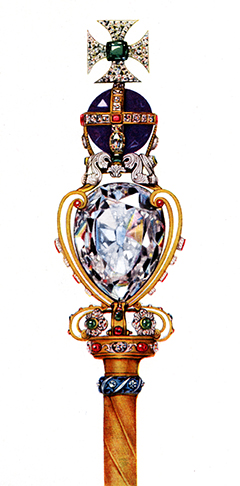

File:Sovereign's Sceptre.jpgLocating a jeweler was as easy as journeying to Bond Street in London, although most major towns had at least one. I was amused to find that a jeweler was one of the earlier shops in pioneer Seattle. I’d certainly like to know what he was setting! There weren’t enough ladies to be needing wedding rings, and I’m having trouble imagining my burly loggers sporting a jeweled cravat pin or snuff box. Perhaps watches?

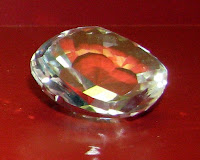
Regardless, the British jeweler in the Regency might work in gold or silver, setting gemstones from around the world—pearls from the Orient, diamonds from Africa, opals from Australia. He might also have to recut the stone to improve its brilliance. Prince Albert had the Koh-i-Noor diamond at the center of the Queen Mother’s Crown recut for that reason in 1852. According to the jewelers who managed the feat, the effort took 3 weeks, was overseen by the Duke of Wellington, and involved visits by state dignitaries. The final stone weighed 105.6 carats. Yowsers! The pictures show a replica of what it looked like before and after.


The more prestigious the client, the more prestigious the jeweler. Garrad & Co, which recut the Koh-i-Noor diamond, has the distinction of being the oldest jewelry house in the world. They have served as Crown Jeweler since Victoria granted them a Royal Warrant in 1843.

You might say they’re a cut above the rest, a real gem.

The Wikipedia and Wikimedia Commons images of the diamond are from the user Chris 73 and are freely available at //commons.wikimedia.org/wiki/File:Koh-i-Noor_old_version_copy.jpg and //commons.wikimedia.org/wiki/File:Koh-i-Noor_new_version_copy.jpg under the creative commons cc-by-sa 3.0 license.

Friday, October 28, 2016

It Has a Ring to It

Oh, that precious ring, the one handed to our beloved in pledge of eternal devotion. While engagement and wedding rings are commonplace today, young ladies and gentlemen of the nineteenth century generally only had a single ring, the band of gold for the wife only. However, I was surprised to find that the October 1810 issue of La Belle Assemblée, that arbiter of all things fashionable, had much to say about rings and the mindset of the day.

It was the custom at Rome, to send to the bride, before marriage, a present from the bridegroom of an iron ring, without any stone, to prove how long lasting, durable, and firm their union ought to be, and the frugality requisite to be observed in the married state, in order to provide for a family: but luxury soon gained ground; the old custom was abolished, and the iron rings gave place to those of more cash and expence.
Not sure how I’d feel about being given what amounts to a shackle. But there are certainly ladies who hold out for a diamond, the bigger the better.

The Roman knights were distinguished from the senators by their gold rings, and it was customary, as a mark of honour, to present ambassadors with them when they received orders from the senate to depart for foreign states. After the regal power was put aside in Rome, gold rings were worn as a sign of liberty; and Hannibal, when he had gained a signal victory, sent to Carthage a bushel of gold rings taken from off the fingers of the Roman nobles and knights who were slain in the field of battle.
Okay, TMI.

Though the first inhabitants of England, Ireland, and Scotland, and the ancient Gauls were accustomed to wear the wedding ring on the forefinger, the use, at last, prevailed amongst all nations, to place it on the next to the little one on the left hand, called the annulary finger; because, according to the opinion of the Egyptians, a small nerve runs from this finger to the heart.
You can see who’s taking the credit here, all mentions of Egyptians aside.

The piece goes on to talk about an old tradition of making sure the precious stones were set in such a way that the jewel itself touched the finger. The reason? Some jewels were supposed to possess virtues:

  • Diamond—preserves against poison and the plague, expels anger, and ensures victory
  • Ruby—banishes sorrow and averts ill thoughts
  • Amethyst—gains the wearer the favor of princes
  • Jacinth—fortifies the heart and preserves against thunder and lightning
  • Emerald—cures epileptic fits and renders harmless the bite of any venomous animal
  • Opal—preserves against infectious air and prevents fainting fits.

Queen Victoria’s oldest son Edward Albert (King Edward VII) had another idea about the purpose of wedding and engagement rings. The engagement ring he gave his bride, Princess Alexandra of Denmark, carried six precious stones: a beryl, an emerald, a ruby, a turquoise, a jacinth, and a second emerald. The initial letters of the gems spelled out his nickname: BERTIE.

Perhaps he should have consulted La Belle Assemblée.

All these reputed virtues, whether real or imaginary, serve to shew that the first wearing of rings had in it something holy, honourable, and talismanic: the small golden fetter which binds the wife to the husband, is now reckoned the most sacred of all. The mourning ring, for a departed and dearly valued friend, or relative, claims the next place; and though valuable rings are often given as pledges of love, respect, and amity, yet there are only two, the wedding and the mourning ring, which possess and retain, through every age, the symbolic solemnity of their first institution.