
Showing posts with label National parks. Show all posts

Friday, September 25, 2020

Pictures from Wonderland

First—thanks to Roxanne C, for your comment last week. Contact me at reginascott@owt.com. I know you mentioned you had a copy of the book you won. Let’s see what else I can find you.

The heroine of A Distance Too Grand, Meg Pero, is a photographer, specializing in stereographs, those double pictures that allowed people to approximate three-dimensions in her time. But when I was researching Yellowstone National Park for the second book in my American Wonders Collection, Nothing Short of Wondrous, I discovered another early photographer had made his mark there.

Frank Jay Haynes was born in Michigan in 1853. He didn’t do well at his first profession, traveling salesman, so, when he went to live with family in Wisconsin, he took the opportunity to apprentice as a photographer. F. Jay opened his own studio in 1876 in Moorhead, Minnesota. But he wasn’t content to stay there. It seems that traveling part of his salesman’s job stayed with him throughout his life.

Less than a year later, he started taking his equipment on the road, traveling via stagecoach from Bismarck, North Dakota, to Deadwood, South Dakota, taking pictures of the scenery and the people along the way. The next year, he traveled from Bismarck to the Pacific Ocean and followed that up with a tour down and up the Missouri River. His pictures made excellent prints, postcards, and, yes, stereographs.

Perhaps because his popularity was growing, he won a contract with the Northern Pacific Railroad to take publicity shots along the line to Bismarck. With a free pass to ride any train, he could go where he liked, when he liked. Along the way, he met then Yellowstone superintendent Philetus Norris, who invited him to come tour Wonderland and photograph its scenic beauty. During his two months in the park in 1881, F. Jay shot more than 200 pictures. And he came back the next year to shoot more.

Again, his stature grew, to the point that, in August 1883, he was chosen to accompany President Arthur in touring Yellowstone and serve as the official photographer. He still found time to photograph the golden spike ceremony of the Northern Pacific in Montana. But Yellowstone had so impressed him that he applied for and won a concession to be the park’s first official photographer. His studio opened in 1884.

But Yellowstone was only really accessible from May through September. What do to the rest of the year? F. Jay purchased a Pullman car from the Northern Pacific and refitted it as a traveling studio, calling it the Palace Studio Car. He traveled all over the west for the next 20 years in that car, taking pictures of local places and local folks. He was part of the one of the first winter tours of Yellowstone in 1886 and photographed the journey from my native Tacoma to Glacier Bay, Alaska, in 1891 for the Puget Sound and Alaska Steamship Company.

When he passed away in 1921, his son Jack, who had been helping him, inherited his business and carried on the tradition until his death in 1962.

And if you’d like to experience a little of Yellowstone, hop over the Goodreads, where you can enter a giveaway of a print copy of Nothing Short of Wondrous, due out October 20, 2020. 

Picture perfect!

Friday, August 30, 2019

100 Years and Counting: Grand Canyon National Park


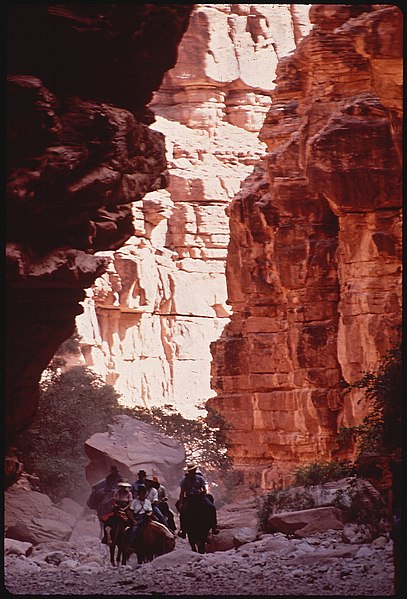
File:ENTERING THE GRAND CANYON - NARA - 544313.jpgMy father instilled in me a love and fascination with our national parks. When I was a child, he took us up camping on Mt. Rainier nearly every weekend. At least once a summer saw us in the Olympics. I’ve since toured Yellowstone, Crater Lake, Yosemite, and the Redwoods, and I currently live forty-five minutes from the gates of Mt. Rainier.

But nothing prepared me for the Grand Canyon.

My family visited for the first time in 2016. The craggy cliffs fading into the distance, the sheer drops, the silence! It is an amazing place, and one I feel fortunate to be writing about in A Distance Too Grand, out in October.


People have stood in awe of the canyon for eons. The earliest human inhabitant of the area has been dated to 12,000 years ago, after the last Ice Age. Native Americans found ways to live among the rugged cliffs and thundering rapids. Missionaries, the U.S. military, prospectors, and lumberman made brief forays into the depths. Army lieutenant Joseph Christmas Ives, in his report of his exploration partway into the canyon in 1858, called the area “altogether valueless.” He predicted that his would be the last party of Anglo-Americans to visit this “profitless locality,” which would be “forever unvisited and undisturbed.”


I’m glad not everyone agreed.

Additional explorers, such as John Wesley Powell, lauded the majesty of the canyon. In 1893, President Benjamin Harrison protected the area as a forest reserve. In 1903, President Teddy Roosevelt added federal game preserve protections. But it wasn’t until February 1919 that President Woodrow Wilson would make the canyon and its branches a national park. About 44,000 people went to visit it that year.

Today, the park boasts more than five million visitors a year. That’s quite a party. Happy birthday, Grand Canyon National Park!

P.S.—Marissa and I will be off next week, partying ourselves. We will be celebrating Labor Day and the end of summer. Look for new posts the week of September 9th.