Showing posts with label Grand Canyon. Show all posts

Tuesday, October 1, 2019

Having a Grand Old Time! A Distance Too Grand

It’s here! It’s been a while since I had a traditionally published book out, so excuse me while I squeal a little. A Distance Too Grand launches today from Revell.

Meg Pero has been assisting her photographer father since she was big enough to carry his equipment, so when he dies she is determined to take over his profession--starting with fulfilling the contract he signed to serve on an Army survey of the North Rim of the Grand Canyon in 1871. What she doesn't realize is that the leader of the expedition is none other than the man she once refused to marry.

Captain Ben Coleridge would like nothing more than to leave without the woman who broke his heart, but he refuses to wait even one more day to get started. This survey is a screen for another, more personal mission, one he cannot share with any member of his team.

As dangers arise from all sides, including within the survey party, Meg and Ben must work together to stay alive, fulfill their duties, and, just maybe, rekindle a love that neither had completely left behind.

Here's a little taste:

“Is there a problem, Corporal?” the man behind her asked. Oh, but she couldn’t mistake that voice, even ringing with command. It seemed God wasn’t going to answer this prayer either, just as He hadn’t seen fit to allow her father to survive his illness.

Corporal Dent squared his shoulders. “No, sir. This citizen says she’s to go on the survey expedition to the North Rim, but it’s clearly a mistake. I can deal with the likes of her.”

Meg bristled, but the voice behind her was now all commiseration. “No need to be rude, Corporal. I’d be happy to explain the situation to the lady. If you’d tell me your name, miss?”

So well meaning. That was one of the traits that had originally drawn her to him. That and his unrelenting confidence. Easy to turn now, to greet her long-lost love, to let him convince her she should go back home.

But there was no home and never would be if she didn’t win this commission.

She raised her chin and turned. Even though she knew who she would find behind her, the sight of Benjamin Coleridge still shook her. That shock of golden-brown hair, so thick and silky; those blue-gray eyes that could look deep inside her. The chiseled chin that could soften with emotion, that strong physique outlined in the navy wool of his uniform jacket, two silver bars on his shoulders. Oh, but she could hear the ladies sighing from here.

Once more she put on her best smile. “Good afternoon, Captain Coleridge. I must insist that I join your expedition. I’m your photographer.”

You can find the book in trade paperback, e-book, hardcover, and audio book from fine retailers such as the following:

Baker Publishing Group
Amazon
Barnes and Noble 
Kobo 
Apple Books
Books-A-Million
Christian Book 
The Book Depository, free shipping worldwide

Friday, September 27, 2019

Exploring a Legend: John Wesley Powell and the Grand Canyon


I am quite impressed with the Grand Canyon. I know I’m not the only one. All that rugged grandeur! The colors, the changing weather, the varying landscape as you descend. The silence, as if all of nature is holding its breath. But when John Wesley Powell decided to explore the Colorado River, through the Grand Canyon, the place was not much more than a legend.

So was he, truth be told. John Wesley Powell joined the Union Army as a military engineer, but he served in many positions during the Civil War and ended up a brevet lieutenant colonel. A minié ball blew off most of his right arm, but he continued serving until the war ended. Geology was always his greatest love, so he took a position as a professor at Illinois Wesleyan University in that subject. He’d led his wife and students on several journeys of exploration when he decided to tackle the Green and Colorado Rivers in 1869. And he nearly lost his life in the process.

Dangerous rapids, difficult portages, poor weather and flash flood would all plague the trip. They lost most of their boats; they lost most of their supplies. Three men gave up at one point to leave the expedition and hike out of the canyon. They were never heard from again. Four months later, the rest of the expedition made it out.

But the canyon had a grip on his heart and mind. Determined to make it all the way through, with photographic evidence this time, he set out again in May of 1871 with a group of hand-picked men, including photographer John Hillers. It took them eight months, but they managed to traverse the canyon safely, coming out at Kanab Creek. With photographs to prove it.


Powell went on to publish his report of both trips for public consumption, which went a long way toward instilling in the Nation a love for the area, ensuring its preservation as a national park.

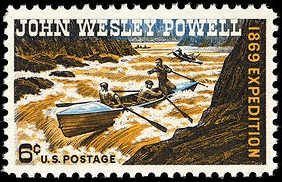
His first expedition was commemorated 100 years later with a U.S. postal stamp.


Rather grand, isn’t it?

Friday, August 30, 2019

100 Years and Counting: Grand Canyon National Park


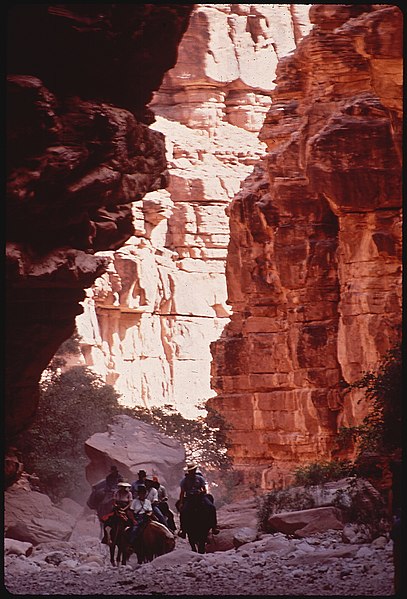
File:ENTERING THE GRAND CANYON - NARA - 544313.jpgMy father instilled in me a love and fascination with our national parks. When I was a child, he took us up camping on Mt. Rainier nearly every weekend. At least once a summer saw us in the Olympics. I’ve since toured Yellowstone, Crater Lake, Yosemite, and the Redwoods, and I currently live forty-five minutes from the gates of Mt. Rainier.

But nothing prepared me for the Grand Canyon.

My family visited for the first time in 2016. The craggy cliffs fading into the distance, the sheer drops, the silence! It is an amazing place, and one I feel fortunate to be writing about in A Distance Too Grand, out in October.


People have stood in awe of the canyon for eons. The earliest human inhabitant of the area has been dated to 12,000 years ago, after the last Ice Age. Native Americans found ways to live among the rugged cliffs and thundering rapids. Missionaries, the U.S. military, prospectors, and lumberman made brief forays into the depths. Army lieutenant Joseph Christmas Ives, in his report of his exploration partway into the canyon in 1858, called the area “altogether valueless.” He predicted that his would be the last party of Anglo-Americans to visit this “profitless locality,” which would be “forever unvisited and undisturbed.”


I’m glad not everyone agreed.

Additional explorers, such as John Wesley Powell, lauded the majesty of the canyon. In 1893, President Benjamin Harrison protected the area as a forest reserve. In 1903, President Teddy Roosevelt added federal game preserve protections. But it wasn’t until February 1919 that President Woodrow Wilson would make the canyon and its branches a national park. About 44,000 people went to visit it that year.

Today, the park boasts more than five million visitors a year. That’s quite a party. Happy birthday, Grand Canyon National Park!

P.S.—Marissa and I will be off next week, partying ourselves. We will be celebrating Labor Day and the end of summer. Look for new posts the week of September 9th.

Friday, February 22, 2019

How a Historical Romance Cover Should be Created: A Distance Too Grand Cover Reveal


Very few of us pick up a book without first looking at the cover. Indeed, covers can draw you to a book you wouldn’t have considered otherwise. I have been blessed with some lovely covers over the years. (We won’t speak of the unlovely covers—they tend to get jealous.) But I have never, in working with six different publishers, been treated to a more amazing process than that for the cover of my October 2019 release from Revell, A Distance Too Grand.

Grand is set on the North Rim of the Grand Canyon in 1871 and features a photographer heroine who wrangles her way onto an Army survey team only to discover the man leading the team is the one she thought she had left behind. As is often the case with publishers, I was asked what I thought would make a good cover and provided details on what my heroine and hero looked like, what they wear in the book, and the setting. I expected that to be that. What has generally happened in the past with other publishers is that I would get a nearly finished product at some point and beg to have any inconsistencies fixed. Sometimes timing demanded that those inconsistencies remained to publication. It is what it is.

Not this time.

I first received an e-mail from the Art Director introducing herself and explaining the process. A short while later I received another e-mail from this wonderful person who I intend to hug if I ever meet her in person. She sent a picture of an antique camera.

“Will this do for Meg?” she asked. “Answer quickly, if you can. We want to buy it, and the auction ends today.”

“Yes, yes,” I enthused. “Perfect.”

They bought an antique camera.

Friends, this doesn’t happen. If a publisher wants a suitable looking camera for a cover, someone will find some sort of clipart that sorta, kinda resembles a camera from the 1800s and force-fit it into the composition. Not this time.

The next e-mail provided pictures of a model they hoped to use for Meg. She too was perfect. I was thrilled.

The next e-mail apologized that they could not find a navy riding habit that exactly matched the picture I had sent. Would this dress do instead? I found myself looking at an antique dress from the time period, with a narrow skirt and a bustle. They were going to rent an authentic outfit from the 1870s. Sadly, Meg could not have worn it on horseback on the survey. I made some suggestions about fudging—using a modern riding habit jacket and painting on the right buttons, using a modern A-line skirt.

“Thanks,” she said. “We’ll keep looking.”

The next e-mail offered two cream-colored riding habits of perfect dimensions, also museum pieces that would be borrowed for the photo shoot.

The actual photo shoot.

I agreed the one the Art Director liked was—yes, you guessed it—perfect and waited breathlessly.

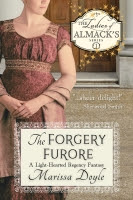
And here is the result.


To say I am delighted is the understatement of the year. This is one of the most beautiful covers I’ve ever had, and the most historically accurate. I feel blessed.

I hope you’ll look for A Distance Too Grand in October. If you just can’t wait, it is available for preorder in print now (I expect e-book to come) from Amazon

Isn’t it Grand?

Friday, September 28, 2018

Food, Glorious, Food—Nineteenth Century Grand Canyon Style

I have never been a big eater. My husband likes to tell the story of the first dinner I cooked for him. He mistook the entre, which I now know he could have eaten in a couple bites, for an appetizer and wondered when I was going to serve him the main course. What he didn’t know was that entre generally served my family of four, with leftovers the next day. But however little my family eats, even I was shocked at how little explorers in nineteenth century Arizona ate and what their diet consisted of.

I am confirming my research (lovely, lovely research!) for my October 2019 historical romance with my new publisher, Revell. A Scenic Beauty (title tentative) tells the story of a determined lady photographer on one of the early geologic surveys of the North Rim of the Grand Canyon. My wonderful critique partner Kristy J. Manhattan found me a copy of John Wesley Powell’s diary of his first expedition of the canyon, which took place approximately 2 years before my story. (His second expedition is happening during my story.) Powell deserves his own blog post (coming soon), but for now, I’ll focus on the food.

Which wasn’t much.

Powell had ten men on his team, all well experienced with wilderness travel. Their goal was to successfully navigate down the Colorado, mapping it as they went. Armed with instrumentation to confirm elevation changes, estimate the heights of the cliffs, and determine the temperatures, they set off in four boats. Their rations included flour, saleratus (an early form of baking powder), bacon, salt pork, beans, dried apples, and coffee. They planned enough to last them for 10 months, in case they had to overwinter in the canyon.


The Colorado had other ideas.

Rapids quickly sank or at least swamped their boats. They lost a third of their rations within the first month. The rest was soon so water logged they had to stop they travels to lay it out on rocks in hopes it would dry enough to eat. When the flour merely turned as hard as the rocks themselves, they beat it and sifted it through their mosquito netting, losing hundreds of pounds in the process. Somewhere along the way they lost the saleratus, because they went from having biscuits to unleavened “bread.”

They tried hunting and were mildly successful, but when they shot something, they tended to eat nothing but meat and coffee for the night. Dinner other nights consisted of boiled spoiled bacon and unleavened bread. One night they visited a garden abandoned by a hunter and trader. Nothing was ripe except the green tops of potatoes. They ate those and spent the evening violently ill. When they happened across land being farmed by Native Americans, they pilfered melons and paddled away as fast as they could. That night they gorged on “melon sauce,” which I take is like applesauce, but with melons, supplementing it with coffee and unleavened bread. That they made it out of the canyon alive—on the food alone—is amazing to me.

And it makes me terribly glad for the leftovers I plan to consume tonight. 😊