

Showing posts with label food. Show all posts

Tuesday, March 8, 2022

The Soup That Never Was

This post was inspired by a social media post I recently ran across that I found fascinating, and had to share with you. It’s about a soup that never was.

Yes, that’s right: a historical soup that never seems to have existed in real life.

Brown Windsor Soup appears in all sorts of modern cookbooks as an historical recipe, a Victorian staple, and even as Queen Victoria’s favorite soup. In my copy of Jane Garmey’s Great British Cooking*, it’s called a “hearty beef soup, once extremely fashionable…. For many years, a particularly unappetizing version was continually served by British Railways in their dining cars, which may explain its present demise.” It appears in the Unofficial Downton Abbey Cookbook and several other modern volumes of Victorian cookery.
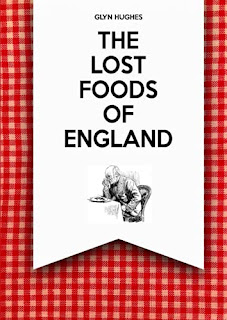
There’s only one problem: were you to go back in time to the Victorian era and, say, try to order it in a restaurant, they wouldn’t know what you’re talking about. Brown Windsor Soup didn’t actually exist, according to food scholar Glyn Hughes, author of The Lost Foods of England (which is totally on my to-buy list!)

When Hughes was beginning research on his book documenting English gastronomy, Brown Windsor Soup seemed like an easy topic to start with; everyone knew what it was, and even had memories of the dreadful version served on trains (see Jane Garmey’s comment above.) But when he started consulting Victorian cookbooks, he could find no mention of itanywhere. Intrigued, he pored through the British Newspaper Archive and even paid researchers to comb through the records of the National Railway Museum. There was nary a single mention of it in Victoria’s reign. Certainly recipes for hearty beef soups existed, but not under this name. Not until the 1920s did it begin to appear in cafeterias and cafes (and likely railway stations dining rooms) as a filling, if dubious and dreary, menu item.

So where did the legend of Brown Windsor Soup as a Victorian staple come from?

Hughes points to a few things, among them toiletries and radio.

It seems that there was a Windsor Soup, or potage à la Windsor, on her majesty’s menus. It was the creation of Charles Francatelli, one of the queen’s chefs whom we’ve met before. But Francatelli’s Windsor Soup was a creamy white soup made with rice, not brown and beefy...and while it’s not known to have been a particular favorite of her majesty, Francatelli’s cookbook was a staple in Victorian households for decades. Other Victorian cooks created their own Windsor soups, but again, most borrowed heavily from Francatellis recipe, and were decidedly white.


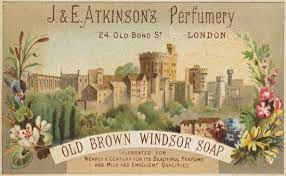
But there was Brown Windsor Soap—a toiletry that was well known as a favorite of Queen Victoria (and Napoleon!), complete with a picture of Windsor Castle on its packaging (and still available today.)

And then there was The Goon Show. This popular (and very goofy) radio show of the 1950s (featuring Peter Sellars in his pre-Inspector Clouseau/Pink Panther days—if you ever have a chance to hear them, do!) latched onto “Brown Windsor Soup” as a recurring comedic gag, a stand-in for all stodgy English cuisine (and, by extension, stodgy Britishness.)

Might all of these—a real Windsor soup, a very popular product with a similar name, and the hilarity of radio—have mixed themselves up with a twentieth century invention into a sort of cultural pseudo-memory? Hughes thinks so—and is astonished by the resistance to his research by people who are convinced to this day that they used to eat Brown Windsor soup on trains.

* * * * *

Not imaginary or Victorian is that there is currently a giveaway for The Forgery Furore, the first installment in my new Regency fantasy series The Ladies of Almack’s, on Goodreads. You can enter it here; entries are open till March 20. Good luck!


*Amazon affiliate links are used in this post.

Tuesday, June 22, 2021

Blast from the Past: Getting Down and Dirty in the Garden

For various reasons, I was over two weeks late in getting my garden planted this year...but as of this past weekend, the tomatoes and peppers and zucchini and cucumbers were finally in, and the bush bean seeds I did manage to plant last weekend are popping up like crazy. In honor of (or perhaps relief at) the occasion, here’s a walk down memory lane into 1917 via 2014...and down the garden path.

* * * * * 

With the clarion call to American women to save food at home so that the starving of Europe and the troops fighting the Kaiser could be fed, 1917 could be called the year of the canning jar...sort of. 

It started in the spring. American women were exhorted to plant gardens and preserve their crops, and by July, the women’s magazines blossomed with advice: July’s McCall’s article “Uncle Sam’s Kitchen Brigade” gave a detailed list of how each type of garden bounty could be canned, both fruit (apricots, plums, berries, and cherries) and vegetables (bean, peppers, asparagus, cabbage spinach, cauliflower, carrots, and beets).

The Independent featured an article on dehydrating foods in June as did The Ladies’ World Magazine in August which suggested dehydrating foods--including leafy greens like spinach-- to preserve them (as the lady above is doing, with wire mesh trays and a house fan!) for a very practical reason: because of the success of the canning campaign, there was a national shortage of canning jars! The Ladies’ Home Journal included an article about “the new containers”, primarily different types of coated paper--the forerunner of our paper milk and juice cartons today. 

In addition to all the encouragement to can, preserve, and dry, American women were also encouraged to change the way their families ate. Based on the number of articles and recipes published about salads this summer (in Women’s World and The Modern Priscilla in particular), I have to wonder if anyone actually ate them before 1917.  The salad was a somewhat different creature from today’s greens and chopped veggies: it tended more to be a collection of foods mixed together and served cold, thereby saving cooking fuel and using up not only the garden’s bounty but also anything else that happened to be lurking in the icebox.  How can you resist a tasty Baked Bean salad, presented by such a fetching young lady?

Friday, November 22, 2019

Mange, of Various Sorts


Many Regency novels talk about blancmange, either as part of a dinner or as a comparison to someone’s complexion, character, or personality. But beloved author Gail Eastwood recently made me realize there are more than one type of mange. Who knew? 

Blancmange is pale and quivering, so you can see why being compared to it might not be a good thing. It’s a milk-based pudding (in the sense we use pudding today in America), hence the blanc or white name. It’s also often flavored with almonds, though the Incomparable Mrs. Beeton, in her Book of Household Management (1861, after the Regency), recommends arrowroot or laurel leaves to season it. Think of it as rather bland panna cotta. Regency folk were quite fond of pouring it into molds and putting it on the table during the dessert course, though Mrs. Beeton seems to think it could be your supper. (Dessert for supper—my kind of lady!)

Jaunemange is yellow but almost as quivering. It’s still a pudding, but the base is egg yolks and it’s flavored with lemon or orange juice, hence the name jaune or golden, yellow. Another key ingredient was isinglass, a gelatin-like substance made from the bladders of sturgeon or other fish. It too was poured into a mold, but it was placed on the table at an earlier course to go with meats like lamb, veal, or prawns.

So, if you are seeking another dish to consider at your next feast, Thanksgiving or otherwise, you might consider adding a little mange. There are a number of contemporary recipes out there like this one and this one

And speaking of Thanksgiving, Marissa and I will be off celebrating next week. Come back in December for more tidbits about history and writing. And presents. ;-)

Friday, August 2, 2019

And Then There Was Food and Seals


Ah, what a lovely time in New York and with Marissa’s family. One of the highlights of the Romance Writers of America Conference for me is the Beau Monde (Regency) Chapter conference the day before, which Marissa covered. Another is when I am invited to tea with book reviewer extraordinaire John Charles. This year was no exception, with the fabulous tea being held at The Plaza. Marissa told me I must look for Eloise, but alas, she wasn’t in evidence in the Palm Court.

But the most wonderful tea was! Sandwiches included smoked salmon on pumpernickel with dill and chive whipped cream cheese; deviled organic egg salad on white bread; oven-roasted turkey with Granny Smith cream cheese on sourdough; English cucumber and minted goat cheese on rye; country ham with spicy mustard on a pretzel bun; and herb-roasted prime rib with horseradish and watercress on a brioche slider. Of course plain and currant scones were on hand with Devonshire cream, lemon curd, and blackberry preserves. For pastries, we had passion fruit and mango s’mores, strawberry and rhubarb fool, and Mogador cake, but my two favorites were carrot cake macarons with golden raisin filling and blackcurrant and violet eclairs. Oh, heaven!

But The Plaza wasn’t the only place with interesting food. The restaurants in the Marriott Marquis hotel where we stayed raise their own greens hydroponically. Fresh herbs and various types of lettuce and edible flowers are picked daily. So cool and so delicious.

Now, just so you don’t think I spent all my time eating, I was also delighted to be treated to an afternoon on the water with my favorite Captain. We saw many fine homes, some historic, and a curious pile on the horizon. It proved to be seals all cuddled together. I had never seen so many in the wild before. Makes me think of Marissa’s Skin Deep again. 😊


All in all, a lovely trip with one of my favorite people on the planet, my dear Marissa. Here’s hoping for 2020 in San Francisco!

Friday, September 28, 2018

Food, Glorious, Food—Nineteenth Century Grand Canyon Style

I have never been a big eater. My husband likes to tell the story of the first dinner I cooked for him. He mistook the entre, which I now know he could have eaten in a couple bites, for an appetizer and wondered when I was going to serve him the main course. What he didn’t know was that entre generally served my family of four, with leftovers the next day. But however little my family eats, even I was shocked at how little explorers in nineteenth century Arizona ate and what their diet consisted of.

I am confirming my research (lovely, lovely research!) for my October 2019 historical romance with my new publisher, Revell. A Scenic Beauty (title tentative) tells the story of a determined lady photographer on one of the early geologic surveys of the North Rim of the Grand Canyon. My wonderful critique partner Kristy J. Manhattan found me a copy of John Wesley Powell’s diary of his first expedition of the canyon, which took place approximately 2 years before my story. (His second expedition is happening during my story.) Powell deserves his own blog post (coming soon), but for now, I’ll focus on the food.

Which wasn’t much.

Powell had ten men on his team, all well experienced with wilderness travel. Their goal was to successfully navigate down the Colorado, mapping it as they went. Armed with instrumentation to confirm elevation changes, estimate the heights of the cliffs, and determine the temperatures, they set off in four boats. Their rations included flour, saleratus (an early form of baking powder), bacon, salt pork, beans, dried apples, and coffee. They planned enough to last them for 10 months, in case they had to overwinter in the canyon.


The Colorado had other ideas.

Rapids quickly sank or at least swamped their boats. They lost a third of their rations within the first month. The rest was soon so water logged they had to stop they travels to lay it out on rocks in hopes it would dry enough to eat. When the flour merely turned as hard as the rocks themselves, they beat it and sifted it through their mosquito netting, losing hundreds of pounds in the process. Somewhere along the way they lost the saleratus, because they went from having biscuits to unleavened “bread.”

They tried hunting and were mildly successful, but when they shot something, they tended to eat nothing but meat and coffee for the night. Dinner other nights consisted of boiled spoiled bacon and unleavened bread. One night they visited a garden abandoned by a hunter and trader. Nothing was ripe except the green tops of potatoes. They ate those and spent the evening violently ill. When they happened across land being farmed by Native Americans, they pilfered melons and paddled away as fast as they could. That night they gorged on “melon sauce,” which I take is like applesauce, but with melons, supplementing it with coffee and unleavened bread. That they made it out of the canyon alive—on the food alone—is amazing to me.

And it makes me terribly glad for the leftovers I plan to consume tonight. 😊

Friday, February 26, 2016

The Many Uses of the Wonderful Raspberry

Pfft!

Sorry, couldn’t resist. I did not mean the sort of raspberry that involves sticking your tongue out of your mouth and making rude noises. I mean the plant and its heavenly berries. You see, raspberries are by far my favorite food. I am even now waiting for 13 plants (6 red summer-bearing, 6 red fall-bearing, and 1 golden raspberry), to arrive from a fine nursery near the slopes of Mt. Rainier. And my dear husband has created the perfect patch in which to put them. I can hardly wait. So, when I stumbled across a section in La Belle Assemblée about raspberries, I couldn’t wait to share that with you either!


The author of the article in the October 1810 edition of that famous ladies’ magazine rhapsodizes about raspberries almost as readily as I do.

“This . . . fruit was well known to the ancients, from whom it received the name of Rubus, either from the redness of the twigs of the parent plant, or from the colour of its juice, which so often stained the taper fingers of the Roman maidens, as it does even now with our fair countrywomen, who are not ashamed to leave the library of science for the humbler studies of the confectionary or still-room. In the latter, they may learn by practice how to please a husband’s taste, even in the gratifications of the palate.”

Yes, well, I didn’t start eating raspberries for my husband’s sake. It’s rather the other way around at my house.

“Its essential character is too minute to require description where the fruit itself is so well known; but we must not forget to mention that of the general genus, there are no less than thirty-two varieties, comprising every species of the  Bramble as well as of the Raspberry.”

Thirty-two varieties? I knew there was a reason I loved England!

“Amongst us the old name of Raspis, or Raspibsberry; in some parts of England it is called the Hindeberry, and also Framboise, from the French. It is believed to be indigenous with us, as it is a native of many parts of Europe, being found not only in woods and hedges, but also in moist situations, and even in rocky places.”

Interesting. The raspberries I have known do not like moist places. They hate getting their feet wet, which worries me a little here in Western Washington. That’s one of the reasons I wanted stock from the area.

“It is needless to expatiate on the estimation in which it is held when prepared as a sweet-meat; we may, however, with propriety describe it when ripe as a fruit of the most fragrant kind, as subacid and cooling, allaying thirst and heat, and promoting the natural habits in common with other summer fruits.”

Now we’re talking! In fact, the author goes on to list several other interesting uses for raspberries in early nineteenth century England:

  • As a syrup approved for children by the College of Physicians, with instructions on its use in the Pharmacopeia
  • As a way to remove tartar from teeth
  • As a rather potent and rare wine
  • As a dye (from the twigs) to turn wool, silk, and mohair black
  • As food (the leaves) for silkworms when mulberry leaves cannot be found.
Even in nineteenth century England, they were considered a wonder-fruit!


Friday, November 6, 2015

Four Things on a Friday

Sometimes things just appear online or in my inbox, and I have to share them! Thus, here are four things you need to know about, this Friday:

The Historical Fashion and Textile Encyclopedia. Oh, what a treasure trove of terminology by Leimomi Oakes, a textile and fashion historian, sewing teacher, writer, and speaker, otherwise known as the Dreamstress. She offers definitions for types of fabrics and styles, and gives you dates of first use, if known. Priceless! 

Food in Season in 19th Century England. Could a lady eat carrots at Christmas? Mussels in March? This wonderful blog entry pulls together information from period literature to show us what was available to eat when. 

New Blog for Clean Romance Reads. Eight authors of clean romance, ranging from contemporary romance to romantic suspense and our beloved historical romance, just launched a new blog, Clean Romance Reads Café. They’re giving away a Kindle Voyage to celebrate. You might want to show them some blog love. J 

Free Online Romances About Thanksgiving. And speaking of sweet reads, 13 authors from the Heartwarming line are sharing free online romantic short stories between now and Thanksgiving. They are contemporaries, but nobody is perfect.

Happy Friday!

Tuesday, October 28, 2014

Introducing...the Supermarket!

As we’ve seen in previous posts, WWI impinged on daily life in America possibly more than any previous war...especially in terms of what and how Americans ate. We’ve discussed how American women were urged to grow their own food, learn to make substitutions, and observe days without wheat, meat, and other abstentions.

Another aspect of food conservation, interestingly, was how food made it into households in the first place. Before the war, women might have stopped into their local grocers if it was close by and if they needed just one or two things. But more commonly, and certainly for larger orders, the usual thing to do was telephone in your shopping list or send a note to the store. Grocery clerks would gather together your order, which usually involved weighing out measures of dry goods like beans or flour and packaging them up, and sometime later, a delivery truck would appear with your groceries, complete with a boy to fetch them into your house. And of course, payment was handled by account—no cash exchanged hands at delivery.

But in 1917, part of the campaign for food conservation was also fuel conservation: as the cost of fuel rose, so did the cost of grocery deliveries...which of course got added into the price of items. Ladies’ magazines of the time had several suggestions, as can be seen in the article above from October 1917's The Delineator: buying larger amounts of staples to reduce the number of deliveries (and as a corollary, going in with neighbors to do the same), doing your own marketing every few days and carrying your purchases home rather than having groceries delivered; buying produce, eggs, and meat directly from farmers (and again, clubbing with neighbors to do one big weekly trip to nearby farms.) Some stores also tried changing how they did business, encouraging patrons to come in themselves to make their purchases and to pay on the spot, rather than purchasing on account.

Meanwhile, in Memphis, Tennessee, a quiet revolution was taking place. In the fall of 1916 a man named Clarence Saunders opened a new kind of grocery store. There were baskets at the door for customers to use. All the merchandise was laid out on open shelves, and prices were clearly marked. Nary a grocery clerk was in sight, until you were ready to bring your purchases to the counter to be paid for...in cash, right there on the spot. And then you carried your purchases home. Saunders called his store Piggly Wiggly (no one is quite sure why)...and the idea took off as the country went to war, the cost of fuel rose, and the former grocery clerks all enlisted.

Saunders franchised hundreds of independently owned stores operating under the Piggly Wiggly name...and while produce and meats weren’t sold in them (meaning that independent green-grocers and butcher shops would stay in business for decades longer), the prototype of the modern supermarket was born.

Tuesday, October 7, 2014

Retreating to the 19th Century

I had the pleasure of attending a Historical Fiction Writers retreat this past weekend given by Moments in Time, a vintage dance group, at the amazing Senexet House in Woodstock, CT. While the high Victorian era is not a period I’ve written within at this time, I certainly had a wonderful, productive weekend. And ate a lot of delicious Victorian food!

Senexet House was built around 1886. It was interesting archi-tecturally in that while it was rather oblong and plain-looking from the outside (aside from the charming carving at the front door you can see in the photo above), inside it’s exactly what one thinks of as a Victorian dwelling: fun architectural details, fireplaces, oddly shaped rooms, and a sense of spaciousness and repose.

Not that the house saw a lot of repose, once everyone descended on it!

Dinner Friday night was lively as we got to know each other, which continued at breakfast the following morning. I fled to my room after breakfast to, you know, write...but others gathered in the living room to try on Victorian clothes and under-garments brought by the retreat’s organizers. Check out the bustle along with the corsets in the second photo at right!

After lunch, I felt virtuous enough after writing all morning to go on an expedition to an antiques mall with two other retreat-goers, and found an awesome designer purse...but otherwise showed admirable restraint. Four o’clock had us in tea gowns and some splendid hats for a delightful tea featuring gargantuan amounts of cakes, cookies, tiny scones with clotted cream, and other goodies, all from 19th century recipes (my favorites: the seed cake and the rout biscuits) Dancing followed (a good thing, after all that food!) and we learned the steps of a quadrille danced in the old resort town of Nahant, MA in the 1830s.

Dinner that evening was an elegant affair (our table at left, pre-dinner), served by candlelight and also featuring 19th century recipes...and then a talk on Victorian spiritualism, followed by some curious unexplained incidents (not joking!) while a few retreaters played with a Ouija board.

On Sunday I again holed up in my room to write all morning, and after lunch took a walk around Senexet House’s grounds in beautiful sunny October weather. The party broke up in mid-afternoon as we all said good-bye to each other... and to the manager Kit’s adorable Pomeranian, appropriately named Bear, who had kept us company all weekend.

I’ve been to a few writing retreats over the years, but this one probably tops the list for fun. If there’s another one in the spring as organizer Nicole Carlson has threatened, I will totally be there!


Tuesday, September 30, 2014

Girls and World War I, Part 3: Getting Down and Dirty (in the Garden)

With the clarion call to American women to save food at home so that the starving of Europe and the troops fighting the Kaiser could be fed, 1917 could be called the year of the canning jar...sort of.

It started in the spring. American women were exhorted to plant gardens and preserve their crops, and by July, the women’s magazines blossomed with advice: July’s McCall’s article “Uncle Sam’s Kitchen Brigade” gave a detailed list of how each type of garden bounty could be canned, both fruit (apricots, plums, berries, and cherries) and vegetables (bean, peppers, asparagus, cabbage spinach, cauliflower, carrots, and beets).

The Independent featured an article on dehydrating foods in June as did The Ladies’ World Magazine in August which suggested dehydrating foods--including leafy greens like spinach-- to preserve them (as the lady above is doing, with wire mesh trays and a house fan!) for a very practical reason: because of the success of the canning campaign, there was a national shortage of canning jars! The Ladies’ Home Journal included an article about “the new containers”, primarily different types of coated paper--the forerunner of our paper milk and juice cartons today.


In addition to all the encouragement
to can, preserve, and dry, American women were also encouraged to change the way their families ate. Based on the number of articles and recipes published about salads this summer (in Women’s World and The Modern Priscilla in particular), I have to wonder if anyone actually ate them before 1917.  The salad was a somewhat different creature from today’s greens and chopped veggies: it tended more to be a collection of foods mixed together and served cold, thereby saving cooking fuel and using up not only the garden’s bounty but also anything else that happened to be lurking in the icebox.  How can you resist a tasty Baked Bean salad, presented by such a fetching young lady?

Tuesday, March 25, 2014

WWI Recipes That Don't Inspire Giggles

So I’ve been having fun being a tad snarky about food conservation recipes from the first World War and how some of them seem...ah, less than appetizing. I was looking through some WWI era pamphlets recently, however, and found a few recipes that (ssh!) sound as if they might not be too bad.

This might make lovely tea sandwiches on thin crustless bread, don’t you think? (from Everyday Foods in War Time by Mary Swartz Rose, 1917)

Fruit and Peanut Butter (for sandwiches)
¼ cup dates
¼ cup figs
½ cup peanut butter
½ teaspoon salt
1 ½ tablespoons lemon juice
¼ cup raisins
2 tablespoons light corn syrup

Wash figs, raisins, dates, and put through food chopper. Add salt, peanut butter, lemon juice, and corn syrup, and mix well.

Here’s a recipe for a chowder that doesn’t seem out of line to this New Englander, though we would use whole milk rather than skim (From Everyday Foods in War Time by Mary Swartz Rose, 1917)

Dried Fish Chowder
½ pound salt fish
4 cups potatoes, cut in small pieces
2 ounces salt pork
1 small onion, chopped
4 cups skim milk
4 ounces crackers

Salt codfish, smoked halibut, or other dried fish may be used in this chowder. Pick over and shred the fish, holding it under lukewarm water. Let it soak while the other ingredients of the dish are being prepared. Cut the pork into small pieces and fry it with the onion until both are a delicate brown; add the potatoes, cover with water, and cook until the potatoes are soft. Add the milk and fish and reheat. Salt, if necessary. It is well to allow the crackers to soak in the milk while the potatoes are being cooked, then remove them, and finally add to the chowder just before serving.


This one could maybe use some cinnamon and nutmeg (and raisins and walnuts might be good too), but I like that it doesn’t have added sugar--a good recipe for carb-counters. (from Best War Time Recipes by the Royal Baking Powder Company, 1918)

Sweet Potato Muffins
1 cup flour
4 teaspoons Royal Baking Powder
1 teaspoon salt
1 cup sweet potatoes (mashed)
1 egg
1 cup milk and water

Sift together flour, baking powder, and salt. Add cold sweet potatoes which have been lightly mashed or put through a ricer. Add beaten egg and liquid, mixing well. Bake in greased muffin tins in moderate oven 25 to 30 minutes.

This sounds more like a soufflé than a fondue, doesn't it? (from Everyday Foods in War Time by Mary Swartz Rose, 1917)

Cheese Fondue
1 1/3 cups hot milk
1 1/3 cups bread crumbs
1 tablespoon butter
4 eggs
1/3 pound cheese (1 1/3 cups grated or 1 cup cut in pieces)
½ teaspoon salt

Mix the milk, breadcrumbs, salt, and cheese; add the yolks thoroughly beaten; into this mixture cut and fold the whites of eggs beaten till stiff. Pour into a buttered dish and cook 30 minutes in a moderate oven. Serve at once.

Enjoy! And let us know if you try making any of them!

Tuesday, February 11, 2014

Baking, 1917 Style

As we learned last week, with the entry of the US into World War I, voluntary food conservation came into being in order to not only provide food for American troops heading over to fight in Europe, but also relieve severe food shortages for European civilians. The Food Administration encouraged homemakers to be frugal and to do without; the women’s magazines jumped in and began to publish recipes that reflected the new frugality.

And so this week, I present...recipes! I haven’t tried any of them—too busy getting ready for April (hint, hint). But I think I might try this first one some time, because....well, chocolate and potatoes? Carb heaven. It’s from a Royal Baking Powder ad in the July 1917 issue of McCall’s Magazine:

Potato Chocolate Cake
¾ cups shortening
2 cups sugar
½ cup chocolate
¾ cup milk
2 ½ cups flour
1 teaspoon vanilla
2 eggs
5 teaspoons Royal Baking Powder
¼ teaspoon nutmeg
¼ teaspoon allspice
1 cup mashed potatoes
½ teaspoon cinnamon
1 cup chopped nuts
½ teaspoon cloves

Cream shortening, add sugar, melted chocolate and mashed potatoes, mix well. Beat eggs separately and add yolks to the first mixture. Add milk and dry ingredients which have been sifted together. Beat well. Add nuts, vanilla, and beaten whites of eggs. Mix thoroughly and bake in greased loaf tin in moderate oven one hour. (The old method called for four eggs)


This one (from a Royal Baking Powder ad in June 1917’s McCall’s) is less tempting—I’m not a fruitcake fan—but I just love the recipe name. Makes you jump up and say, “yum!”, doesn’t it?

Or not.

Eggless, Milkless, Butterless Cake
1 cup brown sugar
1 ¼ cups water
1 cup seedless raisins
2 ounces citron, cut fine
1/3 cup shortening
1 teaspoon nutmeg
1 teaspoon cinnamon
½ teaspoon salt
2 cups flour
5 teaspoons Royal Baking Powder

Boil sugar, water, fruit, shortening, salt, and spices together in sauce 3 minutes. When cool, add flour and baking power which have been sifted together. Mix well, Bake in loaf pan about 45 minutes. (The old method called for three eggs)

And finally, from an article in September 1917’s The Delineator entitled “More French Recipes”, is a recipe from a B. Simmen of Ruschlekom, Switzerland:

War Cake
1 cupful granulated sugar
2 teaspoonfuls cocoa
2 cupfuls milk
2 cupfuls flour
1 tablespoonful melted grape jelly
1 egg
1 or 2 teaspoonfuls powdered cinnamon
1 teaspoonful baking soda
Nuts

Take the granulated sugar and add to it the egg. Then beat together and add the cocoa, cinnamon, and the fresh milk or cream. Add the milk or cream very slowly. Mix in the flour. Dissolve the bicarbonate of soda in one tablespoonful of melted grape jelly.

Butter a high baking-pan, as this dish bakes better in a high pan rather than a shallow one.

Shell some nuts and put them over your cake. This dessert is inexpensive and will keep for several days.

I rather like how the recipe’s author neglects to mention baking the cake!

Bon appétit!

Tuesday, February 4, 2014

Food, Glorious Food...or Food for Glory

On the United States’ entry into World War I in April 1917, the military wasn’t the only thing to mobilize.

Under the direction of future president Herbert Hoover, the U.S. Food Administration jumped into action to convince America’s housewives that they could have a positive impact on the course of the war by conserving food, so that not only American troops would be well-fed, but also the millions in Europe for whom getting enough to eat was a daily struggle. This wasn’t pure altruism; as Hoover wrote, “Of course, the prime objective of the United States in undertaking the fight against famine in Europe is to save the lives of starving people. The secondary object, however, and of hardly less importance, [is] to defeat Anarchy, which is the handmaiden of Hunger.” By “anarchy”, Hoover meant communism, to which Russia had fallen in 1917.

The U.S. Food Administra-tion had six main principles:
"First--To save the wheat. If we eat as usual from our harvest this year we will have little more than enough for our own supply, but we can divide with our allies if each individual makes some sacrifices by eating at least one wheatless meal a day, substituting corn bread or other cereals.
Second--We want to save the meat, for our cattle and hogs are decreasing, and we must send to our allies, so we wish every householder to buy less, to serve smaller portions and to allow no waste.
Third--We wish to save the fats. We consume three times the fats that are necessary for nutrition, and we need them now for war. We wish no butter used in cooking; we want less butter served on the table; we want less lard, bacon, and other pork products used.
Fourth--Any deficiencies in food supply, by economy along the above line, can be amply covered by increasing the use of fish, potatoes, beans, peas, turnips, cabbage, and vegetables generally, corn, buckwheat, rye, and rice, which we have in abundance this harvest.
Fifth--We want to save transportation. Our railways are unable to meet the war pressure for munitions, men and coal, so that we wish every one to consume products of local origin as far as possible, to buy from the local miller, the local packer, buy and eat vegetables grown near home. Aside from eating an increased proportion of these commodities in order to save on the staples, it is extremely important that any surplus of these commodities shall be preserved or well stored for winter use.
Sixth--We preach and want everyone to preach 'the gospel of the clean plate;' to buy less foodstuffs, to serve smaller portions, and to see that nothing of value goes into the garbage can."

This movement to conserve food was driven by a huge advertising blitz. Women’s magazines in particular ran numerous articles on eating locally produced food, eating more fruits and vegetables and poultry and dairy products, which could not easily be transported overseas at this time, cutting down on waste in general and abstaining from certain foods on certain days, hence “Wheatless Wednesdays” and “Meatless Mondays” (foods like cottage cheese and egg dishes were suggested to replace meat).

To make it even more official, housewives could sign a food conservation pledge and receive a special placard to display in their front windows proclaiming that they were doing their bit for the war effort—a clever bit of psychosocial pressure. (That's the pledge above, from the August 1917 issue of Today's Housewife).

Even advertisers jumped on the conservation bandwagon: companies like Domino Sugar ran ads stating that it was every American woman’s patriotic duty to preserve and can fruit to keep it from waste ...using Domino sugar, of course (from McCall's, August 1917).

And of course, the magazines were full of recipes and suggestions on how to conserve food. Stop by next week to get the deets on how to make an Eggless, Milkless, Butterless Cake (yes, really), and more.

Friday, May 10, 2013

Going A-Mothering

Mother’s Day is coming here in the U.S. I have been told with good authority that my Mother’s Day present will consist of something cinematic with dinner to follow. They know I like to be prepared. But some young ladies and gentlemen in the early nineteenth century in England also liked to be prepared, for Mothering Sunday.

From the seventeenth century, Mothering Sunday was celebrated on the fourth Sunday of Lent (which was March 10 in 2013). The original idea appears to be to celebrate services with the largest church, or mother church, in the area, like a cathedral, or at least to return to the church in which you were baptized. The practice was called going a-mothering. Most likely, however, in going to this church, you spent time with family, especially your mother. This tradition gradually evolved (with some help after World War I) into a celebration of mothers in general.

The practice was waning in the nineteenth century, but it still wasn’t uncommon for young servants and apprentices to be given Mothering Sunday off to go visit their families. It was said that many a young lad gathered flowers in the fields along the way to take home to his mother. As Mothering Sunday can fall as early as the beginning of March, I’m not entirely sure there were always many flowers blooming except daffodils, but it’s a lovely sentiment all the same.

In some households, apparently, cooks allowed the youngsters to bake a cake to take home to Mother. In some parts of England, the cake is called a Simnel cake, for the fine flour from which it was baked. It involves marzipan, fruit, and frosting, and had eleven knobs on the top to represent the eleven apostles who stayed true. I must admit, it looks particularly tasty to me. Some people felt it appropriate to break the Lenten fast to partake (oh, me! me!); some saved the cake for Easter Sunday. Other parts of England had sweet buns called Mothering Buns that were frosted and covered with sprinkles.

Okay, so maybe I should request that Mother’s Day present to involve cake. Who’s with me?

Tuesday, December 11, 2012

Queen Victoria’s Christmas Dinner

If anyone in the 19th century was going to celebrate Christmas in a truly outstanding fashion, you know that person had to be Queen Victoria, who more than anyone helped popularize the holiday and set its traditions in stone (or fruitcake). But how, exactly, did she celebrate December 25?

To answer that question, I did a little digging…and found the following. For the menu below, I’ve provided translations where necessary—the Queens’s menus were always in French).

Queen’s Victoria’s Christmas Day Menu - 1896
(from the English Heritage Website (www.englishheritage.org.uk)

Potages (Soups)
La Tête de Veau En Tortue  (head of veal and tortoise)
Aux trois racines (three root vegetables)

Poissons (Fish)
Le Turbot bouilli sauce hollandaise (Boiled turbot with Hollandaise sauce
Les Filets de soles frits (fried filets of sole)

Entrée
Les Kromeskys à la Toulouse (Toulouse style Croquettes wrapped in bacon)

Relevés
Les Dindes rôties à la Chipolata (roasted turkey with sausages)
Chine of Pork Roast
Sirloin of Beef
Plum Pudding

Entremets
Les Asperges sauce mousseline (asparagus in mousseline sauce)
Mince Pies
Le Pain de riz à la cintra (not sure about this one, though it sounds perhaps like a rice pudding?)

Side Table (more about these below)
Baron of Beef
Woodcock Pie
Brawn
Wild Boar’s Head
Game Pie

We aren’t the only curious ones…readers of the New York Times got this peek into the Queen’s holiday in an article in their December 26, 1898 paper:

QUEEN VICTORIA’S CHRISTMAS.

How the Festival is Observed at Osborne—What an Old-Fashioned Christmas is Like.
From the London Mail

For weeks before Christmas the cooks at Windsor are busy preparing the Queen’s dinner for Dec. 25. The principal dishes are all prepared at Windsor, as the kitchen accommodation at Osborne is totally unequal to the task. The Queen’s plum pudding is the triumph of Windsor cookery. In an enormous caldron are placed the usual ingredients, well soaked in fine old Madeira or rum, and all the cooks take their turn in stirring round this huge mass—over 200 puddings are made at Windsor—and occasionally privileged persons are permitted to be present as spectators.

The duly mixed mess is divided into the required number of puddings, which are then boiled for twelve hours. One of these puddings is sent to every one of the Queen’s immediate relatives and descendants. The mincemeat also involves considerable preparation; it is made according to a recipe of King James I.

The ox from whose carcass the baron of beef for the royal table is to be cut is specially fed up, and in Christmas week the enormous joint is handed over to the tender care of the cooks. So big is it that it is placed before a roaring fire at 8 o’clock in the morning and exposed to the heat until 8 at night, when it is pronounced “done”.

Afterward the royal monogram in shredded horse radish is imprinted on the joint, which is served cold. It does not appear on the table, but stands on the sideboard.

The boar’s head always figures in the menu. Both the German Emperor and the King of Saxony invariably send a boar’s head to the Queen as a Christmas present, but the chef finds that an ordinary bacon head cooks better, so the tusks of the wild boar are fastened on to the head of a tame pig, whose appearance is further “made up” by fierce eyes and painted gums.

The game pie is a huge pasty, in whose bowels is concealed a savory compound of woodcock, game, pork, bacon, eggs, spice &c.

Christmas presents for the Queen frequently take the form of delicacies for the royal table. The Czar of Russia keeps up the custom of his late father and sends a royal sturgeon.

The Grand Duke of Mecklenburg-Schwerin always forwards a splendid paté-de-foie-gras encased in pastry, and resembling an enormous pork pie. The Crown Princess of Greece sends her grandmamma a case of fine currants and spices and the Empress Frederick some German gingerbread, of which her father was very fond. The Emperor of Austria forwards a dozen bottles of his priceless Tokay wine.

All these presents are sent to Windsor, and forwarded to the Isle of Wight, along with the other Christmas fare. The Royal yacht used for conveying provisions to Osborne when the court is there, is irreverently called “the milk cart” by the young Princes and Princesses.

The Christmas fare is sent across Southampton Water in time to reach Osborne on Christmas eve. Such dishes as are to be served hot are either warmed up or prepared wholly at Osborne.

Dinner on Christmas Day, as on other days, is served at 9 P.M. All the Queen’s splendid gold and silver plate is used. After the most substantial dishes have been disposed of Stilton cheese is served, and then comes dessert, which consisting of all the rare fruits of the season, is served on the famous Sevres set of plates and dishes, valued at £50,000. Music is provided by the royal band.

Quite an observance, don't you think?  I must say, though, that I feel sorry for whoever had to wash the Queen's dishes (that's a piece from her Minton service, above) after Christmas dinner.  Hopefully they hadn't sampled the tipsy plum puddings beforehand!

Tuesday, October 2, 2012

Jane Austen Nom Nom Nom

Did you know that next year, 2013, marks the 200th anniversary of the publication of Jane Austen’s Pride and Prejudice? Quite a milestone…and quite a book! Not many 200-year-old books can boast of ever-growing sales and continuing reader discussion, can they? As part of the observance and celebration of that birthday, I thought it might be fun over the next few months to have a look at some of the books about Miss Austen and her masterwork—books that make my little history-geek heart go pitter-pat by offering a look at early 19th century life as lived by the author and her creations. I’ll try to stick to books that are in print or otherwise easily and inexpensively obtainable at on-line retailers like Abebooks or Barnes & Noble and Amazon’s used book sellers. I hope you’ll find them interesting. Since food is always interesting, I have a delightful book to share with you today:

The Jane Austen Cookbook by Maggie Black and Dierdre Le Faye (paperback reprint by M&S, 2002). Co-written by a food historian and a Jane Austen scholar, The Jane Austen Cookbook includes, as well as recipes, chapters on Social and Domestic Life in Jane Austen’s time and on domestic details mentioned in her novels and letters. Dining customs were evolving over these years, including the timing of meals and how they were presented and served, and both of these are discussed. And many of the recipes are drawn from a recipe book kept and recorded by Martha Lloyd, a long-time friend of the Austen family who actually lived with Jane and Cassandra and their mother for many years before marrying an Austen brother in 1828…so some of these dishes may have actually been seen on the Austen table. The original text and modern “translations” are included, so that modern cooks can try their own hand at such dishes as Vegetable Pie (a one-crust pie heavy on autumn root veggies, Harrico of Mutton (a lamb and vegetable casserole) Veal or Venison Cake (a terrine-like dish) and a recipe for Martha Lloyd’s own curry powder. And here’s one for Ratafia Cakes, re-written for today’s cooks:

Ratafia Cakes

1 cup ground almonds
2 egg whites
1 teaspoon orange flower water or orange liqueur
¾ cup superfine sugar
rice or parchment paper

Set the oven to 350º F. Rub through a sieve or pound the almonds in a bowl to get rid of any lumps. In a second bowl, whisk the egg whites with the orange flower water or liqueur until stiff. Then mix the sugar into the almonds thoroughly and lastly fold in the whisked whites.

Cover a baking sheet with the parchment paper and place small teaspoonfuls of mixture on in, well spaced apart. Bake for 10-12 minutes or until the cakes are just fawn [very light brown]; they must still be soft underneath. Cool them on the sheet, then keep in an airtight tin. Enjoy them with after-dinner coffee. Makes 36-40.

Enjoy!

Tuesday, March 13, 2012

Celebrity Chefs of the 19th Century, Part 1: Carême

Gordon Ramsay, Anthony Bourdain, Emeril Lagasse…everyone’s heard of (or seen on television) these and a dozen other celebrity chefs. But celebrity chefdom isn’t by any means a modern phenomenon. It actually began early in the 19th century with a Frenchman named Marie-Antoine (though he preferred to be known as Antonin) Carême. And just how much of a superstar chef was he? Hmm…how does working for Napoleon, the Prince Regent, and the Tsar of Russia sound to you?

Carême’s career in cookery started more or less by accident. Born in Paris to an impoverished family sometime in 1783, he was abandoned by his parents in 1792, in the middle of the Terror, to make his own way in life. Fortunately for him, he was taken in by a cook at a chophouse to serve as a lowly kitchen-boy in exchange for room and board. Cookery must have suited him, for in 1798 he left the become an apprentice to a pâtissier, or pastry and confectionery chef, in the busy and fashionable Palais Royal district of Paris.

He also became a reader, and spent all his free hours at the Bibliothèque Nationale reading about food in history and classical architecture…and soon after, began recreating the ruins, temples, and castles that he’d studied in pastry and marzipan and spun sugar. These centerpieces or extraordinaires, often several feet high and wide, gained him the title of master patissier (premier tourrier) by his 17th birthday. They also brought him to the attention of Charles Maurice Talleyrand, that wily politician who somehow managed to hold high office under every administration in France from King Louis XVI to Napoleon to the Citizen King Louis-Philippe.

In addition to being a brilliant politician, Talleyrand was also a brilliant connoisseur of food. It’s likely that Carême came to his attention via his extraordinaires, and soon he was serving as a freelance chef, supervising Talleyrand’s more important dinners as well as making his famous centerpieces. He became known to many important people in this way, and was able to earn enough to open his own pâtisserie in 1803, before he had even reached his majority. He continued to work hard, learning from other chefs, and became better and better known thanks to his continuing work for Talleyrand. He catered the wedding of Napoleon’s brother Jerome in 1808, and in 1810, made the wedding cake for the Emperor’s own marriage to Marie Louise of Austria (and the following year, one of his extraordinaires for the christening of Napoleon’s son).

But though Napoleon fell in 1814-1815, Talleyrand and Carême did not. When Tsar Alexander I entered Paris after Napoleon’s defeat, he stayed at Talleyrand’s house…and ate Carême’s cooking. Alexander’s steward offered him a job on the spot, but Carême refused for the time being. Instead he wrote a cookbook while Talleyrand went to the Congress of Vienna, and a year later, accepted the offer of the Prince Regent to be his chef for the enormous salary of £2000 per year. Prinny redid his kitchens at the Brighton Pavilion expressly for Carême, now known as the best chef in the world. But despite his splendid kitchens, the best ingredients, and the personal interest of the Prince, who actually came down to the kitchens to see his chef in action, Carême returned to France within a year, uncomfortable with the English way of life and profoundly homesick for Paris. He worked for a while for British diplomat Lord Charles Stewart, brother of Prime Minister Lord Castlereagh, and then in 1819 finally accepted that offer to become Tsar Alexander’s chef. He did not last long in Russia either, however, and returned to France, working again for Lord Charles and writing more cookbooks, before joining in 1823 the household of James de Rothschild, with whom he stayed until his early death in 1833, probably from pulmonary disease brought on by years of working in badly ventilated kitchens.

Carême’s influence on what and how we eat lasts to this day: he was the first to pipe meringue from a pastry bag and created vol-au-vents, or puff-pastry cases, and the classification and use of French sauces. He was one of the first chefs to pay attention to the pairing of wines with food, and brought back from Russia a preference for decorating dining tables with flowers rather than with displays of fruit and crockery, and for service à la russe, the method of serving food by individual courses rather than by placing it all on the table at once (called service à la française). Oh, and he created the tall white chef's toque worn by chefs to this day. Definitely a candidate for his own show on the Food Network, don’t you think?

Tuesday, June 29, 2010

A Cool Customer

It's been shockingly hot in my neck of the woods the last few days, so I thought a cool blast from the past might be in order. This post first ran on April 15, 2008; do you have any recipes for frozen treats that you'd like to share, historical or otherwise?

*****

Regina’s discussion of weather prediction got me thinking about spring in New England, the place about which Mark Twain said, “If you don’t like the weather, wait a minute.” One of the surest signs of spring here is the sudden disappearance of popsicles and ice cream sandwiches from local grocery stores’ freezers on the first really warm day of the season. Ice cream is extremely popular in New England—I remember reading somewhere that more ice cream is consumed here than any other region of the US.

Old England had its share of ice cream lovers too, as you can see from this 1824 Ackermann print of a ball dress at right. What flavor does it look like she’s eating…black raspberry, perhaps? France too…this scene from a Le Bon Genre print at left entitled “La Belle Limonadiere” shows a young lady consuming what looks like a tiny egg-cup of lemon sorbet while admiring her waiter’s fine figure. And an ad from around 1840 (I wish it had included a picture) describes the virtues of “FULLER’S FREEZING MACHINE, by which four ICES can be made at one time, and repeated as often as required. The freezing apparatus, by which a Cream or Water Ice can be made by artificial process...” Ices and ice cream were a popular refreshment at balls and parties, both because they were something of a delicacy and because it was nice to slurp down something cold after dancing all evening.

We aren’t talking Ben & Jerry’s, however. I found a handful of ice cream (or iced pudding, as they were called) recipes in the 1846 cookbook The Modern Cook, written by Queen Victoria’s chef, Charles Francatelli. Flavorings included pureed pineapple, ground almonds, ground hazelnuts and cherry puree, and, believe it or not, rice. From the amounts of sugar in some of these, ice cream was preferred tooth-achingly sweet. Here’s a recipe:

ICED PUDDING, A LA CHESTERFIELD

Grate one pound of pineapple into a basin, add this to eight yolks of eggs, one pint and a half of boiled cream, one pound of sugar, and a very little salt; stir the whole together in a stewpan over a stove-fire until the custard begins to thicken; then pass it through a tammy
[a kind of cone-shaped filtering device—modern cooks know it as a tamis], by rubbing with two spoons, in the same manner as for a puree, in order to force the pineapple through the tammy. This custard must now be iced in the usual manner, and put into a mold of the shape represented in the annexed wood-cut; and in the center of the iced cream, some Macedoine ice of red fruits, consisting of cherries, currants, strawberries, and raspberries in a cherry-water-ice, must be introduced; cover the whole in with the lid, then immerse the pudding in rough ice in the usual way, and keep it in a cool place until wanted.

Tuesday, April 7, 2009

There's Tea, and Then There's Tea


Ah, tea…that most English of meals...but which meal is it?

Well, that kind of depends.

Tea was introduced in England as early as 1635, but didn’t become fashionable until the 1660s, when King Charles II married the Portuguese princess Catherine of Braganza. Tea drinking was already established in Portugal, and Catherine brought tea and her beautiful porcelain tea services to enjoy in her new home…and soon, drinking tea was the height of fashion. It remained an extremely expensive luxury item for several decades, but by 1725 a quarter of a million pounds was being imported annually, and tea shops had begun to make their appearance. Tea also began to replace beer and ale as the usual drink of the poor; the abolition of import duties helped this, so that by the beginning of the 19th century, tea was well on its way to becoming the national beverage.

In the 18th and early 19th centuries among the upper classes, tea was often drunk in the evening after dinner, around 9 pm, and served with light refreshments like cakes and sandwiches. When you were eating your dinner at 4 pm, this made some sense…but as hours changed for meals and dinner moved later and later, this habit made a switch…and at some point around the 1830s or so, it started to become fashionable to have tea and light refreshments in the afternoon instead, to sustain one between luncheon at one or two and dinner at 8:30 or 9. At first it was simply something one did as a quick, informal pick-me-up, but gradually sociable ladies figured out that drinking tea and nibbling delicate cakes with friends in the late afternoon was the perfect opportunity for reviewing the gossip of the day and preparing for the gossip of whatever party or ball would be taking place that night. And thus was born the afternoon tea.

That’s one kind of tea…but there is another—namely, high tea. Most Americans hear this term and assume it means an especially fancy, formal kind of afternoon tea, perhaps with extra-elaborate munchies, but in fact it means the exact opposite. High tea was and is more or less a supper-ish kind of meal consumed by working class families. Tea was certainly drunk, but the food was of a hearty, filling nature like toasted bread and cheese, or kippered herrings, or bacon and eggs, or sausages, all served with copious amounts of bread and butter—no tiny delicate pastries here!

So if you were a young lady in London for the season, your tea would probably be drunk at a friend's house some time around four, while you nibbled seed cake and planned the evening's fun...and if you were an apprentice seamstress, you'd have your tea when you got home from work at around six, while you rested your tired feet and enjoying something warm and nourishing.

And that's tea!