Showing posts with label shopping. Show all posts

Tuesday, May 16, 2023

Retro Blast: The Peace of Amiens, or All Major Credit Cards Accepted

Tomorrow marks the 220th anniversary of the end of the Peace of Amiens, that strange interlude in the nearly twenty-five years of war between England and France. So I thought it might be interesting to revisit this post from 2016 and see what it was all about...

* * *

It’s 1802. Great Britain and France have been at war since 1793, when the brand new French republic went on the warpath as surrounding European kingdoms, hoping to nip this republic idea in the bud, sent troops to help restore the Bourbon monarchy. They failed despite various alliances and coalitions and, to everyone’s surprise, France started expanding its borders, thanks in no small part to a certain up-and-coming young Corsican artillery officer.

By 1801 that artillery officer, one Napoleon Bonaparte, is First Consul of the French Republic. British Prime Minister William Pitt,  a resolute foe of Napoleon, is forced out of office in February and a less hawkish PM takes his place. Austria, Russia, and the Kingdom of Naples had all sued for peace a few years before.  And both France and England agree that some peace might be nice for a change.

After much negotiating, wheeling, dealing, and making of secret clauses over the summer and into the fall of 1801 the two countries reach a preliminary agreement at the end of September. In November the Marquis Cornwallis (yes, the same one who surrendered at Yorktown) is sent to the French town of Amiens to negotiate the final terms with Napoleon’s brother Joseph and Talleyrand. Though it takes months and is unsatisfactory in many ways to the British (they in particular are unhappy over the ambiguous disposition of Malta) a final agreement is signed on March 25, 1802 and in October King George officially declares peace.

And Britain goes shopping. 

Before you snort, "yeah, right," think about it: for much of the 18th century, France had been the center of European culture...and Paris had been its apotheosis. French fashions, French art, French food, French manners, all had been admired and imitated; an upper class young man’s education was not considered complete until he’d spent a year or so wandering the Continent—especially France. But for the last ten years, Britain and France had been at war, which meant no visiting most places on the continent.

Now the war was over thanks to the Peace of Amiens, and the English descended on France to satisfy their craving for all things French.They flocked to the Palais Royal for expensive souvenirs and to the modistes and milliners for Paris gowns. They ordered jewelry and sets of china, and went to the galleries to buy art. Artists arrived in droves, not only from England but from all over Europe to visit the Louvre and see not only the latest art but also the Roman and Egyptian sculpture brought back by Napoleon. They visited sidewalk cafes, strolled in the parcs (though Paris was, alas, looking rather shabby after the depredations of the Revolution and ten years of war.) Even scientists came, among them astronomer William Herschel to visit the Paris Observatoire. And politicians came, both for all of the above reasons and, if they could, to catch a glimpse of the First Consul. Napoleon very obligingly received several of them, most notably Charles James Fox (who took the occasion of this trip to France to formally present his heretofore secret wife, former courtesan Mrs. Armistead.) And expatriates took the opportunity to visit their homeland, from which they'd been cut off for so long.

Unfortunately, this amicable state of affairs did not last long. The tensions and discontents created in the Treaty of Amiens were its undoing, along with Napoleon's efforts in other arenas to exclude Britain as much as possible from European affairs. Britain again declared war in May 1803, rather to France's and everyone else's surprise--in fact, over a thousand British tourists ended up imprisoned in France until 1814, when Napoleon was sent to Elba. I hope the shopping had been worth it!

Tuesday, June 1, 2021

Temple of the Muses: Your Ultimate Regency Bookstore


We’ve talked about where the fashionable bluestocking shopped, but I recently came across what must have been the BEST bookstore in London: the Lackington Temple of the Muses. 

It’s a rather grand name, isn’t it. But the bookstore lived up to it in several ways. First, its founder, James Lackington, started poor and illiterate, but he taught himself to read and fell in love with books. Legend has it when he and his wife were down to their last cent at one point, and he had a choice of buying food or a book, he bought a book. I’m sure we can relate. 😊

Second, his Temple of the Muses was easily the largest bookstore of its day, boasting nearly a million volumes at one point. Located at Number 32 Finsbury Place South, at the southeast corner of Finsbury Square in London (east of fashionable Mayfair by a good clip in what appears to be the Spitalfields area), the warehouse featured multiple stories and bookshelves towering to the high ceilings. This print gives you a good idea of the breadth and depth.


Third, he managed to sell his books at a reasonable price. He billed the Temple of the Muses as the “cheapest bookseller in the world.” To make good on that claim, he purchased remaindered stock from publishers for much less than a typical bookseller would pay, and he extended no credit. Purchases at the Temple were purely cash.

Books were listed in an annual catalog, and shoppers came to the central desk to request their preferences. It was said that young gentlemen newly acquired of lands and houses would come shop for entire libraries! You could also request the color of the bindings. Hard to imagine a library where every book spine is the same color!

Lackington also ventured into publishing. Though he retired in 1798, leaving the management of his businesses to his cousin George, his company published Mary Shelley’s Frankenstein.

Tragically, the Temple of the Muses burned down in 1841. You can find more details about this wonderful establishment courtesy of author Maria Grace at her blog.

Tuesday, May 11, 2021

Regency Fabrics, Part 32

Here’s another post in our ongoing series on Regency fabrics.

As I have in previous posts, I’ll be examining actual fabric samples glued into several earlier editions of Ackermann’s Repository, samples supplied by the manufacturers and published by Ackermann in order to boost the British cloth-making industry at a time when exporting British goods to Europe was almost impossible because of the Napoleonic war. I'll give you a close-up scan of each sample, the published description if available, and my own observations of the color, weight, condition, and similarity to present-day materials, to give you as close a picture as possible of what these fabrics are like.

Today’s four samples are from the July 1813 issue of Ackermann’s Repository. The overall condition of my copy is excellent; the page itself is free of foxing and is only slightly toned, though it is a bit ragged on the right-hand margin. The samples themselves are in excellent condition, with only a little fraying on the edges of two of them.

Here we go!

No. 1 A primrose floret sarsnet. There is great beauty and lightness in this fabric, and the colour is chaste. It is necessary in adopting a dress, that the wearer should chuse the colour with some attention to her complexion. It not unfrequently happens, that a dress may be admired for its becoming appearance, from the accidental circumstance of some fitness in the arrangement of colours between the complexion of the wearer and the hue of the dress. Those who are desirous of ascertaining what colours would best suit a Brunetta or a Phillis, would do well to have two handsome figures drawn on a small scale, with faces, necks, and arms painted to each; the shape for dress might be cut out, and the various patterns of silks, muslins, &c. might easily be inserted, to fill up the space, which would afford the means of ascertaining what colours would be most becoming.—If some eminent portrait-painter would write his sentiments upon this subject, he would serve the cause of female fashion. Surely dress, or fashion, might be governed by scientific principles as well as any other matter of taste. This sarsnet is sold by George and Bradley, Golden Key, Holywell-street, Strand.

My comments: Hmm. The actual discussion of the “article” itself gets rather lost in the essay on scientific fashion! Which is a pity, because this is a truly beautiful fabric in a pale buff color, woven in diagonally ribbed stripes that create a dark-light effect. Add the sheen of silk, with just enough body to drape elegantly, and you’ve got one of the loveliest samples I’ve run across. I do wonder if it has faded, as the originally description calls it “primrose”, usually a light yellow, but that’s hard to discern.


No. 2. Peruvian spotted net. Very different in colour from the preceding article, yet in one respect similar, namely, that the paleness of the ground only approximates to the beauty of the blue with which it is spotted. It rarely happens, that a dress of one unbroken colour, let it be ever so brilliant, adorns the wearer, be she dark or fair, or her figure ever so graceful: so large a mass of colour overpowers the countenance and complexion, and produces no high opinion of the taste of the wearer. Sold as above.

My comments: Hmm. Maybe these samples aren’t in as good shape as I’d thought, if the dots on this loosely woven silk netting were actually once blue; either that, or the copy was written for a different fabric than was actually sent. As it’s a net, it was definitely meant to be worn over an underdress; it’s a silk as well, with just enough body to have draped well.


No. 3. Fancy wove muslin. This is a lightsome fabric, that will suit every complexion, and is fitted for the sunnier season. The ornaments best suited to this and the preceding patterns, must be regulated by the taste of the wearers, as less control pervades these matters than heretofore. Indeed, the little expletives of female attire are usually best conceived, and better arranged by the spontaneous hand of the wearer, than by the precise rules established at any particular toilette. Sold by T. and J. Smith, Tavistock-street, Covent-Garden. 

My comments: I’ll agree that this sample is “lightsome”—a charming word for a charming fabric, which makes me think of little girls’ Easter dresses. The muslin is woven of fine, even cotton thread with the pink design woven in, not printed. This picture isn't doing it justice, alas; a very dainty fabric, likely worn over a slip.


No. 4. Russia Paper. This paper is a close imitation of Russia, now so much used in book-binding, pocket-books, purses, and all ladies’ ornamental work. It may be had a shade lighter or darker, at option. It is particularly neat for binding or covering any port-folio, for the toilette or desk, any may be adapted to the many uses for which Morocco paper is calculated. It is not so apt to soil or damage as many of the lighter fancy papers. It may be seen made up and adapted to various purposes, at R. Ackermann’s Repository of Arts, 101, Strand; where ladies will find the newest articles in the fancy paper line. Size of Russia paper, half sheet wove drawing medium, 12s. per dozen.

My comments: We’ve seen paper samples presented here before, but I have to wonder if this one is here because a fourth fabric sample didn’t arrive by the print date. I’m trying to think of a type of paper used today that might be analogous, but not having much luck: this paper is crisp, even after 200+ years…but it’s maybe as heavy as a kraft envelope. All of the color is printed—the back is white—and the printed surface is glazed like a chintz.

What do you think of this month’s fabrics (and paper)?

Tuesday, June 2, 2020

Regency Fabrics, Part 29


Here’s another post in our ongoing series on Regency fabrics.

As I have in previous posts, I’ll be examining actual fabric samples glued into several earlier editions of Ackermann’s Repository, samples supplied by the manufacturers and published by Ackermann in order to boost the British cloth-making industry at a time when exporting British goods to Europe was almost impossible because of the Napoleonic war. I'll give you a close-up scan of each sample, the published description if available, and my own observations of the color, weight, condition, and similarity to present-day materials, to give you as close a picture as possible of what these fabrics are like. So here we go!


Today’s four samples are from the March 1813 issue of Ackermann’s Repository. The overall condition of my copy is very good, with just some toning around the edges of the page. The samples are in overall good shape as well, with perhaps a bit of toning on sample No. 4 and some white staining on No. 2.

No. 1, a celestial blue figured sarsnet, adapted equally for the dress robe, bodice, and spencer, as for the spring mantle or pelisse. Trimmings of swansdown, thread lace, fancy gimp, or the new imperial shag, are appropriate decorations for articles composed of this material. It is sold by Messrs. George and Bradley, Holywell-st. Strand.


My comments: This has faded until it’s almost impossible to see that it was once blue, alas, but it remains a very pretty fabric, of a finely woven silk with a twill background and a floral-like pattern scattered over it. It seems too light in weight to be used for a pelisse, but would indeed have made a lovely dress robe.

No. 2, a figured taffety, from the house of Messrs. Layton and Shears. This unique article is calculated for the intermediate order of costume, and is to be purchased of various shades; and when contrasted with trimmings of coloured satin or ribband, forms a most pleasing domestic habit.—To be purchased of Messrs. Layton and Shears, Bedford House, Henrietta-street, Covent-Garden.


My comments: It’s a little hard to see it in the scan because of the whitish staining, but this has a stylized leaf pattern woven into it, with an overall twill weave. It feels like a light but sturdy cotton.

No. 3, a fashionable small patterned printed cambric, for morning dresses or domestic wear.—Dresses composed of this simple material, are either formed in plain wraps, high gowns, buttoned or trimmed down the front; or in the cottage jacket and petticoat. These small patterned printed cambrics are considered even more genteel than the white robe, for morning wear. The article here exhibited is sold by T. and J. Smith, No. 3, Tavistock-street, Covent-Garden.


My comments: Well, my preference would be for “white robes” for morning wear (some of the white muslin morning dresses in Ackermann are just charming) but to each her own. This looks like quilting cotton, but is a bit heavier in weight; the threads are tightly and evenly woven.

No. 4 is a sample of the imperial patent cotton-thread shirting, brought out by Mr. Millard, the proprietor of the East India Warehouse, No. 16, Cheapside. Its excellence consists in its desirable property of preventing the taking of cold, its superior durability, and its great economy, being of a fineness of quality equal to, and nearly half the price of, Irish and foreign linens. The most skilful and eminent of the faculty will hold it in high estimation, being of a nature to prevent a too profuse perspiration, which flannel is liable to create, at the same time that it does not too severely check that vital principle of health. We, therefore, fell much pleasure in recommending the article to the particular attention of our readers, on account of its superior comfort and utility. It is sold, whole-sale and by the piece, at the before-mentioned warehouse, No. 16, Cheapside, and at no other house in London. The quality of 2s. per yard is equal to that of linen at 3s. 6d. and that of 2s. 6d.to linen of 4s. 6d. and so on in progressive advancement.—Foreign orders, and merchants purchasing for exportation, are treated on the usual liberal terms peculiar to this house.


My comments: This is interesting stuff. The thread in this fabric is fairly fine but not as evenly spun as some of the other cotton fabrics we see here for ladies’ dresses; it’s a tad heavier than the cotton of today’s pinpoint oxford cloth. The true selling point seems to be the idea that cotton prevented one from catching colds because of its breathability. Note that it is Indian cotton, which was just on the upswing in terms of sales.

Any thoughts on this month’s fabrics?

Tuesday, March 24, 2020

Now That’s an Ackermann!

I’ve been posting images and content from Ackermann’s Repository for a loooong time now...looking back, I see his name was first mentioned on NineteenTeen back in November of 2007, about a month and a half after this blog began. Most of what I’ve posted here have been from prints or pages from the original magazine that I’ve picked up in various antique and junk stores both in person and on-line; occasionally I’ll post something from a copy of Ackermann’s from an online archive. I’ve often seen (and sighed over) bound copies of entire years of Ackermann’s—what riches!

But in the dozen or so years I’ve been at this, this is a first. May I present to you...


A copy of Ackermann’s Repository as it might have been purchased in Ackermann’s store in the Strand, back in 1824!

All of the complete copies I’ve ever seen, be they individual or bound in a book, have started with the table of contents. This copy includes an outer cover made of a sturdier paper than the inner pages: the front, as you can see, includes this decorative engraving with the date, issue number and price (4 shillings). There is some color (brown and a smidge of blue) in the engraving; the rest of the cover is black.

Speaking of which...the back contains (as do magazines today)...advertising! Price and Gosnell, Perfumers to His Majesty, sold toiletries, from soap and skin lotions to dyes to toothbrushes and toothpaste.


And as for the binding...the interior pages are sewn together, and the exterior cover seems to have been glued. There is no printing on the spine.


Inside the front cover are more advertisements, from publisher J.Harding of St. James’s-street, and Urling’s Lace, a neighbor to Ackermann in the Strand.


Inside the back cover, we have more book ads from J. Harding, and sheet music from J. Willis of Covent-Garden.


I’m thrilled to be able to share this with you...but I have a few questions. How was the Repository mailed to subscribers? Was it enclosed in an envelope of some description, or wrapped in a paper band with an address? Or were subscribers’ addresses written directly on each issue? Or were they sent in a bundle (or singly, if necessary) to local post offices along with a list of recipients?
Questions, questions...but in the meanwhile, I hope you are as geeked out by this as I am!

EDITED TO ADD: At the request of a reader, I'm adding a close-up of one of the ads on the inside front cover: here you go!


Friday, February 28, 2020

Need a Picnic Hamper? Think Fortnum and Mason


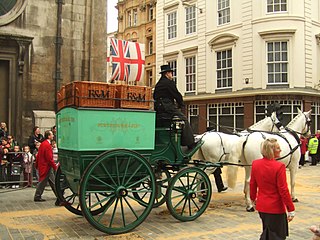
Fortnum and Mason is an upscale department store, beloved by millions today. But its roots date back to before the Regency period, and our ladies and gentlemen of the nineteenth century would have been sure to make use of its offerings, especially the famous picnic hamper.

Established in 1707, when an enterprising footman from the household of Queen Anne and his landlord agreed to start a small shop in St. James’s Market, Fortnum and Mason catered to those travelling. One of their earliest innovations was the Scotch egg in 1738. The culinary delight consisted of a hard-boiled egg wrapped in sausage meat and coated with deep fried breadcrumbs. I must admit I had never heard of it before researching for this blog post, but you can be sure it will find its way into one of my stories in the future!

One of the greatest needs was from the wealthy who had to travel long distances between their country estates and London. They also needed sustenance when travelling to horse races or out on their pleasure craft. Fortnum and Mason met these needs by stocking hampers with luxury travelling food like poultry in aspic jelly, game pie, cheeses, and fruit cake.

But their efforts extended beyond the wealthy. Fortnum and Mason had a soft spot for the military. They sent dried fruit and other preserves to the British army during the war with Napoleon. And they gave soldiers and sailors discounts on letterboxes—places to send and receive mail.

Fortnum and Mason is located on Piccadilly in London, as it has been since the late 1700s. Charles Dickens even shopped there. You can learn more about the amazing shop on their website

(Picture of the shop courtesy of Michel Wal and hampers courtesy of Matt Brown.)

Friday, January 31, 2020

Nibbling Our Way Down New Bond Street


We’ve talked about the center of London shopping in the early nineteenth century before, for example here and here. Bond Street called to young ladies and gentlemen, offering the latest and finest in everything from clothing to housewares and literature. It was also the home of Gentleman Jackson’s boxing emporium and Angelo’s fencing school. But recently I became aware that Bond Street also featured any number eateries, and some of their wares sound downright yummy.

Take Barker’s Repository of Confectionery, at No. 106. They provided “sweets from the Indies” according to The Epicure’s Almanack, a guide to eating and dining from the period. I have been trying in vain to determine what these might have entailed, with little luck. Perhaps rum cake, cookies with coconut, and pastries with mango. Regardless, the shop was said to be popular with the ladies, as the proprietor gave out samples. The shop also supplied sweets to the Royal Family.

Then there’s Owen and Bentley’s Fruit Shop, near the corner of Oxford and New Bond Street. The shop was said to boast every sort of fruit grown in Britain as well as items imported from around the world. It also sold jellies, ices, and liqueurs.

File:Sturgeon2.jpg

Henster and Company, a littler farther down, displayed all sorts of fish, including sturgeon, trout, and carp. I love their title. It simply rolls off the tongue: Fishmongers to His Majesty and the Royal Family.

Lambe’s, also suppliers to the Royal Family (do you sense a theme, here?), had a large warehouse of bottled spa and mineral water. I had no idea this could be purchased away from the spas.

I must notify the Spa Corporation in Grace-by-the-Sea. Perhaps they can broker a deal.

Tuesday, October 15, 2019

Regency Fabrics, Part 26


Here’s another post in our ongoing series on Regency fabrics.

As I have in previous posts, I’ll be examining actual fabric samples glued into several earlier editions of Ackermann’s Repository, samples supplied by the manufacturers and published by Ackermann in order to boost the British cloth-making industry at a time when exporting British goods to Europe was almost impossible because of the Napoleonic war. I'll give you a close-up scan of each sample, the published description if available, and my own observations of the color, weight, condition, and similarity to present-day materials, to give you as close a picture as possible of what these fabrics are like.

Today’s four samples are from the September 1812 issue of Ackermann’s Repository. The overall condition of my copy is very good; the page itself is free of foxing and barely, if at all, toned; the sample in white has suffered some foxing, but that's probably unavoidable.
Here we go!

 
No. 1. A celestial blue imperial striped sarsnet, adapted for pelisses, spencers, evening robes, and mantles. Silk fringe of the same colour, matted crape, Spanish binding, and thread lace, or net, are the only appropriate trimmings for articles of this delicate and pliant material. It is sold by Messrs. George and Bradley, mercers, No. 19, Holywell-street, Strand.


My comments: Alas, it’s no longer possible to see just how celestial the blue was in this sarsnet was: only a hint of color can be seen now. The fabric itself, though, is lovely stuff: it possesses a delightfully silky hand and a shimmer that would indeed make for a beautiful “evening robe.”  

No  2. A sea-weed ground printed cambric, so evidently calculated for the humble order of morning and domestic wear, that no further remark is necessary, than to recommend robes of this article to be made high in the neck, with long sleeves, and frills or collars of lace or needle-work. We are furnished with this print from the house of Harris and Co. No.1, Picket-st. Temple Bar.


My comments:  A nice, sturdy cambric fabric, evenly woven. The background seaweed print is finely printed in a tannish orange; the larger brown pattern has either run, or wasn’t as well printed in the first place, having left brown streaks on the background.

No. 3. A beautiful fancy silver paper for ladies’ work-tables, boxes, card-racks, &c. When made up, it exhibits the appearance of the red sea-weed, strained on a white satin or silver ground. Work-tables, with ebony and gold frames and feet, or japanned to that effect, are a most unique, elegant, and useful article for the boudoir. For card or work-boxes the narrow embossed gold or silver border is a appropriate finish at the edges. This simple and tasteful article is from Ackermann’s, 101, Strand.


My comments: Okay, forget what I said about the samples being in good condition. While it’s just possible to see the seaweed pattern and a hint of red on this sturdy but not too thick paper, the silvery background has long since oxidized away, alas—it must have been pretty. I have to wonder, by the by, why there's a paper sample amongst the fabrics; did a fabric merchant forget to send along his samples?

No. 4. A striped Scotch jaconot muslin, designed for the morning dress and children’s ware. Lace, or borders of double or plaited muslin, are the only becoming and consistent trimmings for robes of this article. It is sold by Charles Cooper and Co. No. 47, Fleet-street.


My comments: Very finely woven and, as a result, very sheer...but also very pretty and delicate. Charming as a child’s smock, or in a morning dress over a lining or slip.

What do you think of this month’s fabrics?


Tuesday, May 28, 2019

Regency Fabrics, Part 24

Here’s another post in our ongoing series on Regency fabrics.

As I have in previous posts, I’ll be examining actual fabric samples glued into several earlier editions of Ackermann’s Repository, samples supplied by the manufacturers and published by Ackermann in order to boost the British cloth-making industry at a time when exporting British goods to Europe was almost impossible because of the Napoleonic war. I'll give you a close-up scan of each sample, the published description if available, and my own observations of the color, weight, condition, and similarity to present-day materials, to give you as close a picture as possible of what these fabrics are like. So here we go!


Today’s four samples are from the January 1812 issue of Ackermann’s Repository. The overall condition of my copy is very; the page itself is free of foxing and is only slightly toned; two of the samples (in white) have suffered some foxing.


No. 1. is an article of peculiar neatness and of great durability, particularly appropriated for ladies’ morning dresses, and children’s frocks and trowsers, the figure never being removed by washing. We are favored with this delicate article from the house of Millard, in Cheapside, where it may be obtained; and where it forms a part of the many elegant articles peculiar to that celebrated establishment, which certainly is unrivalled, both in the variety, richness, and elegance of its supplies; and possesses, at the same time, the advantages of a superior economy. We believe our fair fashionables are well acquainted with this Repository of foreign and British manufactures; but for the information of our correspondents who reside in the country or in distant climes, we must observe, that this house furnishes the greatest choice of fashionable articles for ladies’ wear and household use, as well as rich furniture for drawing-rooms, bed-rooms, &c. These may be purchased from the singularly low price of one shilling per yard, and upwards. The most costly and best productions of India are to be found here. Their Indian shawls, we understand, are offered from eight, to one hundred and fifty guineas each. Their linens of Russia, Irish, German, and Valenciennes manufacture, are of the first fabric. Their printed silks, bettillas, and muslins are of a unique description. Their white chintz, anjengos, and long cloths for children’s wear, are of singular durability and beauty. This house is of the first respectability, each article is warranted, and all goods purchased by the piece, or demi, are obtained at the wholesale price, as well as those purchased by the entire case of package.

My comments: Wow, that was quite a puff-piece, Mr. Ackermann! As the for fabric sample itself, it’s an attractive corded weave, with a pattern woven into the cording. It’s a little hard to judge how long-wearing this might be for children’s clothes, as the ground fabric is of very fine thread, like a muslin, though the threads are evenly spun. But it’s certainly pretty. A couple of definitions, by the way: bettilla is a muslin woven in southern India, and anjego appears to be a similar product of India; I found references to anjengo and anjengo longcloth.

Oh—and 150 guineas for one shawl?!


No. 2. is a delicate and animated printed cambric, for morning or domestic wear. The style of this article must be necessarily simple and plain, as will be obvious to the purchasers. It is sold by Messrs. Smith and Co. Tavistock-street, Covent-Garden.

My comments: More quilting fabric. ☺ The cambric is tightly and evenly woven, and the printing clear and well done...and, um, yeah, definitely no trimming needed on a dress made from this!


No. 3. A white cotton velvet of a peculiarly delicate fabric, designed for the fashionable amusement of painting, an art now particularly in vogue with our fair fashionables, who have wisely relinquished the inelegant and unprofitable employ of shoe-making and book-binding in favour of their industrious, half-ruined, and more humble brethren*. This article, as well as the colours for painting, are sold at Ackermann’s Repository, No.101, Strand; and it is a peculiar advantage to the public, that they may obtain at this house drawings and patterns for copying on the following terms:
Yearly subscriptions, 4 guineas.
Half-year do............ 2 do.
Quarterly do............1 do.
The money to be paid at the time of subscribing, &c. &c. Printed particulars may be had at the Repository of Arts, 101, Strand.

*See the speech of PETER CORDOVAN, vol.4, page 16, Repository of Arts, &c.

My comments: Oh my word, more painting on velvet. I think I feel a blog post coming on...and a little research into the footnote as well! As for the sample of velvet itself, it’s very like what we would call cotton velveteen, with a short, plush nap.


No. 4. A fine Merino cloth, of Wellington bronze, a colour in the highest esteem in fashionable circles. It may be termed the orange colour sobered. It is adapted for robes, pelisses, and mantles, and should be trimmed with a tastefully contrasted fur, variegated chenille, or swansdown. We have seen the Carmelite mantle composed of this material, lined with white sarsnet, with white raised chenille borders, and confined at the throat with rich correspondent cord and tassels, to have a very tasteful effect. This cloth is furnished by Mess. Ghrimes, of Ludgate-hill, whose house is famed for producing the most brilliant in-grain colours in cloth ever exhibited. The present article measures two yards wide, and the price 36s. per yard.

My comments: Ooh, nice fabric! The color is a dark pumpkin—a brownish orange—but it’s the fine twill weave that makes this noteworthy—pliable and nicely drape-able, but sturdy. It would make a cozy winter gown, if a slightly scratchy one (so definitely a lining would be needed in the bodice.)

Any comments on this month's fabrics?

Tuesday, March 19, 2019

Regency Fabrics, Part 23

Here’s another post in our ongoing series on Regency fabrics.

As I have in previous posts, I’ll be examining actual fabric samples glued into several earlier editions of Ackermann’s Repository, samples supplied by the manufacturers and published by Ackermann in order to boost the British cloth-making industry at a time when exporting British goods to Europe was almost impossible because of the Napoleonic war. I'll give you a close-up scan of each sample, the published description if available, and my own observations of the color, weight, condition, and similarity to present-day materials, to give you as close a picture as possible of what these fabrics are like.

Today’s four samples are from the  November 1811 issue of Ackermann’s Repository. The overall condition of my copy is excellent; the page itself is free of foxing and is only slightly toned, and the fabrics themselves seem to be in excellent condition as well.

Here we go!
No. 1.  A fawn-coloured lustre for evening or half-dress. This appropriate article has not before been introduced of this becoming and delicate shade. It is usually trimmed with swansdown, or other light skin, or with falls of thread lace; and is sold by Mr. George, No. 19, Holywell-street, Strand. 

My comments: Oh, lovely! This appears to be a woven silk of a slightly uneven but still beautifully smooth hand, and the color is indeed becoming. I’m sure it drapes very well, and while fairly opaque, would do best over an underskirt.

No. 2. A new sea-weed printed cambric, whose warmth of colouring renders it particularly adapted for the approaching winter season.  It is calculated more immediately for the domestic or morning robe, and is worn with lace cuffs and frill. Sold by Waithman and Son, corner of Fleet-street, Blackfriars.


My comments: Heh—another vintage quilting fabric look-alike, looking very American Civil War era to my eyes. The weave is smooth and even and the printing very sharp and precise.

No. 3. A checked ladies’ Merino cloth for habits, German coats, pelisses, &c. It is similar to that represented in the walking figure of the present Number of this work. The trimmings most fashionable and consistent for coats of this article are, Spanish silk braid and frogs, with divers kinds of fur, happily contrasted with the colour of the cloth.


My comments: A cozy, lightly flocked woolen, not so heavy that it wouldn’t fall nicely. Very curiously, while the check pattern isn't visible to the naked eye, it can been seen when scanned. I cannot tell if the square pattern was woven in or printed as it just doesn't show up in person; also, the scan makes it look like the contrasting check is a sort of faded acid yellow, which is not apparent in regular light--the fabric appears a uniform vanilla color.


No. 4. A Persian kerseymere, worked in tambour, first introduced in this country by the late Persian ambassador, and is much in vogue with our male fashionables. Some gentlemen trim the waistcoat, formed of this unique article, at the collar and breast with a border or edging of sable; it has a most comfortable and becoming effect during the winter months. This article, together with No. 3, is furnished by Messrs. Maunde and Co. wholesale and retail drapers and mercers, in Cornhill.

My comments: Similar in texture but slightly lighter in weight that the woolen in No. 3...but that yellow...and the black, white, and orange pattern...! The yellow is brighter in natural light than it appears to be under the scan. I’m trying to picture a gentleman’s waistcoat made of this and trimmed with fur, and expect that Beau Brummel would have had to have a brief lie-down in a darkened room with a cold compress on his forehead had he spotted one of his friends wearing it.

And an interesting side note on this month’s samples: in the next month’s issue is a note that reads We forgot to mention in our number for November that the Persian Kerseymere, No. 4,  furnished us by Messrs. Maunde and Co., is worked in tambour by a society of unfortunate, but industrious French immigrants, residing in the west of England. An interesting footnote on many levels...do I feel a story coming on about an impoverished but nobly-born French emigré and the foppish earl who falls in love with the fabric of his new waistcoat and moves heaven and earth to find out whose dainty hands stitched it? Stay tuned...

Any thoughts on this month’s fabrics?

Tuesday, January 8, 2019

Regency Fabrics, Part 22

Here’s another post in our ongoing series on Regency fabrics.

As I have in previous posts, I’ll be examining actual fabric samples glued into several earlier editions of Ackermann’s Repository, samples supplied by the manufacturers and published by Ackermann in order to boost the British cloth-making industry at a time when exporting British goods to Europe was almost impossible because of the Napoleonic war. I'll give you a close-up scan of each sample, the published description if available, and my own observations of the color, weight, condition, and similarity to present-day materials, to give you as close a picture as possible of what these fabrics are like. So here we go!

Today’s four samples are from the August 1810 issue of Ackermann’s Repository (yes, we’ve gone back in time a bit, as I recently acquired this print.) The overall condition of my copy is very good: the page itself is almost free of foxing and toning, and the samples are in good shape as well, with perhaps a bit of brown spotting.

No. 1 and 2. A fast-coloured deep cerulean blue furniture chintz, calculated for the decoration of drawing-rooms, boudoirs, and sleeping-rooms. The linings best contrasted with this fashionable article, are, bright yellow, rose colour, or crimson, with variegated Chinese fringe. It is sold, with various other kinds of permanent chintz furniture, at Mr. Allen’s celebrated furniture ware-house, Pall-Mall.


My comments: This is a nicely weighty, close-woven, and deeply glazed chintz, in a lovely shade of blue. The printing seems a little off (look at the leaves in particular), and the design is a little less elegant than other Regency chintzes we’ve seen.

No. 3. An imperial fancy striped cambric muslin, calculated for frocks, pelisse wraps, and every kind of morning robe. Lace may be introduced in this article, although we very frequently see it made up plain, with double plaited trimming of muslin or scalloped lace, simply forming a border at its terminations. This article is sold by Edwards and Co. Hay’s-court, Newport-market.


My comments: Oh, so very pretty! This is extraordinarily light and airy fabric; the thread is very evenly spun which makes for a nice tight weave. The cable design (thinking like a knitter here) is nicely done as well. Of course it would have to be made with a lining, but is one of the prettiest muslins I think I’ve yet examined.

No. 4. A raised corded leno, appropriate to the evening or dinner robe. It is frequently worn over coloured sarsnet or satin slips, and offers a very pleasing change for summer wear. No lace or needlework can be introduced to advantage in this light article, except as a trimming round the bottom or bosom; and the under dress cannot (from the transparent texture of the leno) be composed of any article of an inferior order. It is also sold by Edwards and Co. Newport-market.


My comments: Although not as pretty as No. 3 above, this is also woven of very fine (in all senses of the word) thread and would indeed be very pretty over a colored slip—pale pink or blue, perhaps? Definitely debutante wear. J

Any thoughts on this month’s fabrics?

Tuesday, June 26, 2018

Regency Fabrics, Part 20

Regency Fabrics, Part 20

Here’s another post in our ongoing series on Regency fabrics.

As I have in previous posts, I’ll be examining actual fabric samples glued into several earlier editions of Ackermann’s Repository, samples supplied by the manufacturers and published by Ackermann in order to boost the British cloth-making industry at a time when exporting British goods to Europe was almost impossible because of the Napoleonic war. I'll give you a close-up scan of each sample, the published description if available, and my own observations of the color, weight, condition, and similarity to present-day materials, to give you as close a picture as possible of what these fabrics are like.


Today’s four samples are from the August 1811 issue of Ackermann’s Repository. The overall condition of my copy is good: the page itself is most free of foxing and toning, though one of the samples is a little worse for the two hundred plus years since it was woven, and two have lost their color to a greater or lesser degree.

Here we go!

No. 1. A royal regency leno, for evening or full dress, calculated for the Turkish robes and Roman tunics now so fashionable in elegant circles. It should be worn over white satin, or sarsnet; and embellished with ornaments of pearl, diamonds, white cornelian, or the satin bead. This elegant article is furnished by Harris, Moody, and Co. Pall-Mall.


My comments: This is an attractively airy net style of fabric, elaborately woven of lovely silky thread in dark green, yellow, and dusty pink. While it’s mostly made of air, the style of weaving and heft to the threads gives it some weight. I do wish more Ackermann prints showed dresses made from the fabrics they advertised; it would be most instructive to see just what was done with a fabric like this, worn over white satin. I think I would have been terrified of catching it on jewelry or on something else and tearing the you-know-what out of it.

No. 2. A dove-coloured imperial gauze, adapted for the same order of costume, and to which the same jewellery ornaments are appropriate. Trimmings of fine lace, with decorations of wreaths and bouquets for the hair and bosom, are also becoming appendages to this neat and elegant article, which is furnished by Messrs. Coopers, Pall-Mall.


My comments: Another woven net, this time of all one color. This one feels a little less substantial than the first, despite its greater opacity. It would be charming as an overdress; I wonder if it was made up with the stripes oriented in the vertical or horizontal?

No. 3. A celestial blue penciled muslin, adapted for the intermediate order of dress. It is either made high, with a trimming of narrow lace round the throat, or formed in a low square bosom, finished with white embossed satin ribbon. With each the long sleeve is to be preferred, in this as in most other muslin articles.


My comments: Um...celestial blue? This sample has clearly suffered; the dye is gone, though the feathery little random pattern printed on has survived...and after a quick look around on the interwebz, mine is not the only one to have suffered. It’s not easy to say much about it as it seems to have been glued entirely down on the page, but it is a very loosely (if evenly) woven fabric.

No. 4. A pink muslin, with embossed green spot. This animated article is confined to the more youthful females, to whom it is most becomingly adapted. It should invariably be worn over white sarsnet, fine glazed cambric, or satin; and should be formed in the most plain and simple manner. No jewellery ornaments but white can be admitted to blend with this material, nor any but white flowers to be worn in the hair.

The last two articles are furnished by Messrs. T. and J. Smith, 43, Tavistock-street, Covent Garden.


My comments: Oh my goodness, more polka dots! Interesting that this fabric is only recommended for young women... The dots have faded to a not-very-attractive khaki brown, and look almost applied—as if someone plopped little blobs of paint onto the fabric at regular intervals. Like number three, this is a very open-weave muslin, but the threads are of fine, uniform gauge. I suspect the pink may have once been more intense, not the pale dusty pink of today.  This must have once been a very cheerful sort of “article.”

Any thoughts on this month’s fabrics?


Tuesday, March 13, 2018

Regency Fabrics, Part 18

Here’s another post in our ongoing series on Regency fabrics.

As I have in previous posts, I’ll be examining actual fabric samples glued into several earlier editions of Ackermann’s Repository, samples supplied by the manufacturers and published by Ackermann in order to boost the British cloth-making industry at a time when exporting British goods to Europe was almost impossible because of the Napoleonic war. I'll give you a close-up scan of each sample, the published description if available, and my own observations of the color, weight, condition, and similarity to present-day materials, to give you as close a picture as possible of what these fabrics are like.

Today’s three samples are from the March 1811 issue of Ackermann’s Repository. The overall condition of my copy is excellent: the page has been trimmed but is otherwise free of foxing and toning, and the fabric samples themselves appear to be in fine shape.

Here we go!

Nos. 1 and 2. A bright permanent morone printed cambric, calculated for the intermediate order of dress. This print will admit of repeated washing, without any detriment to its colours. Round dresses and wraps in this article should be constructed quite plain, or with lace cuffs and frills. It is sold by Messrs. Jones and Co. 179, Piccadilly.


My comments: I’m always fascinated by these print fabrics, because so few are shown in the dresses illustrated in the fashion prints often in the same issue; as much as I adore them for the eye candy they are, I have to conclude they aren’t as representative as we sometimes take them for. This cambric reminds me of cross between a modern quilting cotton and a chintz. The dye is a rich, slightly orange-ish red, almost as intense on the back of the fabric as the front; the printing is a little sloppy on close examination, but passes well enough.

No. 3. A green figured shot sarsnet, adapted for robes, spencers, pelisses, and mantles. The trimmings appropriate to this article are, fancy Chinese floss, Indian gimp, and thread lace. Jewellery ornaments must consist of diamonds, pearl, satin bead, or white cornelian. Sold by D. and R. Hodges, Henrietta-street, Covent-Garden.


My comments: I think I would have been a sarsnet fiend had I lived in 1811, though I'm not sure I could have supplied the diamonds that must be worn with this particular fabric. ☺ This is lovely stuff, beautifully silky in texture and with enough weight lent by the twill weave that it would drape beautifully as a dress. It seems perhaps a little light in weight for a pelisse or mantle, though I assume such garments would be made with a lining to add substance. The green is a little lighter than it might seem; the contrasting sheen of the off-white threads makes it appear a little darker.

No. 4. A beautiful regency shot sarsnet, a most fashionable article, for the same purposes as described in No. 3. The regency helmet cap, composed of white velvet or satin, and ornamented with the Prince’s plumes of white feathers, is an appropriate and  becoming head-dress with robes of this attractive material. It is furnished by Joseph Snuggs, 20, Henrietta-street, Covent-Garden.


My comments: Yup, totally a sarsnet fan here. This cream-colored sample is a little stiffer than No. 3, but of a similar weight and just as delightful to the touch. This fabric in particular would make a gorgeous gown!

Any thoughts on this month’s fabrics?