

Showing posts with label London. Show all posts

Tuesday, August 3, 2021

Blast from the Past: I Scream, You Scream, We All Scream for Gunter’s

It’s hot where I am again, and I recently discovered a local brand of Southern-style old fashioned butter pecan ice cream. Maybe that’s why I thought of this post from July 2009. Enjoy! 

As we have mentioned, ice cream was just as popular among nineteenth century ladies and gents as it is today. While few places in England get as hot as the American southwest (or my lowly abode, which saw triple digit heat the last few weeks), remember too that for most of the period there was no mechanical air conditioning or refrigeration. Overhead fans and personal fans had to be moved by hand (your servant’s or your own). If food was cooled at all, it was on ice delivered manually. And on warm summer days, there was nothing finer than scooping into a dish of icy cool ice cream. Of course, it would have been a little difficult for these scrumptious treats to have been delivered by cart. Instead, in London, the fashionable flocked to a little confectionary shop at 7-8 Berkeley Square owned by James Gunter and his family.

Gunter’s was extremely popular for several reasons. For one thing, the food was delightful, with ices and sorbets in flavors like pistachio, pineapple, jasmine, white coffee, and elderflower. For another, it was right across the street from a park with maple trees, so you always had a place to go in the shade to eat your treat. But the most important reason Gunter’s was so popular was the curbside service!

Gunter’s was one of the first drive up eateries. During a time when it would ruin a young lady’s reputation to be seen eating alone with a man inside a restaurant, it was perfectly acceptable to be seen eating outdoors with one! So, a gentleman would drive his carriage up under the shade of the trees across the street, and waiters from Gunter’s would dash across traffic to take his order. They’d then dash back across traffic to get the ices and return them to the gentleman and his lady. The lady would sit in the carriage and eat her treat while the gentleman generally lounged against it and chatted with her while eating his. 

I’m sure her seat gave her quite the vantage point. After all, part of the fun of eating at Gunter’s was seeing who else was eating at Gunter’s. 

Not quite the same as those ice cream trucks, huh?

Friday, August 21, 2020

A Library for London


It’s no surprise that I love reading, and libraries have always been one of my favorite places to hang out. So, when I was reading this week and came across a story about the origin of the London Library, I was intrigued. Especially about this statement:

“The London Library was established in 1841 at a time when there were no lending libraries in London.”


Scratches head.

Hatchard’s has been around since 1797 and had a subscription-based lending program that has featured in many a Regency romance. But that apparently wasn’t what Thomas Carlyle was looking for. A historian and author, he convinced literary friends that more was needed. (I am sad to report that he was also a racist—supporting slavery even though friends tried to argue him out of it.) On the literary front, he was joined by luminaries such as Charles Dickens to raise funds from more than 350 founding members for a subscription-based library of books about “all departments of knowledge.” They considered books held in the typical circulating libraries to be in the “lighter departments of literature” and vowed to be “more discriminating” in developing a serious library.

They started out with 2,000 books and the patronage of Prince Albert. Within a year, they were up to 13,000 books. While their first address had been associated with a gambling hell, they moved on to better digs on St. James’s Square and soon attracted the likes of Charles Darwin and William Thackeray. By 1855, Alfred Lord Tennyson had been appointed President.

And Carlyle? According to the London Encyclopedia, he was a terrible patron of the library he’d envisioned. He returned books late and wrote scathing comments in the margins! Maybe that’s why he had to found his own library?

And I will be hiding out in my own library over the next 2 weeks—stepping out to celebrate my wedding anniversary and Labor Day. See you September 11!

Friday, June 12, 2020

Cattle Call, Updated


I originally published this post in October 2009, but a couple of interesting tidbits came my way this week, which warranted an update.

Tattersall’s Repository was in the nineteenth century and still is Britain’s foremost auction house for horses (called cattle in that day). And not just any cattle. The description of the drawing from the early nineteenth century states, “Cart and agricultural horses are seldom offered for sale at this place, as the purchasers who attend here are devoted rather to the pursuit of pleasure than of business.”  

Founded in 1766 by Richard Tattersall, formerly a groom of the Duke of Kingston, and operated in the nineteenth century by his son, apparently also Richard, Tattersall’s was the place you went to purchase a saddle horse, carriage horse, hunters (horses you rode while hunting), and racehorses. They also auctioned carriages and coach-harness and hounds. It was located on the south side of Hyde Park Corner until 1865, when it relocated to even bigger digs near Knightsbridge Green. It is still in business in Newmarket. While many a Regency romance has called it Tattersall’s, the group itself has stopped using the possessive. https://www.tattersalls.com/

The space included stables and a central circle for checking out the horses and giving them a try. See the folly in the center? The bust on top is of Prinny, the Prince of Wales.

But the idea wasn’t just to buy a horse back then. A young gentleman might go to Tattersall’s even when it wasn’t a sale day on Monday or Thursday, just to be seen around “sporting” types. Tattersall’s was the home of the Jockey Club, the body that makes the rules for England’s races, so you were sure to run into people famous in the racing world. Then too, for about a pound a year, you could buy a subscription to a private room at Tattersall’s, where you could settle your bets. You see, true gentlemen didn’t carry sums of cash to the track. They met at Tattersall’s a few days later and settled their debts. So you could look like you were wealthy and privileged just by hanging around. 

Approximately 100 horses a week passed “under the hammer” of the auctioneer. Saddle horses cost 40 to 200 pounds, a pair of coach horses from 150 to 420 pounds, outstanding hunters around 350 pounds, and racehorses 1,500 pounds.

Think you’d like to purchase one? Think again. Women were not welcome at Tatt’s. You’d have to send a male agent if you wanted to purchase one of the prime bits of blood there. Or even a horse.

Friday, February 28, 2020

Need a Picnic Hamper? Think Fortnum and Mason


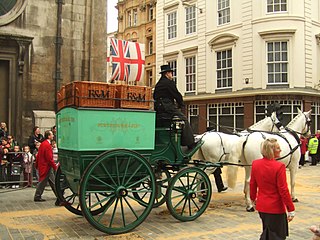
Fortnum and Mason is an upscale department store, beloved by millions today. But its roots date back to before the Regency period, and our ladies and gentlemen of the nineteenth century would have been sure to make use of its offerings, especially the famous picnic hamper.

Established in 1707, when an enterprising footman from the household of Queen Anne and his landlord agreed to start a small shop in St. James’s Market, Fortnum and Mason catered to those travelling. One of their earliest innovations was the Scotch egg in 1738. The culinary delight consisted of a hard-boiled egg wrapped in sausage meat and coated with deep fried breadcrumbs. I must admit I had never heard of it before researching for this blog post, but you can be sure it will find its way into one of my stories in the future!

One of the greatest needs was from the wealthy who had to travel long distances between their country estates and London. They also needed sustenance when travelling to horse races or out on their pleasure craft. Fortnum and Mason met these needs by stocking hampers with luxury travelling food like poultry in aspic jelly, game pie, cheeses, and fruit cake.

But their efforts extended beyond the wealthy. Fortnum and Mason had a soft spot for the military. They sent dried fruit and other preserves to the British army during the war with Napoleon. And they gave soldiers and sailors discounts on letterboxes—places to send and receive mail.

Fortnum and Mason is located on Piccadilly in London, as it has been since the late 1700s. Charles Dickens even shopped there. You can learn more about the amazing shop on their website

(Picture of the shop courtesy of Michel Wal and hampers courtesy of Matt Brown.)

Friday, March 3, 2017

The Gentleman's St. James's

It’s no secret that St. James’s in London was accorded an area for gentlemen. Some say a lady could not be seen there after a certain time of the day without being considered fast. As Marissa and I have mentioned, it is the location of one of the famous gentlemen’s clubs, White’s. It stands at Numbers 37 and 38. Another club, Boodles, was at Number 28, and Brooks was at the corner of Park Place.

But there were other reasons this street was so very male-oriented. Lodging, for one. It was the street that housed Fenton’s, a hotel where visitors from out of town might stay. Some gentlemen had permanent lodging there. In addition, some of the buildings had flats above street level as well. Lord Byron rose to fame in his lodgings there in 1811. James Gillray the caricaturist lived there from 1808 until his death in1815.

St. James’s also featured shopping of a particularly gentlemanly nature. D.R. Harris and Co. has been operating just down the street from White’s since 1790. The chemists specialized in lavender water, men’s colognes, and English flower perfumes as well as shaving gear and items for tending mustaches.

Not too far away was Lock’s Hatters, where a gentleman might buy a silk top hat or cockade. Lord Nelson and Beau Brummel were among its patrons. On the opposite end of the street was Berry Brothers and Rudd, wine merchants and home of one of the largest scales in London. It was a lark to weigh oneself on it.

So, would you have been brave enough to stroll down St. James’s while the gentlemen were at play?

Drawing of Fenton's Hotel courtesy of Wellcome Library, London. Wellcome Images images@wellcome.ac.uk

Friday, February 3, 2017

Bond Street Beaux

Bond Street. Those fond of stories set in the early nineteenth century in England are apt to know the name as synonymous with shopping. It was the Rodeo Drive of Regency London, the place where you went to see and be seen, where the finest purveyors of the finest goods had their establishments. It remains a favorite shopping mecca today. And some of the stores there now have been in those locations or at least along that street since the Regency or before.

Take Chappell & Co. (now Yamaha Music London). Founded in 1810 by Samuel Chappell and two London music professors, it had showrooms for pianos and floors of sheet music, published by the store. Supposedly, even Beethoven remarked favorably about the shop.

Then there’s Russell & Bromley, bootmakers in the Regency, now an upscale shoe store. The website states that the shop does not stock “sale items.” Buyer beware.

My personal favorite, however, is Truefitt and Hill, gentlemen’s hairdressers since 1805 (although the “and Hill” was added in 1935). The “World’s Oldest Barbershop” as recognized by Guinness World RecordsTM, the shop was started by Francis Truefitt. Truefitt seemed to understand the mind of the Regency gentleman. Everything was first class, sophisticated, and well made, and service was impeccable. Besides cutting hair, he made and sold his own products, including gentlemen’s perfume. He was a royal warrant holder (the shop in London still is) and is said to have made wigs for Prinny.

Truefitt’s is mentioned in Dickens and Thackery. King George III, the Duke of Wellington, Lord Byron, and that arbiter of all things fashionable Beau Brummell are said to have availed themselves of his services. So, to my amusement, have American royalty John Wayne, Frank Sinatra, Fred Astaire, and Cary Grant.

I think I just found one more item to add to my “When I next go to England” bucket list.

Tuesday, June 2, 2015

Green and Pleasant Land, Part 1: London

London is an amazing city. Of course the history aspect is amazing...but it’s also a remarkably livable city, at least for me who gets antsy when there aren’t trees nearby. There’s little of the canyon-like effect you get in Manhattan...and the parks are truly lovely. And did I mention the history? ☺

So the five of us arrived at our hotel in Westminster in what is probably an ideal place for sightseeing: we were at the St. James Courtyard hotel, a five-minute walk from Buckingham Palace (and on the same street as the Bluecoat School, about which Regina blogged). The hotel itself dates to the Edwardian era, and is built around a courtyard with all sorts of delightful architectural bits. London abounds in delightful architectural bits, by the way—no walk is ever dull there.


I’m happy to report that the statue of Queen Victoria at her memorial in front of the Palace still looks like a lifeguard (which I’d noticed on my first visit to London about thirty years ago)—for some reason Her Majesty’s nose is lighter than the rest of her, as if smeared with zinc oxide. And Canada Gate at the entrance to Green Park off Constitution Hill is as shiny as ever:


However, I was very sad to see that cows are no longer kept in Green Park as they were during the Regency, despite this reminder of their presence:


I found it a little surprising to see how small St. James’s Palace was, and how “right there” as well—the streets run right alongside it—considering it’s actually the official home of the sovereign (ambassadors are still accredited to the Court of St. James.) It was built by Henry VIII and added onto over the centuries, but still has that sixteenth century feel:


And then we were in St. James’s Street, Masculinity Central of Regency London, home of such places as Brooks’s and White’s Club (and yes, there’s the famous Bow Window at White’s)


What I found interesting (beside all the famous historical landmarks and stores) was the topography. St. James’s Street trends uphill, which I did not know—it’s one of those things that somehow doesn’t get mentioned very often, and which I’m glad I now know. But even more exciting to me was catching sight of King Street off St. James’s. The King Street, home of Almack’s Assembly Rooms? You bet—only, Almack’s is long gone, replaced by (sob!) an office building. But at least I can now say I was there as I scribble away at my Almack’s stories. That's me with Child #1. Yes, he's pretty tall.


What else? We dined at Wilton’s on Jermyn Street, established 1742, and had a wonderful dinner...and a delightful tea at Duke’s Hotel. We carried out a quick raid on Harrod’s and came away with tea and chocolates (alas, the presence of a husband and son necessitated the visit being brief). And we visited the Victoria and Albert Museum (glorious sensory overload—it’s the world’s largest museum of art and design) and Apsley House, the Duke of Wellington’s house at Hyde Park Corner, which was amazing.


No interior photographs permitted, alas, as my little history-geek heart was a-galloping at the eleven-foot tall statue of Napoleon at the base of the Principal Staircase on which it is rumored Wellington used to hang his hat as he went up the stairs (and the painting of Wellington in old age presenting a gift to his godson, Queen Victoria’s son Arthur)...at the astonishing Waterloo Shield, which really has to be seen to be appreciated (Google it!) Wellington came away from the wars with a ton of goodies from grateful European heads of state. And most of all at the Waterloo Gallery, the room where Wellington held his annual dinners to commemorate the battle and which held his collection of Spanish masters. Curiously, among the amazing art collection amassed here are multiple portraits of Napoleon and members of his family. After Waterloo, Wellington would be linked for the rest of his life to the former French emperor—without Napoleon, Wellington would not have been Wellington. That must have been a strange thing to have to live with for the rest of his life—so closely linked to someone he actually never met face-to-face—and he lived nearly forty more years after the battle.

And right around the corner from Apsley House in Hyde Park? Rotten Row, of course!


Next time: visiting Oxford and Windsor

Friday, September 19, 2014

Your Best Guides to London

I've been to London, but oh how I want to go back!  It's a city steeped in history, in drama.  I swear excitement lives in the very air.  Maybe it's because I’m walking down the streets my characters walked, seeing sights that existed before they were even born.  Despite all my critique partners admonitions not to look like a tourist for safety's sake, I gawk and cry out and point to things with giddy delight.  Nineteenth century lads and lasses were no different.

Touring London was a common practice in the early nineteenth century, even if you weren't a young miss on your first Season.  People from the country came up to the great metropolis to take in the culture, the politics.  And what better way to tour a city than to follow the advice of a reputable guide?

Samuel Leigh was a bookseller and publisher who specialized in travel guides.  He claimed to have written his New Picture of London because so many other travel guides were not updated regularly and ended up leading the tourist places that, at best, no longer existed  and at worst might be downright dangerous to visit.  The book  lays out the social and political history of the city and then goes on to list everything from public buildings to churches and colleges and even tea houses of merit.  One chapter offers a plan for visiting London in eight days.    

But Leigh wasn't the only one determined to educate London tourists.  An anonymous gentleman “who has made the police of the metropolis an object of enquiry twenty-two years” wrote The London Guide and Stranger's Safeguard against the Cheats, Swindlers, and Pickpockets.  The book enumerates the many ways criminals can accost you in London, from pickpockets on the streets to robbers at the inn and informers looking to make a buck off your supposed immoral acts. 

Armed with these two books, how could any tourist go wrong?

Friday, February 7, 2014

Wanted: Suitably Impressive London House to Rent for the Season

Location, location, location.  I’ve heard it said that’s the most important part of house buying, and as my husband and I consider downsizing, we’re finding it to be true.  But location wasn’t the only factor important to the families who went up to London for the Season in the nineteenth century, that time between Easter and the end of summer when anyone who was anyone ventured up to London for the rounds of parties, balls, and matchmaking among the upper class.  Families who were nobly born had a London house as well as an estate in the country and perhaps a hunting lodge somewhere they might reasonably expect to find small creatures to persecute, I mean hunt.  The rest of the aristocratic families did what many of us do today--they rented or leased.

Much of the land in London once belonged to large estates dating back to the middle ages.  The mighty families who owned these estates later developed them, keeping the land itself, but building houses on it they would then lease to suitably wealthy and pedigreed tenants.  For example, much of Mayfair, that area near Hyde Park devoted to the aristocracy in the early nineteenth century, was developed from lands belonging to the Grosvenor family.  

Some leases lasted only a Season.  Others lasted as long as a hundred years.  As you can imagine, if your family held one of those longer leases, generations would come to consider the house “theirs.”

Within these leased houses were several types.  There was the terraced house, must like today's townhouses, like these in Bath:


Most of these homes had only a few rooms suitable for entertaining.  They were perfect for sitting with a few friends and having a nice coz.  If you hoped to entertain, you would be better served to lease a larger townhouse with a small plot of land, enough for a garden, like Apsley House, home of the Duke of Wellington:


Such houses might boast a gallery suitable for a large dinner or perhaps a small soiree.  If you wanted to host your own ball, you’d have to locate a mansion with more extensive grounds.  This last type was the most rare in London, kept in the family so to speak, and was the most expensive to lease.  They might also be a bit outside London proper, like Holland House:


The larger the home, the larger the upkeep as well.  Larger houses required more servants, more furnishings and artwork.  Gardens required gardeners; stables necessitated grooms.  Sometimes smaller was more efficient.  However, larger was certainly more impressive.


So, what will your preference be, my lords and ladies?  What sort of home would you prefer this Season?

Friday, September 27, 2013

Dancing, Drama, and Deals: The Pantheon

Nineteenth century Londoners were always keen for entertainment.  Though for the most part the classes did not mix, they each found something a little thrilling about running with a different crowd.  During the summer months, Vauxhall allowed anyone entrance for a small price, and kings could rub elbows with commoners.  But for a few years, a building on Oxford Street rivaled anything the outdoor pleasure garden could dream up.  That building was known as the Pantheon.

The Pantheon was originally built as a series of opulent suites in which to hold masquerades and balls.  The massive crystal chandeliers hanging from the ceilings highlighted the paintings and relief work of heroes and kings.  Boxes along three stories allowed the wealthy to slip away from private entertainments while watching the revelry on the main floor.  As many as three bands might play in a night, with no break, allowing constant rounds of dancing.  A foreign dignitary visiting the place as it was being built remarked that only in England could such excesses be found.

At its peak in popularity, in the 1770s, the Pantheon boasted the attendance of the royal and the influential, including the king and queen.  But popularity waned with the century, and in 1789, the Pantheon was converted into an opera house.  Shortly afterward, it burnt to the ground. Legend has it the fire was started by a rival opera house (who knew tenors could be so vicious?).  A new leaseholder rebuilt and reopened it in 1795, returning it to its original purpose.  From then until 1812, it was the scene of many a salacious scandal.

The print below is from Ackermann's The Microcosm of London and dates between 1808 and 1810.  Here's part of the caption:  "Since the Pantheon was rebuilt, it has been principally used for exhibitions, and occasionally for masquerades, of which the plate is a very spirited representation.  It is composed, as these scenes usually are, of a motley crowd of peers and pickpockets, honourables and dishonourables, . . . demireps, quidnuncs [gossips], and quack doctors."


Events were advertised in the papers, including the Morning Chronicle.  When it came to masquerades, only those dressed in character or dominos were allowed entrance.  Doors opened at ten pm; an optional supper was served at one in the morning.  I imagine a number of mamas and papas refused to allow their young ladies and gentlemen to attend.  And I also imagine no small number of them managed to sneak away to attend anyway.

In 1812, the Pantheon changed hands again, and the new leaseholders decided to make it into a theatre (original, I know).  Unfortunately, the Lord Chamberlain refused to give them the proper license, and the Pantheon closed in 1814.  It was once again reimagined in 1833, when it opened as the Pantheon Bazaar, one of the first indoor shopping malls, the fine suites turned into individual stores.  It would later go on to be used as offices and show rooms for a wine merchant until it was demolished to build a new store for the British retailer Marks and Spencer.

Guess that just goes to show that a good deal will win out every time.

Friday, May 14, 2010

Bored? To the Tower!

We’ve talked from time to time about things teens of the nineteenth century did to entertain themselves, particularly in London. Today, one of the city’s most popular tourist attractions is the Tower of London. It was one of the most popular attractions in the nineteenth century too, and for many of the same reasons.

For one thing, until 1834, the Tower housed the Royal Menagerie. That’s right, you went to the Tower to go to the zoo. They had monkeys, ostriches, lions, and tigers, and the first grizzly bear in England. Personally, I’m not fond of animals in cages, and these poor animals would have lived entirely in iron-barred cells surrounded by stone walls. They also didn’t always get the best care. One ostrich died from eating nails!


Okay, so maybe you don’t want to see the animals. There’s always the Royal Armory! The Tower held armor and weapons from England and the nations that paid it court, from Asia to Africa and all points in between. Said an 1809 tourist publication:

The horse-armoury contains, among other appropriate articles of curiousity, the effigies of the kings of England, clad in armour and on horseback, inclusively from William the Conqueror to his late Majesty George II. They are as large as life, and some of them appear in the suits of armour which those sovereigns actually wore.

Hm. Dead guys on horses. The history geek in me squeals with delight, but it probably wasn’t the best choice for a young man squiring a young lady about town. But there was one place in the Tower sure to delight any young lady: The Jewel Office.

The Jewel Office was a small, dark stone room that contained the crown jewels, including St. Edward’s Crown, used to crown all British monarchs for centuries. The Jewel Office even held the silver font used in baptisms of the Royal Family. Says an 1844 visitor’s guide:

In the Jewel Office are preserved the imperial regalia, and all the crown-jewels worn by princes and princesses at the coronation, together with the whole of the paraphernalia used on those occasions. Independent of a variety of articles, many of which are inestimable, the value of the precious stones in this office considerably exceeds two million sterling.

Pretty things in slightly spooky surroundings—what girl wouldn’t hang all over her fellow to be there?

For part of the nineteenth century, the Tower was open to the public on Sundays; at other times it was open daily. The cost ranged from a shilling to see the menagerie, 2 shillings for the armories, and 2 shillings for the Jewel Office to 6 shillings for the whole shebang later in the century.

So, to the Tower with you, young misses and masters. Will it be beasties, swords and pistols, or jewelry for you?

Tuesday, August 11, 2009

Hey, Where Did Everybody Go?

Some time around mid to late July every year, a very odd thing would happen in 19th century London: anyone who was anyone (if you know what I mean) vanished. The members of the Ton disappeared from Hyde Park, from the shops in Bond Street, and from the clubs in St. James. With the conclusion of the annual horse races at Goodwood, the Season was over...and one did not want to be seen in London once the Season was done if one wished to be thought in the least fashionable!

So where did everyone go?

In the middle and later parts of the century, the place to see and be seen in late July and the first days of August was Cowes, the main town on the Isle of Wight, a small island off the southern coast on England. The island had become fashionable after Queen Victoria bought Osborne House for a family getaway there in the 1840s, and became even more fashionable when Victoria’s son, Bertie the Prince of Wales, took up yacht racing in the 1860s. Suddenly everyone became sailing-mad…or if they weren’t, they pretended to be and rented a house on the island so as not to miss all the good parties.

Sailing at Cowes came to an end around now, because on August 12—the "glorious Twelfth"—the grouse-shooting season officially opened in Scotland. Fashionable ladies packed away their amusingly nautically-themed dresses in favor of tweeds and stout boots and headed north to join in the astonishing (and to modern sensibilities, appalling) annual slaughter of thousands of these large upland game birds. Not that many ladies participated in the actual shooting—grouse hunting was definitely a male activity. But if one wanted to avoid being stuck indoors all day with the other ladies gossiping or writing subtly gloating letters to those of your friends who hadn't managed to wangle an invitation to a shooting party, then one dressed in "rugged" clothing and went to join the hunters at a picnic lunch at mid-day. I am, of course, using the term "picnic" a little loosely here…generally lunch was served at trestle tables nicely set with linens and silver, with the butler and footmen on hand to pass out the game pies, hams, and hearty stews followed by apple dumplings and plum puddings washed down with beer, wine, cider, sloe gin and cherry brandy. Not summertime fare as we know it!

And speaking of summer fun...or should I say fanQNPoohBear is last Tuesday's winner. QNPoohBear, please contact me via the form on my website with your mailing address so I can send you your fan. And everyone else, keep commenting! There are more fans to go…

Friday, March 20, 2009

And You Thought Life Was Busy Now

Sometimes I feel like I’m being stretched in sixteen directions at once. Motherhood, writing, moonlighting in my old profession, volunteering at church, trying to help parents, being there for friends, wait, wasn’t I supposed to exercise somewhere in there? Many have said that the pace of life has increased dramatically in the last decade.

But they never saw the schedule for a young lady on her first season.

Marissa and I have written previously about the importance of going up to London after Easter each year to see and be seen. This was your chance to find the young man of your dreams, to chart your future. I’ve no doubt it was every bit as exciting as the stories told in books.

But think about it. Here you are, a young lady of sixteen or seventeen. Up until now, you’ve most likely been at home with perhaps a governess to teach you to read, write, calculate, embroider, and do other useful things. Perhaps you were one of the few who went to an exclusive girls school and learn deportment and dancing as well. Either way, your days have been fairly orderly, predictable, and staid.

Then you arrive in London. In short order, you have to shop for fabric, find a modiste, and get your gowns and riding habits made (and fitted and fitted again). You need hats, gloves, boots, shoes, muffs, tippets, scarves, pelisses, mantles, evening capes, and reticules to go with your new gowns, not to mention corsets, chemises, and morning robes. You have a maid to style your hair. Once you’re properly attired, you may get up early and don your fetching new riding habit to ride in Hyde Park then come home and change to eat breakfast while looking through all the invitations that arrived yesterday while you were out. Hm, if you’re to attend Lady Badgerly’s musicale, you’ll need one more set of gloves to match that new gown. So you change again and out you go shopping. You come back home victorious for nuncheon and then you may change again to go pay calls or accept calls from all your new friends. Some considered it bad form to stay more than 15 minutes at any one house, so you bobbed all over the West End visiting and being visited. Kiss, kiss. How lovely to see you. Do call again soon.

Back home in time to change for dinner, and then perhaps to change again before heading out to a ball or the opera. You also have to find time to practice your singing or playing (you must show off at musicales yourself, you know), read whatever's in vogue so you can speak intelligently, and study the ladies' magazines so you can stay up to the minute in fashion. Then there were horse races, river regattas, Venetian breakfasts (which are actually in the afternoon), cricket matches, court galas, scientific lectures, art exhibits, concerts, and the theatre, not to mention all the sights of London, like Vauxhall Gardens, the Egyptian Hall, the British Museum, the Elgin Marbles, and a must-see visit to the Panoramic View of St. Petersburg, a very large painting at Mr. Wigley’s Great Room.

Remember that the Season ran from after Easter to the middle of August, at best five months and often less. During that time a young lady might be expected to attend over 50 balls, 75 parties, 30 dinners, and two dozen breakfasts, with all the dressing, undressing, redressing, primping, curling, and shopping required to support them. And in the middle of all that she was expected to find, attract, get to know, and become engaged to her future husband.

And I thought I was stretched! Phew!

Friday, February 27, 2009

Guest Blogger Sarah MacLean: Anything but Rotten!

First, I have to say how incredibly excited I am to be guest blogging here at Nineteen-teen! I’ve been a clandestine reader for AGES…where was this blog when I was in high school and secretly hiding my Regency novels inside my Geography book?!

As you know from my interview earlier this week, I write Regency romances, set in London and focused on British aristocracy, collectively referred to as the ton (the word came from French, literally meaning “tone” but used to describe people of fashion). Young women of the aristocracy had copious free time to do things like visit their friends, shop for dresses and ribbons, pretty themselves for the marriage mart and tool around Hyde Park.

Hyde Park is gorgeous—an enormous park in the center of London, covering more than 350 acres. I've been in love with it since a morning walk I took there at 6:30am on my first day in London a few years back. It has a fantastic history…for the Tudors fans in the crowd, Henry VIII took the space (which belonged to Westminster Abbey) in the early 1500s to use it for deer hunting. It belonged to the Crown for years, and then, finally, under Charles I, was turned into a public space. I could go on and on about its history without ever getting to the 19th century...here's a quick overview.

The King or Queen of England’s official seat is St. James Palace, but William III (who ruled with his wife Mary in the late 1600s) preferred the landscape of Kensington Palace, which at the time was far enough outside of London that it felt more rural. Because he had to travel back and forth from Kensington to St. James, he commissioned a private pathway that ran the length of Hyde Park and lit the path with 300 oil lamps, creating the first artificially lit road in England. William used the pathway all the time, and it was christened Route de Roi, which means “King’s Road” in French. Either the English couldn’t pronounce it, or they simply didn’t care that much…because that road is now called Rotten Row.

By the mid 18th century, Rotten Row was much more than a King’s private pathway. It was where everyone, EVERYONE would go to see and be seen. The road itself is a dirt pathway, so that was reserved mostly for horses and curricles or phaetons. Along the side was a length of green...and that was where ladies and gentleman of the aristocracy took their meandering (and I like to think gossipy) walks. It depends on what you read, but definitely by the mid-1800s, this was THE place to be, for both women and men, during the early afternoon--the fashionable hour. Charles James Apperley said of it:

"On any fine afternoon in the height of the London season…he will see a thousand well appointed equipages pass before him…Everything he sees is peculiar, the silent roll and easy motion of the London-built carriage, the style of the coachmen - it is hard to determine which shine brightest, the lace on their clothes, their own round faces, or flaxen wigs - the pipe-clayed reins - pipe-clayed lest they should spoil the clean white gloves…not forgetting the spotted coach-dog, which has been washed for the occasion…such a blaze of splendor…is now to be seen nowhere but in London."

For young women, Rotten Row was one of the places where they had a chance to show off and check out the rest of society--from women wearing the height of fashion to men in new and extravagant curricles. It was on Rotten Row that the ton got a look at those couples who were courting, the rakes who were on the lookout for wives or mistresses, the Prince Regent himself. When young ladies were on the marriage mart, a ride on Rotten Row--either on her own mount or inside his curricle with a chaperone at a discreet distance--was a broadcast to all and sundry that she might soon be off the market. Outdoor excursions gave young women a chance to spend time with the gentlemen who were courting them without risking their reputations.

Of course, the best thing about Rotten Row is that it makes for pretty neat fictional food. My favorite scene in my whole novel is one where the heroine and hero ride in his brand new curricle on Rotten Row to see and be seen. The history of Rotten Row is enough to send your imagination running away...without you!

Thanks for spending the week with us, Sarah, and best of luck with The Season! Don't forget that everyone who comments on either today's or last Tuesday's post will be entered in a drawing to win a signed copy of Sarah's book!

Tuesday, January 6, 2009

Winter Fun, 1814 Style

Once upon a time (well, before 1831), two interesting facts were true: London Bridge was located somewhat further downstream on the Thames than it is now, and a climatic bump in the road called the Little Ice Age (ca. 1300-1900 AD) held most of Europe in its chilly grip.

So what do these facts have to do with each other?

Plenty, as it turns out! These two circumstances resulted in rare but wonderful phenomena known to Londoners as Frost Fairs. Especially hard winters would freeze the Thames hard enough so that it would support foot traffic…and of course, London’s citizens rushed to enjoy the novelty of strolling across the river wherever they chose to, rather than being forced to use bridges or boats…and where curious and excited Londoners thronged, other Londoners determined to make a fast shilling or two followed. Enterprising tradesmen opened stalls on the ice selling everything from warming (or intoxicating!) beverages to food to books and toys, while others opened games stalls, rather like a country fair.

Frost Fairs were recorded in 1564, 1608, 1634, 1715, 1739, and 1789. The last and probably best known Frost Fair happened in February of 1814. A cold and very snowy January gradually closed the Thames’ flow, and by February 1st hardy souls were venturing out onto it. The inevitable crowds followed and within a few days drinks stalls, printing presses selling souvenirs cards with “Printed on the Thames” on them, and stalls selling any other item that could be similarly labeled (and sold for inflated prices!) were doing a brisk business. One stall built a roaring fire and roasted a sheep on it (spectators were charged admission just to watch it cook!) then sold it by the slice as “Lapland mutton”. Swings (see them in the middle right of the picture above?), skittles, merry-go-rounds, donkey rides, and even an elephant added to the festival air.

Of course, a thaw was inevitable. By February 7 the river was once again flowing and the Fair a thing of the past. In 1823 London Bridge was re-built further upstream and in 1831 the old London Bridge torn down, causing the Thames to flow more swiftly, so that it never froze over again.

Friday, July 4, 2008

Where in London is Regina Scott?

Oh, I only wish I really was in London. I'm actually off visiting family with limited e-mail capabilities, so Marissa is posting this for me. But we have a new contest for you. Yes, you can win an autographed copy of La Petite Four, just in time for its original release date of July 3 (before it was moved up, you know).

All you have to do is guess where I am in this picture. Specifically, what was that building behind me in the nineteenth century, that it got my wonderful critique partner Kristin and me so excited we shot the place three times with her camera and twice with mine? I'm looking for the name of the place, not the actual address. If a number of you guess correctly, your names will go in the Regency hat box on my desk and the winner's name will be drawn at random.

And if you discover the name of the building somewhere online, please don't tell others where you learned the information. Let them have the fun of winkling it out. (Yes, winkle. I watched the Emma Thompson version of Sense and Sensibility again last weekend. What a lovely word, winkle, meaning to coerce information out of another person, usually by gentle means. Though I don't think I'd like someone to try to winkle out all my secrets, mind you!)


Winkle away, my dears. I'll check back the week of the 7th and see who won.

Friday, February 29, 2008

Where Am I Today?

Well, if everything goes as planned, today Marissa is posting this because I’m in London! My dear friend and critique partner Kristin is with me, and we’re running around like crazy people, trying to see and do everything I’ve always longed to see and do. There are so many things on the list that squeezing the most out of the 5 days we have on the ground will be a daunting task. However, I thought perhaps you might like to know some of the places we hope to hit:

The Wallace Collection: This amazing private collection of art, furniture, and porcelain was bequeathed to the government in 1897, with the stipulation that nothing be added or taken away. We can wander through the 25 galleries and imagine we are the daughters of a wealthy house, and all this wonder is ours. http://www.wallacecollection.org/

The Thames Police Museum: I so want to write a story about these heroic men! They were one of the first organized state-sponsored police organizations in the world, founded in 1798 by two brilliant and charismatic visionaries. Our guide on this private tour tells me he’s just finished proofing his galleys for a book on the river police from that fateful day to 1830. I told him we’d have sooooo much to talk about! http://www.thamespolicemuseum.org.uk/

Spencer House: This Mayfair mansion was built in 1766 for the first Earl Spencer, an ancestor of the late Princess Di. I want to wallow in the opulence.

St. Martin in the Fields: This is one of the churches favored by the aristocracy (the other being St. George’s Hanover Square) in nineteenth century London. We hope to take in a lunchtime piano concerto and eat in the CafĂ© in the Crypt. Really. http://www2.stmartin-in-the-fields.org/page/home/home.html


Bath: This town still looks remarkably like it did when our nineteenth century teens visited with their mamas and elderly relations to take the waters at the spa. We hope to take a walking tour with a guide from the Jane Austen Centre, where they’ll no doubt have to drag us kicking and screaming from the gift shop. http://www.janesausten.co.uk/index.ihtml


I promise to take pictures and soak up ambience and report all when I get back. Until then, happy reading!

Tuesday, December 11, 2007

Horsing Around, Part II: Good Habits


Last week we discussed horses and carriages and guys driving too fast (and probably not asking directions). This time, I’d like to talk about the other side of horsing around: riding.

As you might have guessed from looking at the clothes, there weren't many forms of physical activity or exercise that women and girls in the 1800s could do and still be thought proper--so if you’ve always hated gym, you were probably born in the wrong century. One of the few (I’ll talk about the others in a future post) was riding.

Again, we’re speaking relatively here. Grooms and stablehands did all the horse care and saddling and so on, which is half of what makes riding such great exercise. All an upper class nineteenth century girl had to do was amble down to the stables and climb aboard…after she’d changed into the proper costume, of course. You couldn’t wear something frothy made of silk and lace when you were about to gallop around the muddy countryside on horseback, so you wore a riding habit.

A riding habit was generally made of a sturdy fabric like wool broadcloth, trimmed maybe with little luxurious touches like a velvet collar or a fine linen stock (high neckcloth, like a man’s cravat). It generally consisted of a skirt and coat, cut very form-fitting. A hat, often copied from a man’s style but with a veil added in, and gloves completed the costume. Pantaloons were worn underneath it for modesty’s sake in case (horrors!) you fell off, and the skirt was cut with extra fabric so it draped nicely when you were settled into your sidesaddle.

Yes, sidesaddle. Women in polite society did not ride astride. Sidesaddles have a sort of crook that you hook one leg over while the other has a stirrup. It sounds more precarious than it actually is, and many, many women were quite dashing riders.

Horseback riding was not just for country life. A favorite activity for elegant young women during the London Season was riding in Hyde Park, either on the sandy path known as “Rotten Row” or on the Ladies’ Mile. A morning ride was a fabulous way to see and be seen (remember, you were wearing that very handsome and figure-revealing habit), gossip with friends and flirt with the boys, and make plans for afternoon shopping or evening partying. Horsing around, indeed!

Tuesday, October 2, 2007

Coming Out

In the nineteenth century, teens didn't date, or hang out, or hook up.

They came out.

Hey, stop giggling. I know what you're thinking.

"Coming Out" had nothing to do with sexual identity, though in a way it did have something to do with sex...more specifically, with marriage.

In Regina's last entry, we heard about the Season--non-stop party time in London and in smaller cities around Britain...though a Season spent anywhere but London was unthinkable if you had any social ambition. A major part of the Season was basically a marriage market: young women (as young as 16) meeting men in search of wives.

So when a girl was deemed "ready" at somewhere between age 16 and 19, she would go to London with her parents or other near relative and spend a ridiculous amount of time and money at dressmakers' shops having dresses made for every possible social occasion: ball dresses, dinner dresses, evening dresses, morning dresses, walking dresses, carriage dresses, riding habits, promenade dresses...and one very important Court dress.

Once her wardrobe was full to bursting with neatly folded dresses (hangers didn't come into use till later), a young woman of the proper social standing was then able to go to the Palace of St. James on one of a handful of designated afternoons or evenings, dressed in her Court dress with a train that could be as long as eight feet and tall, nodding white feathers in her hair...and be presented to the Queen. That meant she and a gaggle of other girls her age got to walk carefully into a room where the Queen and throngs of other people waited, curtsey carefully to whatever members of the royal family were there and kiss their hands. If her daddy was someone like an earl or a duke, the Queen kissed her on the forehead.

And that was it...except she couldn't just say "toodles" and go skipping out. No, she had to curtsey again and walk backwards from the Queen's presence--wearing that train, mind you. There were several court officials who spread her train out for her when she arrived and others who lifted her train for her on a long stick and tossed it to her...so she had to back out curtseying, catch her train over one arm, and keep walking backwards till she made it out the door.

After that, she was officially an adult. If Mom and Dad felt like it, they might throw her a ball or some other event to mark the occasion and announce more clearly that she was now entering the marriage market. She'd made her curtsey to the Queen and had Come Out, and could now party to her heart's content.

And wear all those dresses, of course.

Thursday, September 27, 2007

'Twas the Season

Around the country, students are either working away at their first quarter of school or about to start it. In fact, our daily lives often revolve around the school year calendar and its holidays. Not so in 19th century England. Among the upper classes in those days, the year revolved around the Season.

The Season—when everyone who was anyone packed their bags and headed for London. To hear some tell, it was one endless party: balls, musicales, Venetian breakfasts (which are held in the afternoon, but that’s another post!), soirees, routs (can someone please tell me the difference?). On any given night you could also choose among events at the many theatres, such as a famous actor reciting Shakespeare, a diva singer at the opera, or a plucky pantomime. During the day, you’d make morning calls (also in the afternoon) on anyone you’d met the nights before so you could wrangle invitations to more balls, routs, the opera, etc. And of course, you’d visit your tailor or a seamstress for new outfits, ride in Hyde Park, tour the sights, enjoy a horserace or, if you were really daring, a boxing match, and do a thousand other things only a large city like London can offer.

So when did all this revelry happen? The Season wasn’t a specific set of days, like December 25 is Christmas. This whirlwind of activity generally started spinning after Easter Sunday, which can be anywhere from the middle of March to the end of April, and ended when Parliament adjourned for the summer, somewhere between early July and mid-August. Some people think there was also a “Little Season” in the fall, but no one has been able to pin it down. It may be that the Little Season was only held when Parliament decided to sit during the fall, which happened six times from 1810 to 1820.

Even today, prices for hotel rooms in London go up after Easter and come down in the fall. How do I know? I’m going to London! (Picture me doing a little happy dance at my computer.) Yes, it’s shocking—I’ve written 18 books set in England and I’ve never been able to go there. Thanks to a whole lot of frequent flyer miles and Marriott hotel points, I’m heading to London with my wonderful critique partner in late February/early March.

Before the Season starts.