

Showing posts with label gardening. Show all posts

Tuesday, June 22, 2021

Blast from the Past: Getting Down and Dirty in the Garden

For various reasons, I was over two weeks late in getting my garden planted this year...but as of this past weekend, the tomatoes and peppers and zucchini and cucumbers were finally in, and the bush bean seeds I did manage to plant last weekend are popping up like crazy. In honor of (or perhaps relief at) the occasion, here’s a walk down memory lane into 1917 via 2014...and down the garden path.

* * * * * 

With the clarion call to American women to save food at home so that the starving of Europe and the troops fighting the Kaiser could be fed, 1917 could be called the year of the canning jar...sort of. 

It started in the spring. American women were exhorted to plant gardens and preserve their crops, and by July, the women’s magazines blossomed with advice: July’s McCall’s article “Uncle Sam’s Kitchen Brigade” gave a detailed list of how each type of garden bounty could be canned, both fruit (apricots, plums, berries, and cherries) and vegetables (bean, peppers, asparagus, cabbage spinach, cauliflower, carrots, and beets).

The Independent featured an article on dehydrating foods in June as did The Ladies’ World Magazine in August which suggested dehydrating foods--including leafy greens like spinach-- to preserve them (as the lady above is doing, with wire mesh trays and a house fan!) for a very practical reason: because of the success of the canning campaign, there was a national shortage of canning jars! The Ladies’ Home Journal included an article about “the new containers”, primarily different types of coated paper--the forerunner of our paper milk and juice cartons today. 

In addition to all the encouragement to can, preserve, and dry, American women were also encouraged to change the way their families ate. Based on the number of articles and recipes published about salads this summer (in Women’s World and The Modern Priscilla in particular), I have to wonder if anyone actually ate them before 1917.  The salad was a somewhat different creature from today’s greens and chopped veggies: it tended more to be a collection of foods mixed together and served cold, thereby saving cooking fuel and using up not only the garden’s bounty but also anything else that happened to be lurking in the icebox.  How can you resist a tasty Baked Bean salad, presented by such a fetching young lady?

Tuesday, June 23, 2020

Being a Homebody


I’ve been very much a homebody lately—haven’t we all? Being at home for me hasn’t chafed at all: I’ve been gardening up a storm—look at those zucchini, cucumbers, and green beans! 


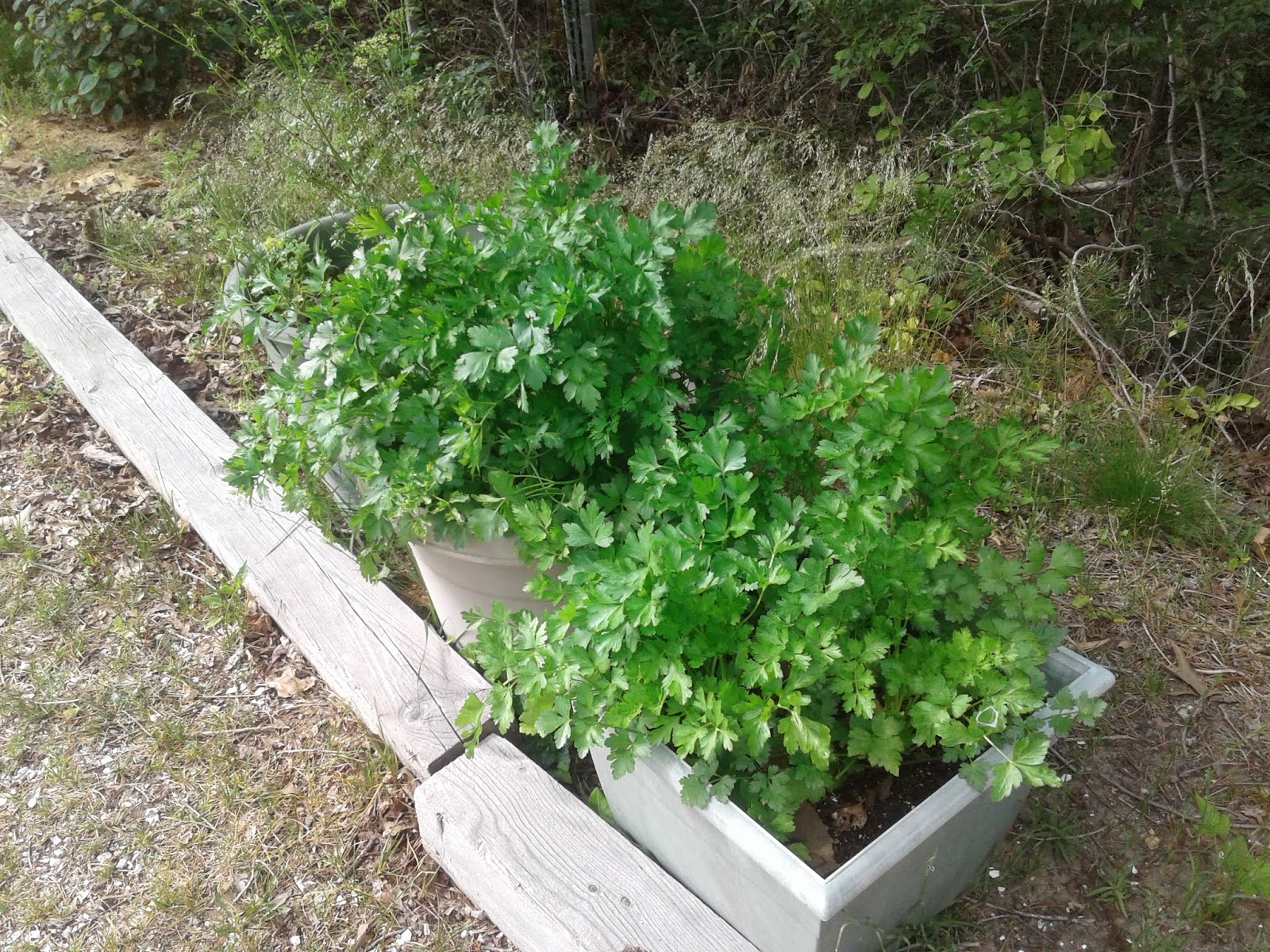
My fingernails are permanently stained from weeding, and Beatrice-bunny has been feasting on fresh parsley, cilantro, and Italian dandelions from my herb planters.

And when not outdoors, I’ve generally had a paintbrush in my hand—my office now wears a handsome coat of “Creamy Mushroom” and my bedroom is cool and blue in “Life at Sea.”

And then I remembered Mrs. Hurst Dancing.

Mrs.Hurst Dancing is a delightful book I mentioned here back in 2010—it’s a collection of drawings by Diana Sperling, a young lady who lived with her family at a comfortable country house in Essex in the early years of the 19th century. Di (as she was called) recorded her family’s doings between 1812 and her marriage in 1834 in a series of watercolor drawings in a charmingly naïve style, and they are suffused with good humor and charm…as well as giving us an excellent picture of life among the country gentry at this time.

And what do we see the Sperling family doing? Among other things, they redecorate…


And plant a garden…


And suddenly, 1820 doesn’t seem all that far from 2020...

What are you doing at home?

* * * * * * * * * * *

In a postscript, one other thing I’ve been doing is receiving some good news: Evergreen is a finalist in two RWA chapter contests—the NationalReaders’ Choice Awards and the Prism Awards. More news soon!


Tuesday, August 28, 2018

Blast from the Past: Lawn Ornaments, Garden Furniture, and Hermits

It's a busy couple of weeks here in NineteenTeen East, what with winding down the summer and helping assorted offspring launch new ventures for the fall. So to follow up on Regina's bothy boys (and my upcoming posts on the very picturesque Iceland), here is a revisit with The Picturesque Hermit. Both Regina and I will be taking next week off to enjoy the last gasp of summer, and are looking forward to regular posting as September gathers up steam. Look for a new report from Carriage & Driver on the latest model year vehicles, continuing eye candy fashion posts, and more!


As our 19th century young lady tourists meandered about the country, guidebooks in hand as they visited scenic vistas and stately homes surrounded by artfully planned “natural” landscapes, they might pause to admire a grotto here, a ruined temple there, an obelisk raised on an artificial hill…or they might stop to check out the resident hermit.

Yes, really.

Just as the wealthy landowners of the 18th century rebuilt their houses into magnificent country seats, so they hired landscape gardeners to design what was really an outdoor set of “rooms”. All those fake ruins and follies and grottoes and medieval herb gardens and Chinese bridges and sylvan groves and statue gardens were the outdoor equivalent of the libraries, music rooms, dining rooms, drawing rooms, and salons indoors—spaces made to impress, to inspire admiration. The outdoor features, beside being “picturesque”, also carried picturesque meanings: a ruined temple symbolized man’s creations overtaken by the forces of nature, for example. And if a ruined temple or nymph’s grotto was “interesting”, how much more so would be if it contained a resident?

But since authentic nymphs were not always easy to find, some wealthy landowners built hermitages—picturesque (of course) dwellings which would be occupied by hermits. And just as ruins had a meaning, so too did hermitages--they symbolized the idea of man's return to nature.

Hermitages ranged from the very rustic--a single room, perhaps made out of wattle and thatch woven into the roots of an overturned tree--to the rather grand--a temple or miniature cathedral (the image above is of the hermitage at Frogmore, from an 1823 issue of Ackermann's Repository). The hermits themselves differed as well. Some were men (sorry, no female hermits--just think of the scandal!) genuinely interested in living a secluded, humble life dedicated to work and prayer…while others were cheerful types willing to appear suitably ragged and “natural” in order to entertain his lordship’s guests out for a stroll in the grounds.

Some landowners had very specific ideas on how their hermits should behave, demanding their potential hermits sign contracts stating that they weren't to speak, or to cut their hair or toenails. Others were more relaxed and invited their resident hermits to mingle with guests as a form of rustic entertainment.

So what do you think? Is there a spare garden shed in your yard? Why not be 19th century and install a hermit in it?

Friday, August 24, 2018

Blast from the Past: Bothy Boys

I'm heading off to celebrate my 30th wedding anniversary with my dear husband. No Iceland for us, alas, but if I see something lovely, I will bring back pictures. In the meantime, enjoy this post from 2015.

What lives in a dark hole in the garden, coming out to till the soil and tend the plants?  No, I’m not talking about gnomes or hobbits.  I’m talking about bothy boys.

Bothy boys appear to be a mid- to late-nineteenth century phenomena in England.  Those wealthy families with extensive gardens often required a herd of gardeners to tend things.  I hadn’t thought about the fact that some garden tasks, like protecting spring plants from a sudden frost or maintaining greenhouses before the widespread use of electricity, were twenty-four-hour efforts.  Particularly on a massive estate, sending your garden workers home to the nearest village between shifts simply wasn’t feasible.

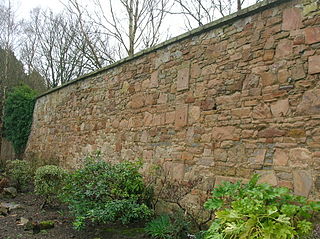
While the head gardener might have his own quarters on the estate, the under gardeners, journeymen, and apprentices were sometimes housed in bothys. A bothy is a small house of sorts, with an emphasis on the sorts.  The term is used for waystations on Scottish trails.  But on the great estates, bothys served as home to as many as a dozen workers.  Some bothys were no more than a dirt cellar carved out of a hillside with piles of blankets for bedding.  Upscale bothys were made of stone or brick and boasted dormitory-style living with a sitting room. The picture at top isn’t actually a bothy--I couldn’t find a royalty-free picture, alas.

The “boys” who lived in the bothy were not always boys--workers ranged from their teens to their early thirties.  They worked hard all day and sometimes into the night, depending on the time of year and needs of the gardens. The best houses provided instructors one night a week to teach the fellows enough botany to care for the plants, enough Latin to recognize the proper names, and enough drawing to sketch plan, placements, and the occasional odd specimen.

Produce from the garden appears to have been part of their wages, and they used it barter for other things, like meat for the table and eggs and cream from the local farmer. The universal feeling seems to be that these fellows had better things to do than cook for themselves; the better estates had a woman come in to clean once a week and cook once a day. Romantic that I am, I was already planning story ideas about a plucky Irish cook and a strapping bothy boy. But then I read that the position of bothy cook was generally given to an elderly female servant who was considered past her prime.

I bet she still kept those bothy boys in line.

For more on bothys, check out this excellent treatise and the pictures herehere, and here.

Friday, June 1, 2018

Cool 19th Century Places to Visit: Lakewold Gardens

This is closer to the 20th century than the 19th, but I recently had the pleasure of visiting this charming gem, and I thought you’d find it interesting.

In the late 1800s and early 1900s, the area around Lakewood, Washington, was considered a “retreat” for city dwellers in Tacoma and Seattle because of the many lakes. In 1908, avid gardener Emma Alexander bought a 5-acre plot of land along the shore of Gravelly Lake. She started building a summer cottage, with a garden around it using many native plants. After her son took over the property in 1918, he added an adjacent 5 acres. During his ownership, he also built a finer house and enlarged the gardens.

The estate passed through other hands before being purchased by George Corydon and Eulalie Wagner. The wealthy Corydon had his hand in lumber, investments, and coal, while his wife adored gardening. It was Eulalie who had the current house built along Palladian lines. The story goes, she wanted pink stone for the exterior and sent all the way to Tennessee for it. When it arrived, she promptly returned it because it wasn’t pink enough.

Eulalie also hired Thomas Church, a renowned landscape architect, to come redesign the gardens. He returned over the course of several summers to achieve her dream.

She and her husband entertained lavishly, with friends and family, including hosting weddings for their children. As the wife of a lumber executive, my grandmother remembered being invited to Christmas parties at Lakewold Gardens. I was struck by the many nineteenth century touches, like this sweeping staircase and black-and-white marble floors.


And silk wall coverings that date from the nineteenth century.


I thought the library particularly Regencyesque.


In 1987, Eulalie donated the house and gardens to a non-profit organization, asking that the gardens be maintained and opened to the public.

Lakewold Gardens is located at 12317 Gravelly Lake Drive SW. The gardens are open year-round, though closed a few holidays. Check the website at http://lakewoldgardens.org/ for details. The video below was created to celebrate all that Lakewold offers. I guarantee the place will grow on you. 😊


Friday, May 20, 2016

Nineteenth Century Wonder-Plant: Lovely Lavender

What do Sequim, Washington; Lullingstone, England; and Provence, France, have in common? Something that no nineteenth century lady, and many gentlemen, would be without.

Lavender.

Lavender is thought to have originated in India or the Middle East. Called spikenard or nard, it was known in Biblical times. The Romans considered it an herb and used it in or on just about everything. Sometime during the Dark Ages, monks began cultivating it in England. The pilgrims are credited with bringing it to America.

I will admit to being fond of the little purple flowers (although the plant just getting ready to bloom in my garden is white), but lavender has a surprising utility. Just consider some of the ways it was used in the nineteenth century:

  • Distilled with water as a light astringent (lavender water, anyone?) or to help laryngitis
  • Combined with other scents for perfumes and lotions
  • Powered into smelling salts
  • Applied as a poultice to bites or stings
  • Used with hot chocolate to put your beloved in the mood
  • As a flavor for snuff
  • Included in herbal tea
  • As an ingredient for baking.
Perhaps my favorite use for lavender, however, is in a lavender wand, which is creating by bending the flowered end of a lavender stalk into the center and then weaving ribbon to close it up. My dear husband gave me one for one of our anniversaries, and I take it out and inhale deeply from time to time. The scent never ceases to relax me.

The beribboned devices were not only used to waft away sour smells but could be found in Victorian cupboards to keep bugs out of stored clothing and blankets. And they were quite right, for lavender actually does have insecticidal properties!

Want to make one of your own? Follow directions here.

So, what's your favorite use for lavender?

Friday, April 8, 2016

Tiptoeing Through the Tulips

The northern part of Washington State, between the Cascades and Puget Sound, is famous for flower fields. Every spring, thousands trek to see the daffodils and tulips stretching for acres under the watchful presence of Mt. Baker. Making that journey has long been on my bucket list, so I was delighted to have a chance to spend part of an afternoon tiptoeing through the tulips recently with Regency author Donna Hatch.

Tulips, however, would have been no strangers to the ladies and gentlemen of the nineteenth century. Imported from the Ottoman Empire to Holland in the sixteenth century, the flower was an immediate hit. In fact, a frenzy for the bulbs, called Tulip Mania, is credited with creating the first economic bubble. Tulips became so popular that the bulbs were used as a kind of currency, and those who planted tulips frequently found their gardens raided. (Tulip pirates, anyone?) According to an 1841 book by Charles Mackay about that time, as many as 12 acres of land was traded for one Semper Augustus bulb (the red and white flower at the left).

Although the tulip was not imported to the United States until the mid-1800s, by the early 1800s, tulips could be found in every English garden of any note and were appearing in paintings, as motifs on ceramics and architecture, and even in ladies costumes. In the language of flowers, a tulip means fame. Certainly the term became slang for a gentleman who had an overly refined taste in clothing.

But the English tulip flowers quickly distinguished themselves from their Dutch counterparts. Flames or feathers of color striped the blossoms. In later years, these patterns were attributed to Tulip Breaking Virus, but at the time such blooms were highly prized as rarities. English Florists’ Tulips, as they were called, were grown to specific standards, and fanciers vied for raising the perfect plants. Tulip societies popped up in many major towns, and there was even a Royal National Tulip Society. Sadly, only the Wakefield and North of England Tulip Society remains.

But you can come my way and tiptoe through the tulips instead.

And you can make sure to come back next week, when Marissa will unveil something even better than a striped tulip: a new book. Squee!

Friday, March 18, 2016

Two Delightful Signs of Spring in Regency England

Are you seeing the signs of spring where you are? Here, daffodils and crocuses are blooming (even if the wild bunnies are eating the latter before they can bud). Tulips are poking up, my camellia has the loveliest pink blossoms, and the forsythia is a blaze of yellow. But when I was in England a few years ago, I noticed a two different signs of spring than I am used to in the Pacific Northwest. And they would have been seen in the Regency as well.

1.      Daffodils. Yes, I have daffodils in my flower bed, but in England it’s common to see them naturalized, raising their golden heads from every grassy nook and across wide fields. They certainly inspired the poet, William Wordsworth, who wrote about them from the Lakes District in 1807.

I wandered lonely as a cloud
That floats on high o'er vales and hills,
When all at once I saw a crowd,
A host, of golden daffodils;
Beside the lake, beneath the trees,
Fluttering and dancing in the breeze.
 Continuous as the stars that shine
And twinkle on the milky way,
They stretched in never-ending line
Along the margin of a bay:
Ten thousand saw I at a glance,
Tossing their heads in sprightly dance.

2.     March hares. Alice’s Adventures in Wonderland, anyone? Even though that book by Lewis Carroll was first published in 1865, young lords and ladies in Regency England would have heard the saying, “Mad as a March hare.” European hares, or brown hares as they are often called in England, do appear a bit mad this time of year as they hop about during mating rituals. With a top speed of 45 miles an hour, they are England’s fastest land animal. Apparently, the lady uses her back legs to force away overly amorous gentlemen. Though approaching endangerment today, they were far more numerous in the 1800s. Even when they aren’t mating, these creatures have been known to jump hedgerows— forwards and backwards! Now, that’s a sign to watch for!

Any interesting signs of spring in your area?

Friday, February 26, 2016

The Many Uses of the Wonderful Raspberry

Pfft!

Sorry, couldn’t resist. I did not mean the sort of raspberry that involves sticking your tongue out of your mouth and making rude noises. I mean the plant and its heavenly berries. You see, raspberries are by far my favorite food. I am even now waiting for 13 plants (6 red summer-bearing, 6 red fall-bearing, and 1 golden raspberry), to arrive from a fine nursery near the slopes of Mt. Rainier. And my dear husband has created the perfect patch in which to put them. I can hardly wait. So, when I stumbled across a section in La Belle Assemblée about raspberries, I couldn’t wait to share that with you either!


The author of the article in the October 1810 edition of that famous ladies’ magazine rhapsodizes about raspberries almost as readily as I do.

“This . . . fruit was well known to the ancients, from whom it received the name of Rubus, either from the redness of the twigs of the parent plant, or from the colour of its juice, which so often stained the taper fingers of the Roman maidens, as it does even now with our fair countrywomen, who are not ashamed to leave the library of science for the humbler studies of the confectionary or still-room. In the latter, they may learn by practice how to please a husband’s taste, even in the gratifications of the palate.”

Yes, well, I didn’t start eating raspberries for my husband’s sake. It’s rather the other way around at my house.

“Its essential character is too minute to require description where the fruit itself is so well known; but we must not forget to mention that of the general genus, there are no less than thirty-two varieties, comprising every species of the  Bramble as well as of the Raspberry.”

Thirty-two varieties? I knew there was a reason I loved England!

“Amongst us the old name of Raspis, or Raspibsberry; in some parts of England it is called the Hindeberry, and also Framboise, from the French. It is believed to be indigenous with us, as it is a native of many parts of Europe, being found not only in woods and hedges, but also in moist situations, and even in rocky places.”

Interesting. The raspberries I have known do not like moist places. They hate getting their feet wet, which worries me a little here in Western Washington. That’s one of the reasons I wanted stock from the area.

“It is needless to expatiate on the estimation in which it is held when prepared as a sweet-meat; we may, however, with propriety describe it when ripe as a fruit of the most fragrant kind, as subacid and cooling, allaying thirst and heat, and promoting the natural habits in common with other summer fruits.”

Now we’re talking! In fact, the author goes on to list several other interesting uses for raspberries in early nineteenth century England:

  • As a syrup approved for children by the College of Physicians, with instructions on its use in the Pharmacopeia
  • As a way to remove tartar from teeth
  • As a rather potent and rare wine
  • As a dye (from the twigs) to turn wool, silk, and mohair black
  • As food (the leaves) for silkworms when mulberry leaves cannot be found.
Even in nineteenth century England, they were considered a wonder-fruit!


Friday, May 22, 2015

Boys of the Bothy

What lives in a dark hole in the garden, coming out to till the soil and tend the plants?  No, I’m not talking about gnomes or hobbits.  I’m talking about bothy boys.

Bothy boys appear to be a mid- to late-nineteenth century phenomena in England.  Those wealthy families with extensive gardens often required a herd of gardeners to tend things.  I hadn’t thought about the fact that some garden tasks, like protecting spring plants from a sudden frost or maintaining greenhouses before the widespread use of electricity, were twenty-four-hour efforts.  Particularly on a massive estate, sending your garden workers home to the nearest village between shifts simply wasn’t feasible.

While the head gardener might have his own quarters on the estate, the under gardeners, journeymen, and apprentices were sometimes housed in bothys. A bothy is a small house of sorts, with an emphasis on the sorts.  The term is used for waystations on Scottish trails.  But on the great estates, bothys served as home to as many as a dozen workers.  Some bothys were no more than a dirt cellar carved out of a hillside with piles of blankets for bedding.  Upscale bothys were made of stone or brick and boasted dormitory-style living with a sitting room. The picture at top isn’t actually a bothy--I couldn’t find a royalty-free picture, alas.

The “boys” who lived in the bothy were not always boys--workers ranged from their teens to their early thirties.  They worked hard all day and sometimes into the night, depending on the time of year and needs of the gardens. The best houses provided instructors one night a week to teach the fellows enough botany to care for the plants, enough Latin to recognize the proper names, and enough drawing to sketch plan, placements, and the occasional odd specimen.

Produce from the garden appears to have been part of their wages, and they used it barter for other things, like meat for the table and eggs and cream from the local farmer. The universal feeling seems to be that these fellows had better things to do than cook for themselves; the better estates had a woman come in to clean once a week and cook once a day. Romantic that I am, I was already planning story ideas about a plucky Irish cook and a strapping bothy boy. But then I read that the position of bothy cook was generally given to an elderly female servant who was considered past her prime.

I bet she still kept those bothy boys in line.

For more on bothys, check out this excellent treatise and the pictures here, here, and here.

Friday, May 1, 2015

May Flowers on May Day

Happy May Day!  Though not a holiday much celebrated in either England or America in the nineteenth century, there were still those hardy souls who clung to the old ways and picked flowers, danced around the May Pole, and handed bouquets to friends and family on May 1.  So, dear friends, here are some flowers I “picked” just for you, courtesy of Hampton Court gardens in England:


And I couldn't resist throwing in this fellow for good measure.


May your May Day be merry!

Tuesday, September 30, 2014

Girls and World War I, Part 3: Getting Down and Dirty (in the Garden)

With the clarion call to American women to save food at home so that the starving of Europe and the troops fighting the Kaiser could be fed, 1917 could be called the year of the canning jar...sort of.

It started in the spring. American women were exhorted to plant gardens and preserve their crops, and by July, the women’s magazines blossomed with advice: July’s McCall’s article “Uncle Sam’s Kitchen Brigade” gave a detailed list of how each type of garden bounty could be canned, both fruit (apricots, plums, berries, and cherries) and vegetables (bean, peppers, asparagus, cabbage spinach, cauliflower, carrots, and beets).

The Independent featured an article on dehydrating foods in June as did The Ladies’ World Magazine in August which suggested dehydrating foods--including leafy greens like spinach-- to preserve them (as the lady above is doing, with wire mesh trays and a house fan!) for a very practical reason: because of the success of the canning campaign, there was a national shortage of canning jars! The Ladies’ Home Journal included an article about “the new containers”, primarily different types of coated paper--the forerunner of our paper milk and juice cartons today.


In addition to all the encouragement
to can, preserve, and dry, American women were also encouraged to change the way their families ate. Based on the number of articles and recipes published about salads this summer (in Women’s World and The Modern Priscilla in particular), I have to wonder if anyone actually ate them before 1917.  The salad was a somewhat different creature from today’s greens and chopped veggies: it tended more to be a collection of foods mixed together and served cold, thereby saving cooking fuel and using up not only the garden’s bounty but also anything else that happened to be lurking in the icebox.  How can you resist a tasty Baked Bean salad, presented by such a fetching young lady?