

Showing posts with label cooking. Show all posts

Tuesday, November 21, 2023

Retro Blast: Happy Thanksgiving!!

I can’t say it any better than I did back in 2011—Regina and I wish our American readers the very happiest of Thanksgivings. I’m still making that cranberry ginger sauce as posted below (which I’ll have to go do as soon as I post this—it does best if it has a day or two in the fridge before serving) as well as another family favorite Thanksgiving side dish—garlic and rosemary marinated mushrooms.

And speaking of recipes, Book View Café’s BVC Eats: Recipes from the Authors of Book View Café is now available in print as well as in e-book form from all the usual suspects, as well as directly from Book View Cafe.

* * * * *

Although Thanksgiving was not a holiday that would have been celebrated by the 19th century British young ladies of our books, Regina and I certainly celebrate it…and one of the things we’re most thankful for is you, our readers. You’re truly what keeps us blogging every week…so thank you!

Now, just because Thanksgiving isn’t a 19th century British holiday doesn’t mean we can’t celebrate it in our own way…so Regina and I would like to offer you some recipes with a 19th century flavor that might do well at your own Thanksgiving feast.

This first one is from Beeton’s Book of Household Management, first published in England in 1861 by Mrs. Isabella Beeton. Remember that name…you’ll be hearing more about her in the coming weeks. This sounds like a terrific way to use up leftover Thanksgiving mashed potatoes:

Potato Rissoles

Mashed potatoes
Salt and pepper to taste
Minced parsley
Egg (number depends on how much mashed potatoes is available)
Bread crumbs (likewise)

Beat the egg in a shallow dish. Set bread crumbs aside in another shallowdish or plate. Add a seasoning of pepper and salt and a little minced parsley to the mashed potatoes. Roll the potatoes into small balls, dip them into the egg and then cover them in bread crumbs. Fry in hot oil or butter for about 10 minutes. Drain and dish them on a napkin, then serve. Note.-The flavour of these rissoles may be very much increased by adding finely-minced tongue or ham, or even chopped onions, when these are liked.

And here’s a recipe from Queen Victoria’s chief chef, Charles Francatelli:

French Beans with fine herbs

Pick over, trim, and wash string beans, and boil in lightly salted water until tender. Put two pats of butter into a stewpan with a tablespoonful of chopped parsley and also two shallots finely chopped, a little nutmeg, mignionette pepper [a mix of black and white pepper and coriander] and salt, and the juice of a lemon; simmer this over a stove-fire until melted, and then add the beans, tossing the whole together, and serve.

This last recipe isn’t 19th century, but it makes its appearance every year on my Thanksgiving table:

Pickled Ginger Cranberry Sauce (from Cooks Country Magazine, October/November 2008)

Pulse one 16 ounce can cranberry sauce (I prefer whole berry myself—gives a better texture), 2 tablespoons drained pickled ginger, and 1 teaspoon wasabi powder or dry mustard in foor processor until combined. Refrigerate, covered, for 30 minutes. Serve chilled or at room temperature.

Have a pleasant Thanksgiving, full of good food and good company!

Tuesday, November 7, 2023

Now We're Cookin'!

We certainly are! I’m delighted to announce that Book View Café’s first cookbook, BVC Eats: Recipes from the Authors of Book View Café, which I co-edited with fellow BVC author Shannon Page, is out today.

So why did a bunch of fantasy and science fiction and mystery and romance writers decide to publish a cookbook? Several reason, actually...the main one being that most of us love to cook. After all, cooking is as much a creative endeavor as writing is, and writers tend to have an itch to create more than just stories: we knit, sew, quilt, carve, paint, draw…and cook. Over the years we’ve published dozens of recipes on our blog, and as a way to commemorate our fifteenth year in business, a cookbook seemed like a fun way to celebrate.

The fun part is that this isn’t just a collection of recipes. Each contributor has prefaced their recipes by an origin story, the inspiration for the recipe, or a memorable occasion at which they served it. It’s as enjoyable to read as it is to cook from, whether you wish to make cocktails and hors d’oeuvres, a Sunday brunch, an elegant dinner, a pig roast, or what's being served on Mars at a well-known girls’ school.

BVC Eats is releasing exclusively from Book View Café until November 20, when it will be available from all the usual online bookstores and in print. We hope you’ll check it out, because in this case, good eating is also good eating.


Friday, July 31, 2020

Food, Glorious Food, Mount Rainier Edition

I’m working on my third book for Revell, set on and around what would become Mount Rainier National Park. This story has the latest date of the American Wonders Collection so far—1893. I shared how little and how oddly the early explorers of the Grand Canyon ate, as I discovered while researching for A Distance Too Grand (October 2019), which is set in 1871. You would think more than 20 years later, things would be better.

Not so much!

Mount Rainier was a tantalizing figure on the southeast horizon for many in the burgeoning cities of Tacoma and Seattle, not to mention the state capital of Olympia to the west of the mountain. Some of those who decided to venture onto its icy slopes seemed to be a little spare on the food. Jerked venison is frequently mentioned, as is coffee. But some of the men who climbed claimed to have only taken flour and coffee. At least one account describes each man “eating” a half cup of flour as food each day. I searched and searched to find what they added to it and how they cooked it. It appears they didn’t.

Shudders.

At least others came better fortified. Philemon Van Trump, who made the first successful ascent in 1870 and returned several times over the years, brought such staples as flour, bacon, coffee, canned Boston baked beans, jerked venison, oatmeal, potatoes, butter, sugar, condensed milk, and canned apricots, peaches, and pears. He did, however, have a pack horse as far as Paradise, a little more than a third of the way to the top. Little of that made it to the summit.

Some of the items he took surprised and intrigued me:

  • English breakfast tea. I hadn’t known it was named that then, but that was what he wrote in his own report of the climb.
  • Codfish balls. Apparently canned.
  • Potted tongue. Also canned.
  • Liebig’s extract of beef. This was apparently a thick, dark paste. It may have been used like we use bouillon cubes today, as there are records of “beef soup” being served in the crater by those spending the night among the steam vents.

There was one other item that was mentioned on a number of visitors to the mountain, and it’s no stranger to campfire cookery today.

Chocolate.

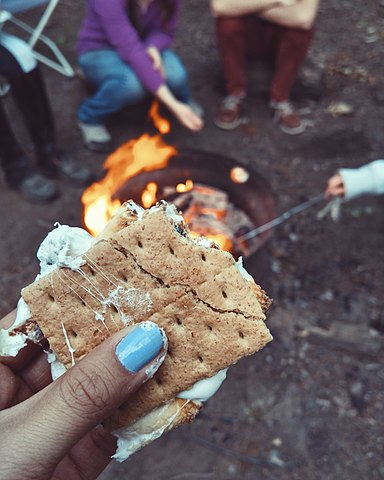
S’mores, anyone?

Tuesday, November 19, 2019

Making My List, Checking It Twice...


My shopping list for Thanksgiving dinner, that is. I can’t even begin to think about that holiday beginning with “C” that is rolling toward us like a freight train with no brakes...

But I digress.

Of course I’m planning on the usual turkey and gravy. Green beans with almonds are a must. We do chopped potatoes tossed in oil and herbs and garlic and roasted in a pan on the grill rather than mashed potatoes, a very small dish of squash cooked with butter and onion salt rather than anything sweet, and always a Waldorf salad because we loooves us some Waldorf Salad. I may experiment with a savory bread pudding (Parmesan/garlic) instead of stuffing this year, just because it sounds like a neat idea. Desserts are variable; we’re not a big sweets-eating family, and are usually happy with peppermint stick ice cream with hot fudge sauce and a pie or two (apple or pumpkin with coffee ice cream because this is New England and we eat coffee ice cream by the half-gallon.)

But there’s one dessert I simply must have every year. It’s light and just sweet enough to be satisfying without being cloying. It doesn’t even have a name; I adapted it from a recipe my favorite aunt used to make when she was the family’s Designated Thanksgiving Hostess. She made hers in a pie shell; I’ve ditched the shell and serve it instead in a pretty crystal bowl. I’ve fiddled with the proportions of ingredients and added the ginger because ginger and pineapple go really well together. And every year, I look forward to making (and eating) it.

Pineapple Floof

·        2 eight-ounce packages of Neufchatel (reduced fat cream cheese)
·        ¼ cup sugar
·        2 cups heavy cream, whipped
·        2  large (not the soup-can size) cans crushed pineapple
·        At least ½ teaspoon ground ginger (I usually use more, because I lurve me some ginger, but you might not be so enamored of it)

Leave Neufchatel out on the counter an hour or so to soften;  at the same time, put the (preferably steel) bowl you’ll be whipping the cream in into the freezer to chill, along with the beaters—a chilled bowl helps the cream whip up better and keeps it from turning into butter. Dump the pineapple into a colander to drain.

When the Neufchatel is softened, beat the sugar into it till well blended. Blend the drained pineapple and ginger into the cheese mixture. Beat the heavy cream in your chilled bowl till it looks like huge fluffy cumulus clouds on a summer day, then fold it into the pineapple gloop till all is blended together. Pour it into a serving bowl or into individual dishes, dust the top with more ginger because it’s pretty, and chill in the fridge for a couple of hours before serving.

Just lovely.

So what Thanksgiving dish can’t you live without? Want to share the recipe?

Tuesday, December 18, 2018

Popping in for Popovers

I’m drawing up my grocery shopping list for my family’s Christmas dinner (it’s just a week away—eek!) We always have a roast beef at Christmas, served with the traditional horseradish sauce. Queen Victoria evidently enjoyed a good piece of roast beef herself on December 25. But because I live in New England, not the old one, our roast beef is eaten with those lovely bubbles of bready goodness, popovers.

For those who haven’t had the good fortune to be acquainted with popovers, they are muffin-shaped, mostly hollow rolls made from a thin, eggy batter; they are baked in either muffin cups or in special high-sided popover pans. Cooked in a very hot oven, the thin, liquid batter releases lots of steam, which creates the hollow effect, rather like a soufflé. When done, you slather popovers with butter and enjoy...honestly, given the choice I’d rather skip dessert on Christmas and just eat more popovers.

The origin of the popover is in Yorkshire pudding, the traditional accompaniment to a beef roast, which follows a similar recipe but is cooked in a pan (originally set under the spit on which a roast was cooking, so that the dripping juices from the roast fell into the pan of batter, enriching it.) For some reason, cooks in the new world came up with the idea of cooking the batter in individual, small servings and using butter rather than meat drippings...and the rest is delicious culinary history.

Being huge popover fans in my family, we have the special popover pans, but 5 oz. Pyrex custard cups will work as well.

POPOVERS 😍

Set your oven rack to the middle of the oven, because these babies rise.

Ingredients:

1 ½ cups all-purpose flour
1 ½ cups milk
½ teaspoon salt
3 eggs
2 tablespoons melted butter

Generously butter a dozen or so small Pyrex custard cups; set them in a baking pan, which makes the whole thing easier to handle. Whisk together all the above ingredients, preferably in a mixing bowl with a spout. The batter should be thin—rather the consistency of heavy cream—and don’t worry if it’s a bit lumpy. Pour the batter into the prepared cups till they’re about half to two-thirds full—don’t fill them completely or they won’t puff. Put them in a cold oven and turn it on, setting the temperature to 425°. Set the timer for 45 minutes, and go do something else to take your mind off them, because you can’t peek—if you open the door, kittens will sob, puppies will turn their backs on you, flowers will fail to bloom...and your lovely popovers might collapse. Only after 45 minutes can you check on them, to make sure they’re deliciously golden brown; depending on your oven, a few more minutes might be necessary. When done, remove them immediately from their cups, and serve at once with butter.

If you feel like gilding the lily, finely grated Parmesan cheese and/or herbs can be added to the batter. Or you can serve them with herbed garlic butter—but I digress... 😋

Enjoy...and I hope your year-end celebrations are warm and wonderful. See you next year!

Friday, November 16, 2018

Cooking Vegetables in Nineteenth Century Britain? A-Maizing!


Ah, yes, it is nearly Thanksgiving here in the States, and thoughts turn to the meal about to be served. I am the most fortunate of women—my husband chooses, purchases, thaws, dresses, cooks, and carves the turkey. It generally looks like something from an ad for the perfect Thanksgiving. The grain and vegetables of the meal fall to me or anyone I can wrangle into helping. (I am also blessed with good friends and family members who cook.) I recently turned to that expert in household management, Isabella Beeton to see what she had to say about vegetables in her 1859 cookbook. The results, were, ahem, a-maizing. 


Mashed potatoes are a classic with turkey. Mrs. Beeton notes that different potatoes have different flavors. The names tickled me: the Shaw, Kidney, Bread-fruit, Tartan, Red-apple, and Lancashire Pink. But though she provides a recipe for mashed potatoes and even mashed turnips, she had a strong opinion about “vegetables reduced to a puree.”
Persons in the flower of youth, having healthy stomachs, and leading active lives, may eat all sorts of vegetables, without inconvenience, save, of course, in excess. The digestive functions possess great energy during the period of youth: the body, to develop itself, needs nourishment. Physical exercise gives an appetite, which it is necessary to satisfy, and vegetables cannot resist the vigorous action of the gastric organs. As old proverb says, ‘At twenty, one can digest iron.' [Note from Regina—please do not attempt to digest iron.] But for aged persons, the sedentary, or the delicate, it is quite otherwise. Then the gastric power has considerably diminished, the digestive organs have lost their energy, the process of digestion is consequently slower, and the least excess at table is followed by derangement of the stomach for several days. Those who generally digest vegetables with difficulty, should eat them reduced to a pulp or purée, that is to say, with their skins and tough fibres removed. Subjected to this process, vegetables which, when entire, would create flatulence and wind, are then comparatively harmless.” 
Word to the wise!

Corn on the cob is generally past its prime for most of us in the U.S. around Thanksgiving, but her advice on how to cook it was fascinating. I had no idea that, even in 1859, the word "corn" wasn't used in Britain, and the plant itself was rarely grown!

BOILED INDIAN WHEAT or MAIZE.
INGREDIENTS.—The ears of young and green Indian wheat; to every 1/2 gallon of water allow 1 heaped tablespoonful of salt.
Mode.—This vegetable, which makes one of the most delicious dishes brought to table, is unfortunately very rarely seen in Britain; and we wonder that, in the gardens of the wealthy, it is not invariably cultivated. Our sun, it is true, possesses hardly power sufficient to ripen maize; but, with well-prepared ground, and in a favourable position, it might be sufficiently advanced by the beginning of autumn to serve as a vegetable. The outside sheath being taken off and the waving fibres removed, let the ears be placed in boiling water, where they should remain for about 25 minutes (a longer time may be necessary for larger ears than ordinary); and, when sufficiently boiled and well drained, they may be sent to table whole, and with a piece of toast underneath them. Melted butter should be served with them.
Note.—William Cobbett, the English radical writer and politician, was a great cultivator and admirer of maize, and constantly ate it as a vegetable, boiled. We believe he printed a special recipe for it, but we have been unable to lay our hands on it. Mr. Buchanan, the present president of the United States, was in the habit, when ambassador here, of receiving a supply of Indian corn from America in hermetically-sealed cases; and the publisher of this work remembers, with considerable satisfaction, his introduction to a dish of this vegetable, when in America. He found it to combine the excellences of the young green pea and the finest asparagus; but he felt at first slightly awkward in holding the large ear with one hand, whilst the other had to be employed in cutting off with a knife the delicate green grains.
However you choose to celebrate, Marissa and I wish you a lovely Thanksgiving. We will be off next week, celebrating with our family and friends. We hope you can do the same.

Tuesday, February 11, 2014

Baking, 1917 Style

As we learned last week, with the entry of the US into World War I, voluntary food conservation came into being in order to not only provide food for American troops heading over to fight in Europe, but also relieve severe food shortages for European civilians. The Food Administration encouraged homemakers to be frugal and to do without; the women’s magazines jumped in and began to publish recipes that reflected the new frugality.

And so this week, I present...recipes! I haven’t tried any of them—too busy getting ready for April (hint, hint). But I think I might try this first one some time, because....well, chocolate and potatoes? Carb heaven. It’s from a Royal Baking Powder ad in the July 1917 issue of McCall’s Magazine:

Potato Chocolate Cake
¾ cups shortening
2 cups sugar
½ cup chocolate
¾ cup milk
2 ½ cups flour
1 teaspoon vanilla
2 eggs
5 teaspoons Royal Baking Powder
¼ teaspoon nutmeg
¼ teaspoon allspice
1 cup mashed potatoes
½ teaspoon cinnamon
1 cup chopped nuts
½ teaspoon cloves

Cream shortening, add sugar, melted chocolate and mashed potatoes, mix well. Beat eggs separately and add yolks to the first mixture. Add milk and dry ingredients which have been sifted together. Beat well. Add nuts, vanilla, and beaten whites of eggs. Mix thoroughly and bake in greased loaf tin in moderate oven one hour. (The old method called for four eggs)


This one (from a Royal Baking Powder ad in June 1917’s McCall’s) is less tempting—I’m not a fruitcake fan—but I just love the recipe name. Makes you jump up and say, “yum!”, doesn’t it?

Or not.

Eggless, Milkless, Butterless Cake
1 cup brown sugar
1 ¼ cups water
1 cup seedless raisins
2 ounces citron, cut fine
1/3 cup shortening
1 teaspoon nutmeg
1 teaspoon cinnamon
½ teaspoon salt
2 cups flour
5 teaspoons Royal Baking Powder

Boil sugar, water, fruit, shortening, salt, and spices together in sauce 3 minutes. When cool, add flour and baking power which have been sifted together. Mix well, Bake in loaf pan about 45 minutes. (The old method called for three eggs)

And finally, from an article in September 1917’s The Delineator entitled “More French Recipes”, is a recipe from a B. Simmen of Ruschlekom, Switzerland:

War Cake
1 cupful granulated sugar
2 teaspoonfuls cocoa
2 cupfuls milk
2 cupfuls flour
1 tablespoonful melted grape jelly
1 egg
1 or 2 teaspoonfuls powdered cinnamon
1 teaspoonful baking soda
Nuts

Take the granulated sugar and add to it the egg. Then beat together and add the cocoa, cinnamon, and the fresh milk or cream. Add the milk or cream very slowly. Mix in the flour. Dissolve the bicarbonate of soda in one tablespoonful of melted grape jelly.

Butter a high baking-pan, as this dish bakes better in a high pan rather than a shallow one.

Shell some nuts and put them over your cake. This dessert is inexpensive and will keep for several days.

I rather like how the recipe’s author neglects to mention baking the cake!

Bon appétit!