Showing posts with label recipe. Show all posts

Tuesday, November 16, 2021

Listen While You Bake

It’s the time of year around here when folks start thinking about cooking, especially baking. Pumpkin pies, spice cake, oatmeal cookies, peanut butter fudge, raspberry crisp, you name it. So, in case you’re one of those so inclined, here’s a throwback to a great historic recipe from beloved author Louise M. Gouge, as well as some reading and listening to go along with it. 


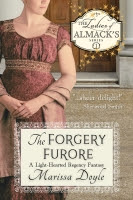
While you’re waiting for the pie to bake or the fudge to set, try It Started With a Duke: Fortune’s Brides, the Beginning, with two full novels and a novella, now available as both ebook and audiobook!

The mysterious Meredith Thorn and her cat, Fortune, opened an employment agency to help gentlewomen down on their luck. Her first assignment? Finding a governess for the young daughters of the Duke of Wey. Enjoy three warm, witty Regencies that begin the Fortune’s Brides series: Never Doubt a Duke, Never Borrow a Baronet, and Always Kiss at Christmas, Meredith’s origin story.

“I am seriously LOVING this series. Regina is hooking me from the first page, and I don’t want to set the book down until I finish the story!” – For the Love of Christian Fiction

“I highly recommend the entire series - to anyone who enjoys well written Regency romance.” – Audible listener Lil Miss Molly (used with permission)

Smashwords 

Amazon (affiliate link)

Apple Books 

Barnes and Noble  

Kobo

Audible 

Apple audio  

Scrumptious!

Tuesday, November 17, 2020

A Parsnip in a Pear Tree?

I was recently introduced to the idea of parsnips as holiday food. I thought it a fine idea, even though I don’t think I’ve ever eaten a parsnip. But I discovered that Mrs. Beeton had a great deal to say of them in her Book of Household Management, which we’ve discussed before

According to Mrs. Beeton, parsnips are native in Britain and in season from November through June. They could be found growing wild in meadows and along the roadsides but were also cultivated. She warns that the young root is sweet and smells good, but an older root can cause vertigo and delirium. Parsnips can be used to make bread and wine as well as eaten as a vegetable. As a vegetable, they were served with salted cod and egg sauce, as an accompaniment for boiled beef, as dressing for a sheep’s head, and as garnish for boiled leg of pork.

So, courtesy of Mrs. Beeton, I give you two recipes for parsnips.

Parsnip Soup

1 lb sliced parsnips
2 oz. butter, melted
1 quart beef, vegetable, or chicken stock
Salt and cayenne to taste

Put the parsnips into the stewpan with the butter, and simmer them till quite tender. Then add nearly a pint of stock, and boil together for half an hour. Pass all through a fine strainer, and add the remainder of the stock. Season, boil, and serve immediately. Serves 4.

Boiled Parsnips

Parsnips, washed, scraped thoroughly, and black specks removed; cut into quarters if large
Water, salted at the rate of 1 heaped tablespoon of per gallon

Put parsnips into boiling water, and boil them rapidly until tender, ½ to 1 hour, depending on the size of the parsnips. Drain and serve. Serves 1 parsnip per person.

Need a little company while you’re cooking for the December holidays? Consider preordering the audiobook for Never Marry a Marquess. It’s available for preorder now and can be downloaded beginning December 8. 

Amazon 

Audible 

Happy Thanksgiving! Marissa and I will be out next week. We'll see you on Tuesday, December 1.

Tuesday, November 19, 2019

Making My List, Checking It Twice...


My shopping list for Thanksgiving dinner, that is. I can’t even begin to think about that holiday beginning with “C” that is rolling toward us like a freight train with no brakes...

But I digress.

Of course I’m planning on the usual turkey and gravy. Green beans with almonds are a must. We do chopped potatoes tossed in oil and herbs and garlic and roasted in a pan on the grill rather than mashed potatoes, a very small dish of squash cooked with butter and onion salt rather than anything sweet, and always a Waldorf salad because we loooves us some Waldorf Salad. I may experiment with a savory bread pudding (Parmesan/garlic) instead of stuffing this year, just because it sounds like a neat idea. Desserts are variable; we’re not a big sweets-eating family, and are usually happy with peppermint stick ice cream with hot fudge sauce and a pie or two (apple or pumpkin with coffee ice cream because this is New England and we eat coffee ice cream by the half-gallon.)

But there’s one dessert I simply must have every year. It’s light and just sweet enough to be satisfying without being cloying. It doesn’t even have a name; I adapted it from a recipe my favorite aunt used to make when she was the family’s Designated Thanksgiving Hostess. She made hers in a pie shell; I’ve ditched the shell and serve it instead in a pretty crystal bowl. I’ve fiddled with the proportions of ingredients and added the ginger because ginger and pineapple go really well together. And every year, I look forward to making (and eating) it.

Pineapple Floof

·        2 eight-ounce packages of Neufchatel (reduced fat cream cheese)
·        ¼ cup sugar
·        2 cups heavy cream, whipped
·        2  large (not the soup-can size) cans crushed pineapple
·        At least ½ teaspoon ground ginger (I usually use more, because I lurve me some ginger, but you might not be so enamored of it)

Leave Neufchatel out on the counter an hour or so to soften;  at the same time, put the (preferably steel) bowl you’ll be whipping the cream in into the freezer to chill, along with the beaters—a chilled bowl helps the cream whip up better and keeps it from turning into butter. Dump the pineapple into a colander to drain.

When the Neufchatel is softened, beat the sugar into it till well blended. Blend the drained pineapple and ginger into the cheese mixture. Beat the heavy cream in your chilled bowl till it looks like huge fluffy cumulus clouds on a summer day, then fold it into the pineapple gloop till all is blended together. Pour it into a serving bowl or into individual dishes, dust the top with more ginger because it’s pretty, and chill in the fridge for a couple of hours before serving.

Just lovely.

So what Thanksgiving dish can’t you live without? Want to share the recipe?

Tuesday, December 18, 2018

Popping in for Popovers

I’m drawing up my grocery shopping list for my family’s Christmas dinner (it’s just a week away—eek!) We always have a roast beef at Christmas, served with the traditional horseradish sauce. Queen Victoria evidently enjoyed a good piece of roast beef herself on December 25. But because I live in New England, not the old one, our roast beef is eaten with those lovely bubbles of bready goodness, popovers.

For those who haven’t had the good fortune to be acquainted with popovers, they are muffin-shaped, mostly hollow rolls made from a thin, eggy batter; they are baked in either muffin cups or in special high-sided popover pans. Cooked in a very hot oven, the thin, liquid batter releases lots of steam, which creates the hollow effect, rather like a soufflé. When done, you slather popovers with butter and enjoy...honestly, given the choice I’d rather skip dessert on Christmas and just eat more popovers.

The origin of the popover is in Yorkshire pudding, the traditional accompaniment to a beef roast, which follows a similar recipe but is cooked in a pan (originally set under the spit on which a roast was cooking, so that the dripping juices from the roast fell into the pan of batter, enriching it.) For some reason, cooks in the new world came up with the idea of cooking the batter in individual, small servings and using butter rather than meat drippings...and the rest is delicious culinary history.

Being huge popover fans in my family, we have the special popover pans, but 5 oz. Pyrex custard cups will work as well.

POPOVERS 😍

Set your oven rack to the middle of the oven, because these babies rise.

Ingredients:

1 ½ cups all-purpose flour
1 ½ cups milk
½ teaspoon salt
3 eggs
2 tablespoons melted butter

Generously butter a dozen or so small Pyrex custard cups; set them in a baking pan, which makes the whole thing easier to handle. Whisk together all the above ingredients, preferably in a mixing bowl with a spout. The batter should be thin—rather the consistency of heavy cream—and don’t worry if it’s a bit lumpy. Pour the batter into the prepared cups till they’re about half to two-thirds full—don’t fill them completely or they won’t puff. Put them in a cold oven and turn it on, setting the temperature to 425°. Set the timer for 45 minutes, and go do something else to take your mind off them, because you can’t peek—if you open the door, kittens will sob, puppies will turn their backs on you, flowers will fail to bloom...and your lovely popovers might collapse. Only after 45 minutes can you check on them, to make sure they’re deliciously golden brown; depending on your oven, a few more minutes might be necessary. When done, remove them immediately from their cups, and serve at once with butter.

If you feel like gilding the lily, finely grated Parmesan cheese and/or herbs can be added to the batter. Or you can serve them with herbed garlic butter—but I digress... 😋

Enjoy...and I hope your year-end celebrations are warm and wonderful. See you next year!

Friday, November 17, 2017

As Always, Thankful for You!

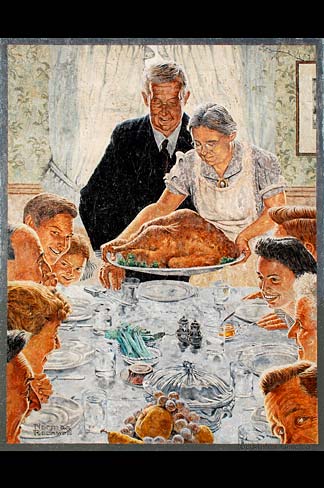
File:Norman Rockwell Mural (Marion County, Oregon scenic images) (marDA0166).jpgMarissa and I will be off next week spending time with our families, but we wanted to let you know how thankful we are for all of you. Your encouragement and support mean a lot. Thank you for reading, commenting, and sharing our work on Nineteen Teen and our books.

You may have your holiday meal planned. Mine is. Mostly. There is a debate on how to make mashed potatoes. And I’d like to try apple compote to go with the turkey.

But if you’re up for something new, here are two recipes, the first courtesy of the mother of my wonderful critique partner and the second from author Louise M. Gouge, who is a marvelous cook and a marvelous writer of Regency-set and Western romance. 

Marilynn’s Thumbprint Cookies
Ingredients:
3 sticks butter or margarine
3 cups flour
¾ cup sugar
½ tsp salt
2 cups ground nuts
Raspberry or blackberry jelly (my favorite is raspberry)
Directions:
Preheat oven to 325°F. Mix all ingredients except for the jelly. Roll the dough into tbsp-sized balls, place on cookie sheet and flatten each ball with your thumb, leaving an indentation in the middle. Drop a dollop of jelly into each indentation. Bake for 20 minutes or until slightly browned. Remove cookies from the cookie sheet and cool. Makes at least 2 dozen cookies.


Whatever you end up cooking, may you have a very happy Thanksgiving! 

Friday, November 18, 2016

Cook Thankfully This Thanksgiving

My Regency characters would never have celebrated Thanksgiving—it is an American holiday, after all. My characters in pioneer Seattle would have known of the national day, though Abraham Lincoln had proclaimed it only three years before the time their stories are set. By the era of the cowboys of Little Horn, Thanksgiving was a cherished tradition. So, Marissa and I are off next week in celebration. As a thank you for your readership, we leave you with a nineteenth century recipe, updated for today. I have cooked it. It was a little bland for my taste (and I like less spicy things), but very filling!

Macaroni and Tomatoes

Ingredients for 2-quart casserole
10 oz elbow macaroni, boiled and drained
8 oz cheddar cheese, grated
4 oz bread cubes (stuffing)
1 14.5-oz can of stewed tomatoes, excess liquid drained
1 tsp salt
½ tsp pepper
2 Tbsp butter, plus some for buttering the casserole
¼ cup milk

Heat oven to 350 degrees.
Butter the casserole and line the bottom with some of the bread cubes.
Add a layer of macaroni and sprinkled some of the grated cheese over the top.
Add a layer of stewed tomatoes and sprinkle with salt and pepper.
Add another layer of bread cubes, more macaroni and so on until the dish is nearly filled.
Crunch up the remaining bread cubes and sprinkle them over the top.
Dot with butter.
Pour milk over it all.
Bake until nicely browned, about 35 minutes.

I will also leave you with one other piece of news. Utterly Devoted, which is recommended in The Complete Idiot’s Guide to the Ultimate Reading List, has been reissued as The Unwilling Miss Watkin, book 4 in the Uncommon Courtships series. It is one of my most highly acclaimed books, featuring one of my personal favorite heroes. I am very thankful to have it available for readers once more.

Happy Thanksgiving!


Friday, November 20, 2015

Food for the Heart

We hear a lot about heart-healthy recipes, but sometimes what we need is sustenance that feeds our inner being. With Thanksgiving coming, Marissa and I wanted to share a recipe for you to enjoy. Normally, I look for nineteenth century recipes, but this year, I decided to share a family recipe for a dessert that would have been around in the nineteenth century, on both sides of the pond.

My mother makes the best apple pie, hands down. Her pie even won a ribbon years ago at what is now our state fair. The secret is the addition of lemon juice, I’m convinced. It’s a family favorite and never fails to win smiles of approval. I hope you enjoy it as well.

Ingredients
Pastry for 9” two-crust pie
1 to 2 tsp of lemon or pineapple juice
1 to 2 Tbsp flour, depending on the fruit’s juice
2/3 to ¾ cup of granulated sugar
¼ tsp nutmeg
½ tsp cinnamon
1/8 tsp salt
1 Tbsp butter, cut in small pieces
6 to 7 cups thinly sliced, pared, cored tart apples (Granny Smith were my father’s favorite)

Directions
Heat oven to 425 degrees F. Combine juice with flour, sugar, nutmeg, cinnamon, and salt. Line pie pan with one of the pastry crusts. Place half of the apples in the pie pan. Sprinkle with half of juice/sugar mixture. Top with remaining apples, heaping in center, then add the rest of the juice/sugar mixture. Dot with butter; top with remaining crust. Poke holes through crust to let steam escape. Bake 40 to 50 minutes.

Marissa and I will be off next week, celebrating Thanksgiving with family and friends. As for me, I had news that gladdened my heart this week. Would-Be Wilderness Wife has been nominated for a coveted Reviewers Choice Award from RT Book Reviews, the premiere review magazine for the romance industry. I’m hopeful that means the book touched a number of hearts. 


Happy Thanksgiving!

Tuesday, March 25, 2014

WWI Recipes That Don't Inspire Giggles

So I’ve been having fun being a tad snarky about food conservation recipes from the first World War and how some of them seem...ah, less than appetizing. I was looking through some WWI era pamphlets recently, however, and found a few recipes that (ssh!) sound as if they might not be too bad.

This might make lovely tea sandwiches on thin crustless bread, don’t you think? (from Everyday Foods in War Time by Mary Swartz Rose, 1917)

Fruit and Peanut Butter (for sandwiches)
¼ cup dates
¼ cup figs
½ cup peanut butter
½ teaspoon salt
1 ½ tablespoons lemon juice
¼ cup raisins
2 tablespoons light corn syrup

Wash figs, raisins, dates, and put through food chopper. Add salt, peanut butter, lemon juice, and corn syrup, and mix well.

Here’s a recipe for a chowder that doesn’t seem out of line to this New Englander, though we would use whole milk rather than skim (From Everyday Foods in War Time by Mary Swartz Rose, 1917)

Dried Fish Chowder
½ pound salt fish
4 cups potatoes, cut in small pieces
2 ounces salt pork
1 small onion, chopped
4 cups skim milk
4 ounces crackers

Salt codfish, smoked halibut, or other dried fish may be used in this chowder. Pick over and shred the fish, holding it under lukewarm water. Let it soak while the other ingredients of the dish are being prepared. Cut the pork into small pieces and fry it with the onion until both are a delicate brown; add the potatoes, cover with water, and cook until the potatoes are soft. Add the milk and fish and reheat. Salt, if necessary. It is well to allow the crackers to soak in the milk while the potatoes are being cooked, then remove them, and finally add to the chowder just before serving.


This one could maybe use some cinnamon and nutmeg (and raisins and walnuts might be good too), but I like that it doesn’t have added sugar--a good recipe for carb-counters. (from Best War Time Recipes by the Royal Baking Powder Company, 1918)

Sweet Potato Muffins
1 cup flour
4 teaspoons Royal Baking Powder
1 teaspoon salt
1 cup sweet potatoes (mashed)
1 egg
1 cup milk and water

Sift together flour, baking powder, and salt. Add cold sweet potatoes which have been lightly mashed or put through a ricer. Add beaten egg and liquid, mixing well. Bake in greased muffin tins in moderate oven 25 to 30 minutes.

This sounds more like a soufflé than a fondue, doesn't it? (from Everyday Foods in War Time by Mary Swartz Rose, 1917)

Cheese Fondue
1 1/3 cups hot milk
1 1/3 cups bread crumbs
1 tablespoon butter
4 eggs
1/3 pound cheese (1 1/3 cups grated or 1 cup cut in pieces)
½ teaspoon salt

Mix the milk, breadcrumbs, salt, and cheese; add the yolks thoroughly beaten; into this mixture cut and fold the whites of eggs beaten till stiff. Pour into a buttered dish and cook 30 minutes in a moderate oven. Serve at once.

Enjoy! And let us know if you try making any of them!

Tuesday, February 11, 2014

Baking, 1917 Style

As we learned last week, with the entry of the US into World War I, voluntary food conservation came into being in order to not only provide food for American troops heading over to fight in Europe, but also relieve severe food shortages for European civilians. The Food Administration encouraged homemakers to be frugal and to do without; the women’s magazines jumped in and began to publish recipes that reflected the new frugality.

And so this week, I present...recipes! I haven’t tried any of them—too busy getting ready for April (hint, hint). But I think I might try this first one some time, because....well, chocolate and potatoes? Carb heaven. It’s from a Royal Baking Powder ad in the July 1917 issue of McCall’s Magazine:

Potato Chocolate Cake
¾ cups shortening
2 cups sugar
½ cup chocolate
¾ cup milk
2 ½ cups flour
1 teaspoon vanilla
2 eggs
5 teaspoons Royal Baking Powder
¼ teaspoon nutmeg
¼ teaspoon allspice
1 cup mashed potatoes
½ teaspoon cinnamon
1 cup chopped nuts
½ teaspoon cloves

Cream shortening, add sugar, melted chocolate and mashed potatoes, mix well. Beat eggs separately and add yolks to the first mixture. Add milk and dry ingredients which have been sifted together. Beat well. Add nuts, vanilla, and beaten whites of eggs. Mix thoroughly and bake in greased loaf tin in moderate oven one hour. (The old method called for four eggs)


This one (from a Royal Baking Powder ad in June 1917’s McCall’s) is less tempting—I’m not a fruitcake fan—but I just love the recipe name. Makes you jump up and say, “yum!”, doesn’t it?

Or not.

Eggless, Milkless, Butterless Cake
1 cup brown sugar
1 ¼ cups water
1 cup seedless raisins
2 ounces citron, cut fine
1/3 cup shortening
1 teaspoon nutmeg
1 teaspoon cinnamon
½ teaspoon salt
2 cups flour
5 teaspoons Royal Baking Powder

Boil sugar, water, fruit, shortening, salt, and spices together in sauce 3 minutes. When cool, add flour and baking power which have been sifted together. Mix well, Bake in loaf pan about 45 minutes. (The old method called for three eggs)

And finally, from an article in September 1917’s The Delineator entitled “More French Recipes”, is a recipe from a B. Simmen of Ruschlekom, Switzerland:

War Cake
1 cupful granulated sugar
2 teaspoonfuls cocoa
2 cupfuls milk
2 cupfuls flour
1 tablespoonful melted grape jelly
1 egg
1 or 2 teaspoonfuls powdered cinnamon
1 teaspoonful baking soda
Nuts

Take the granulated sugar and add to it the egg. Then beat together and add the cocoa, cinnamon, and the fresh milk or cream. Add the milk or cream very slowly. Mix in the flour. Dissolve the bicarbonate of soda in one tablespoonful of melted grape jelly.

Butter a high baking-pan, as this dish bakes better in a high pan rather than a shallow one.

Shell some nuts and put them over your cake. This dessert is inexpensive and will keep for several days.

I rather like how the recipe’s author neglects to mention baking the cake!

Bon appétit!

Friday, November 22, 2013

Being Thankful for Custard (And Fish Fingers)

Marissa and I are thankful for much in our lives.  Our families will be close during the holidays, and we'll be taking next week off blogging to spend time with them.  We each are writing and publishing books we love, and we have lots of ideas still simmering at the backs of our minds.  And so many of you have dropped by to comment on this blog the last few months.  Thank you for the encouragement!

I personally am also thankful that tomorrow marks the 50th anniversary of a British classic, Dr. Who!  So, in honor of the Doctor and Thanksgiving, here's an early nineteenth-century recipe from famed cook Mrs. Beeton for Baked Apple Custard (like traveling with the Doctor, I advise you to try at your own risk!).

1 pint of milk (heavy cream can be substituted for half the milk)
1/4 cup of sugar
A few drops of vanilla extract
4 eggs
1 dozen large apples
1 small teacupful of cold water
Sugar to taste
Grated rind from one lemon
Dash of nutmeg

Pour the milk into a saucepan and add the quarter cup of sugar and the vanilla. 
Stir gently and heat on low until the flavors are blended. 
Bring the mixture to the point of boiling, then pour it into the top of a double boiler and let it cool. 
While it is cooling, whisk the eggs well and peel, cut, and core the apples. 
Put the apples in another saucepan with the cold water on medium heat and bruise them to a pulp as they heat.
Sweeten them with a little sugar to taste and add the grated lemon rind.
When the milk has cooled, stir in the eggs and heat the mixture in the double boiler. 
Keep stirring the custard one way until it thickens but do not let it boil.
Allow the apples to cool and put them into a pie dish.
Pour the custard over the apples and sprinkle a little nutmeg over the top.
Bake the dish at 350 degrees F from 25 to 35 minutes.
Serve while warm.

And yes, if you are a true Whovian, you will need to find some fish fingers (fish sticks) to dip in this.  Of course, a true Whovian will probably sneer at the apple part, but allow me some creativity.

And speaking of creativity, do come back after Thanksgiving, when we will be launching the second book in the Master Matchmakers series, The Wife Campaign!

Happy Thanksgiving!

Friday, October 18, 2013

Ratafia: Not as Weak As You Might Think

Writers of books set in the early nineteenth century often talk about how there's history--facts and dates chronicled with exacting care--and then there's the shared world readers have come to expect based on countless other books set in that period.  One of those shared-world ideas is the notion that ratafia--a fruity drink--is weak disgusting punch that causes any heroine worth her salt to turn up her nose.  I certainly have used a character's response to ratafia more than once to show personality.  So I was surprised this week to run into a recipe for red ratafia, dated 1764, that didn't quite match my own expectations.

Take of black-heart cherries 24 pounds; black cherries, 4 pounds; raspberries and strawberries of each 3 pounds.

Any liquid that includes three pounds of raspberries is okay in my book.

Pick these fruits from their stalks, and bruise them, in which condition let them continue 12 hours; press out the juice, and, to every pint of it, add a quarter of a pound of sugar.

A quarter of a pound of sugar per pint?  Now we're talking.

When the sugar is dissolved, run the whole through the filtrating bag, and add to it three quarts of clean proof spirits.

Tradition has it that ratafia was made with brandy, but I consulted a chef I know and she said that "clean proof spirits" might have been a clearer alcohol like gin.  Either way, it's still a relatively small amount compared to the amount of juice from all that fruit.

Then take of cinnamon, four ounces; of mace, an ounce; and of cloves, two drams. Bruise these spices, put them into an alembic, with a gallon of clean proof spirits, and two quarts of water, and draw off a gallon with a brisk fire.

Now, there's the first mention of water, which in my mind is what would have made the ratafia as insipid as it is usually described.  But notice that those two quarts of water are going against a gallon of alcohol, plus it's being boiled away over a fire.  I understand this is considered a distillation.  According to my friendly chef, today's alcohol might be distilled several times along the way, making it more potent.

Add as much of this spicy spirit to your ratafia as will render it agreeable to your palate; about one fourth is the usual proportion.

So, we're adding spiced liqueur to fruit juice and sugar in alcohol.  It is possible compared to other alcoholic drinks at the time that this would be considered a weak drink, but it would still have packed plenty of punch (pardon the pun).

I wondered too whether ratafia might have evolved over the years.  Perhaps what was a strong drink in 1764 had weakened considerably by the middle of the nineteenth century.  However, I found nearly identical recipes in a popular British encyclopedia from 1797 until at least 1823.

And now I have a whole new respect for those frilly little ladies sipping their ratafia!

Friday, December 21, 2012

Happy Christmas from Nineteenteen!

Happy Christmas, my dears! Marissa and I will be taking some time off, as we usually do this time of year, to make memories with our families. Look for my next post on January 4. In the meantime, be sure to beg, borrow, or rent a copy of the film Sense and Sensibility starring Emma Thompson so you can be ready to share your thoughts in our next Young Bluestockings Attend the Cinema discussion on January 14.

Of course, we could not leave without a couple of Christmas presents for you. The first is a loving tribute to Chatsworth, the seat of the Duke of Devonshire and supposedly the model on which Jane Austen based Mr. Darcy’s Pemberley.


The second can be found on my website. The Love Inspired Historical authors have put together a recipe book of favorite family dishes, including one my father used to make every Christmas. I hope you enjoy it.

From Marissa and me, a very merry Christmas and a peaceful and prosperous New Year to you all!

Friday, November 16, 2012

Thanks and Thanksgiving

Thanks to those who took the Everard dating quiz! The winner of the free copy of a book from the trilogy is Lane Hill House. Congratulations! You left your e-mail in your comment, so I will be in touch shortly.

Next Thursday is Thanksgiving here in the States. Marissa and I will be taking the week off to spend time with family and friends. But should you find yourself surfeited with turkey and not sure what to do with it, here’s a recipe from the nineteenth century, updated to today, courtesy of Mrs. Beeton.

Hashed Turkey

Ingredients
Leftover turkey
1 onion, sliced
Salt and pepper to taste
A little more than a pint of water
1 carrot, sliced
1 turnip, sliced
Herbs to taste
1 dozen mushrooms, cut up
Butter and flour or corn starch to thicken

Instructions
Cut the turkey into pieces and set aside. Put the remaining ingredients except the thickener in a stew pan and simmer for an hour. Strain the gravy and thicken it, then return it to the pan and lay the pieces of turkey into it to warm them. Bring it all to a boil. Serve over toasted bread.

You can find more of Mrs. Beeton's recipes online, especially at Mrs. Beeton's Book of Household Management. Happy Thanksgiving!

Tuesday, October 2, 2012

Jane Austen Nom Nom Nom

Did you know that next year, 2013, marks the 200th anniversary of the publication of Jane Austen’s Pride and Prejudice? Quite a milestone…and quite a book! Not many 200-year-old books can boast of ever-growing sales and continuing reader discussion, can they? As part of the observance and celebration of that birthday, I thought it might be fun over the next few months to have a look at some of the books about Miss Austen and her masterwork—books that make my little history-geek heart go pitter-pat by offering a look at early 19th century life as lived by the author and her creations. I’ll try to stick to books that are in print or otherwise easily and inexpensively obtainable at on-line retailers like Abebooks or Barnes & Noble and Amazon’s used book sellers. I hope you’ll find them interesting. Since food is always interesting, I have a delightful book to share with you today:

The Jane Austen Cookbook by Maggie Black and Dierdre Le Faye (paperback reprint by M&S, 2002). Co-written by a food historian and a Jane Austen scholar, The Jane Austen Cookbook includes, as well as recipes, chapters on Social and Domestic Life in Jane Austen’s time and on domestic details mentioned in her novels and letters. Dining customs were evolving over these years, including the timing of meals and how they were presented and served, and both of these are discussed. And many of the recipes are drawn from a recipe book kept and recorded by Martha Lloyd, a long-time friend of the Austen family who actually lived with Jane and Cassandra and their mother for many years before marrying an Austen brother in 1828…so some of these dishes may have actually been seen on the Austen table. The original text and modern “translations” are included, so that modern cooks can try their own hand at such dishes as Vegetable Pie (a one-crust pie heavy on autumn root veggies, Harrico of Mutton (a lamb and vegetable casserole) Veal or Venison Cake (a terrine-like dish) and a recipe for Martha Lloyd’s own curry powder. And here’s one for Ratafia Cakes, re-written for today’s cooks:

Ratafia Cakes

1 cup ground almonds
2 egg whites
1 teaspoon orange flower water or orange liqueur
¾ cup superfine sugar
rice or parchment paper

Set the oven to 350º F. Rub through a sieve or pound the almonds in a bowl to get rid of any lumps. In a second bowl, whisk the egg whites with the orange flower water or liqueur until stiff. Then mix the sugar into the almonds thoroughly and lastly fold in the whisked whites.

Cover a baking sheet with the parchment paper and place small teaspoonfuls of mixture on in, well spaced apart. Bake for 10-12 minutes or until the cakes are just fawn [very light brown]; they must still be soft underneath. Cool them on the sheet, then keep in an airtight tin. Enjoy them with after-dinner coffee. Makes 36-40.

Enjoy!

Tuesday, April 17, 2012

Beauty, 19th Century Style, Part 2: Skin Care Recipes, or Everything I Need to be Beautiful can be Found at the Supermarket

Our 19th century girls couldn’t run down to the mall to pick up the latest beauty products…instead, they went down to the larder and out to the garden when they wanted something to remove freckles, or fade the tan they accidentally got at that picnic on Monday, or soothe chapped lips. Here are a few recipes for beauty products I found in The Lady’s Stratagem, compiled by Frances Grimble from a variety of early 19th century sources, as well as from The Mirror of Graces, anonymously published in 1811 by a Lady of Distinction.

Do any of them actually work to remove freckles or tan or pimples? I have no idea; some of the receipts call for unpleasant ingredients (a face wash of poultry blood to remove tan, for example!), and others call for ingredients no longer generally available, like spermaceti (a whale product) and musk. On the other hand, sweet almond oil and cucumber are used today in skin and body products…so who knows? Happy reading!

Cucumber Pomatum
This pomatum, which I have so often recommended for all faults in the skin, is prepared thus: take a quantity of fine olive-oil proportionable to how much pomatum you want. Grate white cucumbers in a quantity equal to the oil. Put the whole in a dish or a silver tumbler and place this vessel in a water-bath [like a double boiler]. Stir its contents continually with a silver soup-spoon, which replaces the pharmacist’s spatula. Continue to stir the mixture for some time, but do not let it boil; then strain it through a cheese cloth. Repeat the process with the same oil up to six times, always keeping the heat of the water-bath below the boiling point. This fine pomatum, white as snow, should be covered and used at once, because it turns rancid with time.

Lip Salve
A quarter of a pound of hard marrow, from the marrow-bone. Melt it over a slow fire, as it dissolves gradually, pour the liquid marrow into an earthen pipkin [that's one, at left], then add to it an ounce of spermaceti, twenty raisins of the sun, stoned [seeds removed], and a small portion of alcanna root, sufficient to color it a bright vermilion. Simmer these ingredients over a slow fire, then strain the whole through muslin; and while hot, stir into it one tea-spoonful of the balsam of Peru. Pour it into the boxes in which it is to remain; it will there stiffen, and become fit for use.

Pomade de Seville
(This simple application is much in request with the Spanish ladies, for taking off the effects of the sun, and to render the complexion brilliant.)
Take equal parts of lemon juice and white of eggs. Beat the whole together in a varnished earthen pipkin, and set on a slow fire. Stir the fluid with a wooden spoon till it has acquired the consistence of soft pomatum. Perfume it with some sweet essence, and, before you apply it, carefully wash the face with rice water.


Oil of Bitter Almonds, to cure Sun-burn and Freckles
Remove the yellow skins from some bitter almonds. Crush the almonds well, and press out the oil. Only a small amount should be prepared at a time, because it evaporates and easily turns rancid.

Preparation of Dr. Withering, to dispel Eruptions of the Skin
Squeeze out the juice of a leek, mix it with an equal quantity of sweet milk or cream, and use it to wash the pimples, which will dry up and promptly go down without leaving spots.

Friday, March 23, 2012

Celebrity Chefs of the Nineteenth Century, Part 2: Mrs. Beeton

Prinny’s favorite chef wasn’t the only one celebrated for culinary excellence. One of the go-to sources for recipes and household management in nineteenth century England, then and now, is Mrs. Beeton's Book of Household Management. The illustrated book, collected from columns Isabella Beeton wrote over 24 months for her husband's magazine, numbers at over a thousand pages, and basically tells a lady all she needs to know about taking care of her home and family. It also included advice for servants. But more than a collection of recipes, Mrs. Beeton strove to help her readers understand the "why" behind the "how."

"I have followed the animal from his birth to his appearance on the table; have described the manner of feeding him, and of slaying him, the position of his various joints, and, after giving the recipes, have described the modes of carving Meat, Poultry, and Game," she says in her preface. She is also credited with developing the form of recipes we still follow today as well as focusing on presentation of food rather than just its mixture.

You would think that someone who instructed generations of Britains would have been well educated in domestic practices, perhaps run a sizeable household herself for many years. At least, that's what I thought when I went looking for more information on her. Imagine my surprise to find that Isabella was only 23 when she began writing the columns! She'd been educated at a school for girls in Germany, and she married her husband when she was 20. She had four children, two of whom died when they were very young, and she herself died shortly after birthing the fourth, at age 28. Yet she left a legacy that helped thousands of young ladies just like herself function with style as wives and mothers. Pretty impressive!

From project Gutenberg, here is her general advice on my favorite part of the meal, dessert:

"Pines, melons, grapes, peaches, nectarines, plums, strawberries, apples, pears, oranges, almonds, raisins, figs, walnuts, filberts, medlars [fruit from a deciduous tree in the rose family], cherries, &c. &c., all kinds of dried fruits, and choice and delicately-flavoured cakes and biscuits, make up the dessert, together with the most costly and recherché wines. The shape of the dishes varies at different periods, the prevailing fashion at present being oval and circular dishes on stems. The patterns and colours are also subject to changes of fashion; some persons selecting china, chaste in pattern and colour; others, elegantly-shaped glass dishes on stems, with gilt edges. The beauty of the dessert services at the tables of the wealthy tends to enhance the splendour of the plate. The general mode of putting a dessert on table, now the elegant tazzas are fashionable, is, to place them down the middle of the table, a tall and short dish alternately; the fresh fruits being arranged on the tall dishes, and dried fruits, bon-bons, &c., on small round or oval glass plates."

Is anyone else suddenly hungry?

Tuesday, November 22, 2011

Happy Thanksgiving, Dear Readers!

Although Thanksgiving was not a holiday that would have been celebrated by the 19th century British young ladies of our books, Regina and I certainly celebrate it…and one of the things we’re most thankful for is you, our readers. You’re truly what keeps us blogging every week…so thank you!

Now, just because Thanksgiving isn’t a 19th century British holiday doesn’t mean we can’t celebrate it in our own way…so Regina and I would like to offer you some recipes with a 19th century flavor that might do well at your own Thanksgiving feast.

This first one is from Beeton’s Book of Household Management, first published in England in 1861 by Mrs. Isabella Beeton. Remember that name…you’ll be hearing more about her in the coming weeks. This sounds like a terrific way to use up leftover Thanksgiving mashed potatoes:

Potato Rissoles

Mashed potatoes
Salt and pepper to taste
Minced parsley
Egg (number depends on how much mashed potatoes is available)
Bread crumbs (likewise)

Beat the egg in a shallow dish. Set bread crumbs aside in another shallowdish or plate. Add a seasoning of pepper and salt and a little minced parsley to the mashed potatoes. Roll the potatoes into small balls, dip them into the egg and then cover them in bread crumbs. Fry in hot oil or butter for about 10 minutes. Drain and dish them on a napkin, then serve. Note.-The flavour of these rissoles may be very much increased by adding finely-minced tongue or ham, or even chopped onions, when these are liked.

And here’s a recipe from Queen Victoria’s chief chef, Charles Francatelli:

French Beans with fine herbs

Pick over, trim, and wash string beans, and boil in lightly salted water until tender. Put two pats of butter into a stewpan with a tablespoonful of chopped parsley and also two shallots finely chopped, a little nutmeg, mignionette pepper [a mix of black and white pepper and coriander] and salt, and the juice of a lemon; simmer this over a stove-fire until melted, and then add the beans, tossing the whole together, and serve.

This last recipe isn’t 19th century, but it makes its appearance every year on my Thanksgiving table:

Pickled Ginger Cranberry Sauce (from Cooks Country Magazine, October/November 2008)

Pulse one 16 ounce can cranberry sauce (I prefer whole berry myself—gives a better texture), 2 tablespoons drained pickled ginger, and 1 teaspoon wasabi powder or dry mustard in foor processor until combined. Refrigerate, covered, for 30 minutes. Serve chilled or at room temperature.

Have a pleasant Thanksgiving, full of good food and good company!

Friday, November 26, 2010

Something Else to Slather on Your Turkey

Show of hands: how many of you Americans had cranberry sauce with your turkey yesterday? Add my hand to the mix. Cranberries, however, are a North American fruit. While they were imported commercially to England as early as 1820, they weren’t a traditional sauce for turkey there until much, much later.

Instead, our nineteenth century young lads and lasses might have eaten their turkey with bread sauce. Here’s a modern version of the traditional recipe, which should serve about 8 people (thanks to ElinorD for the photo):

Ingredients
4 slices slightly stale white bread
½ of a medium onion, peeled
8 whole cloves
1 bay leaf
8 black peppercorns
1 pint whole milk
4 T butter, in 2 parts
2 T heavy cream
Salt and pepper to taste

Remove the crusts from the bread, tear the bread into pieces, then crumble it into fine crumbs. Poke the cloves into the onion. Put the onion, bay leaf, peppercorns, and milk into a heavy saucepan. Over low heat, bring the mixture almost to a boil, stirring occasionally. Remove the pan from the heat and cover with a lid. Leave it to settle for an hour.

Remove the onion, bay leaf, and peppercorns and throw them away. Over medium heat, bring the remaining mixture to simmering, then beat in the breadcrumbs and 2 T of the butter. Lower the heat and return the mixture to simmering. Cook the sauce for 10 minutes, stirring frequently, until the crumbs have swollen and thickened it. Beat in the remaining butter and the cream and season to taste with salt and pepper. To keep it warm, serve it in a warmed sauce boat or bowl.

One caveat: I have never tried this recipe, and those who know me well will understand why. I am seriously allergic to onions. I generally substitute something else for them in any recipe, but, from the sound of it, this recipe wouldn’t be the same without it. If you make the bread sauce, please let me know what you think. Until then, enjoy your cranberry sauce!

Tuesday, June 29, 2010

A Cool Customer

It's been shockingly hot in my neck of the woods the last few days, so I thought a cool blast from the past might be in order. This post first ran on April 15, 2008; do you have any recipes for frozen treats that you'd like to share, historical or otherwise?

*****

Regina’s discussion of weather prediction got me thinking about spring in New England, the place about which Mark Twain said, “If you don’t like the weather, wait a minute.” One of the surest signs of spring here is the sudden disappearance of popsicles and ice cream sandwiches from local grocery stores’ freezers on the first really warm day of the season. Ice cream is extremely popular in New England—I remember reading somewhere that more ice cream is consumed here than any other region of the US.

Old England had its share of ice cream lovers too, as you can see from this 1824 Ackermann print of a ball dress at right. What flavor does it look like she’s eating…black raspberry, perhaps? France too…this scene from a Le Bon Genre print at left entitled “La Belle Limonadiere” shows a young lady consuming what looks like a tiny egg-cup of lemon sorbet while admiring her waiter’s fine figure. And an ad from around 1840 (I wish it had included a picture) describes the virtues of “FULLER’S FREEZING MACHINE, by which four ICES can be made at one time, and repeated as often as required. The freezing apparatus, by which a Cream or Water Ice can be made by artificial process...” Ices and ice cream were a popular refreshment at balls and parties, both because they were something of a delicacy and because it was nice to slurp down something cold after dancing all evening.

We aren’t talking Ben & Jerry’s, however. I found a handful of ice cream (or iced pudding, as they were called) recipes in the 1846 cookbook The Modern Cook, written by Queen Victoria’s chef, Charles Francatelli. Flavorings included pureed pineapple, ground almonds, ground hazelnuts and cherry puree, and, believe it or not, rice. From the amounts of sugar in some of these, ice cream was preferred tooth-achingly sweet. Here’s a recipe:

ICED PUDDING, A LA CHESTERFIELD

Grate one pound of pineapple into a basin, add this to eight yolks of eggs, one pint and a half of boiled cream, one pound of sugar, and a very little salt; stir the whole together in a stewpan over a stove-fire until the custard begins to thicken; then pass it through a tammy
[a kind of cone-shaped filtering device—modern cooks know it as a tamis], by rubbing with two spoons, in the same manner as for a puree, in order to force the pineapple through the tammy. This custard must now be iced in the usual manner, and put into a mold of the shape represented in the annexed wood-cut; and in the center of the iced cream, some Macedoine ice of red fruits, consisting of cherries, currants, strawberries, and raspberries in a cherry-water-ice, must be introduced; cover the whole in with the lid, then immerse the pudding in rough ice in the usual way, and keep it in a cool place until wanted.

Tuesday, April 15, 2008

I Scream, You Scream...

Regina’s discussion of weather prediction got me thinking about spring in New England, the place about which Mark Twain said, “If you don’t like the weather, wait a minute.” One of the surest signs of spring here is the sudden disappearance of popsicles and ice cream sandwiches from local grocery stores’ freezers on the first really warm day of the season. Ice cream is extremely popular in New England—I remember reading somewhere that more ice cream is consumed here than any other region of the US.

Old England had its share of ice cream lovers too, as you can see from this 1824 Ackermann print of a ball dress at right. What flavor does it look like she’s eating…black raspberry, perhaps? France too…this scene from a Le Bon Genre print at left entitled “La Belle Limonadiere” shows a young lady consuming what looks like a tiny egg-cup of lemon sorbet while admiring her waiter’s fine figure. And an ad from around 1840 (I wish it had included a picture) describes the virtues of “FULLER’S FREEZING MACHINE, by which four ICES can be made at one time, and repeated as often as required. The freezing apparatus, by which a Cream or Water Ice can be made by artificial process...” Ices and ice cream were a popular refreshment at balls and parties, both because they were something of a delicacy and because it was nice to slurp down something cold after dancing all evening.

We aren’t talking Ben & Jerry’s, however. I found a handful of ice cream (or iced pudding, as they were called) recipes in the 1846 cookbook The Modern Cook, written by Queen Victoria’s chef, Charles Francatelli. Flavorings included pureed pineapple, ground almonds, ground hazelnuts and cherry puree, and, believe it or not, rice. From the amounts of sugar in some of these, ice cream was preferred tooth-achingly sweet. Here’s a recipe:

ICED PUDDING, A LA CHESTERFIELD

Grate one pound of pineapple into a basin, add this to eight yolks of eggs, one pint and a half of boiled cream, one pound of sugar, and a very little salt; stir the whole together in a stewpan over a stove-fire until the custard begins to thicken; then pass it through a tammy
[a kind of cone-shaped filtering device—modern cooks know it as a tamis], by rubbing with two spoons, in the same manner as for a puree, in order to force the pineapple through the tammy. This custard must now be iced in the usual manner, and put into a mold of the shape represented in the annexed wood-cut; and in the center of the iced cream, some Macedoine ice of red fruits, consisting of cherries, currants, strawberries, and raspberries in a cherry-water-ice, must be introduced; cover the whole in with the lid, then immerse the pudding in rough ice in the usual way, and keep it in a cool place until wanted.