Showing posts with label science. Show all posts

Tuesday, August 23, 2022

Twisting History

Did you feel a little twist in your middle at the title of this post? I do my very best to make sure all of my historical novels are historically accurate, from clothing to language, from setting to action. I realize it’s impossible to know every fact, and not all of my heroines conform to the expectations of a young lady of means during that time period. But there are real-life examples, many we’ve covered, that didn’t conform either.

But when it came to actually changing key historical facts to fit the story? Oh, how daunting!

Yet….

Every author plays a game of “what if.” What if a lady who had been betrayed too often learned to rely on how her cat responded to people to decide whether to trust? (Fortune’s Brides) What if a lady was so kind and sensible that she attracted the most ridiculous and heart-broken suitors? (The Unflappable Miss Fairchild) What if Napoleon, who was a devout admirer of science, invested in that science to such an extent that he was able to stay in power and threaten Britain?


And so, Shelley Adina and I twisted history, though not as much as you might think, to write the Regent’s Devices series. The inventions of Jules Verne were exaggerations of things available in his time. Likewise those of H.G. Wells and Edgar Rice Burroughs. In fact, I would propose that it is impossible to write science fiction or fantasy or even a mystery story without a little twisting of reality.

Look for the final twists coming your way in The Lady’s Triumph, launching September 28. More info at my website.

Tuesday, July 12, 2022

Napoleon Hearts Science

Napoleon Bonaparte was the big bag bogeyman for much of the Regency period. Nothing would have made him happier than to invade England, and the English knew it. His face and figure featured in many a satirical cartoon of the day. Boney. The Corsican Monster.

The promoter of science and technology.

From an early age, Napoleon showed a skill for mathematics, so much so that he was originally put into artillery school in the military. He was still a young general, his star rising, when he was voted into the equivalent of the French Academy of Sciences. Many would whisper the scientists were merely attempting to curry favor. But he reciprocated by insisting that more than 150 scientists join the “expedition” to Egypt when he and the French army attempted to conquer that country in 1798. On the trip, he held scientific discussions aboard ship, raising the brows of the other military leaders and crew alike. But that expedition ended up discovering the Rosetta stone and opening the study of Egyptology.

Once back in France, Napoleon put not only his political prowess behind scientific advancements but his finances. He paid exorbitant salaries to scientists and engineers and offered prizes to have the most learned men of the day come speak on emerging areas, like electricity. One of these was Alessandro Volta, the Italian chemist credited with inventing the battery.

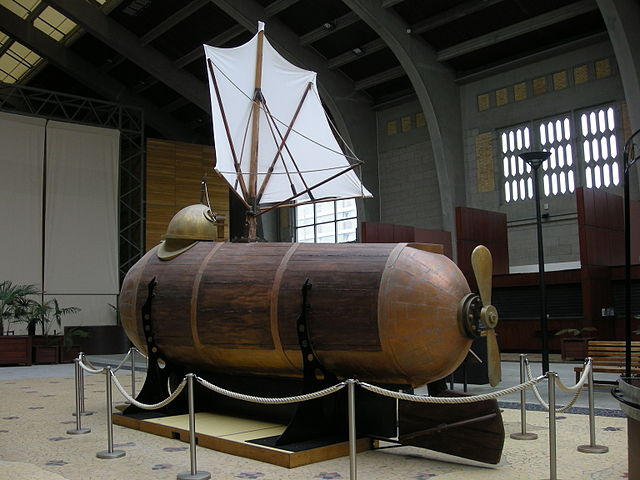
He pushed France to improve iron-smelting skills, supposedly because he wanted to be able to build bigger monuments. After seeing Robert Fulton test his submarine in the Seine in 1800, Napoleon awarded him with a grant to continue advancing the technology. Unfortunately, Fulton couldn’t figure out the fine points of propulsion. He lost his grant and returned to the United States. A shame Loveday Penhale of the Regent's Devices series hadn’t been there to help him. Doesn't it just look like a device she and Celeste Blanchard would have created? ðŸ˜Š


Others remembered his work. When Napoleon was defeated and exiled to St. Helena, there were allegedly plans to rescue him, by submarine!

One biographer claims Napoleon said if he hadn’t been the leader of France, he would have been a scientist on the scale of Galileo and Newton. Now, that sounds like the arrogant emperor England loathed!

Friday, October 12, 2018

Nineteenth Century Heroines: Highly Accessible


Some of you know that I was once and occasionally still am a writer of technical documents. That’s why I was particularly thrilled when I discovered this nineteenth century heroine. Jane Marcet may be one of the first technical writers, a person with some education and access to scientists who could translate their lofty ideas into something for everyone to marvel at. Her work is credited with influencing countless young ladies as well as the famous chemist, Michael Faraday, who read one of her books when he was a teen and decided to go into science.

Jane certainly didn’t start life in a way that would suggest she would follow that path. She was born in 1769, one of a dozen children of a wealthy Swiss banker and his wife. She was educated at home along with her brothers. Her mother died when she was only 15, and she became the manager of the household and her father’s hostess at the parties he liked to throw. On a trip to Italy when she was 27, she decided she liked painting and was tutored by no less than Joshua Reynolds and Thomas Lawrence, two of the foremost portrait painters of the day (my Lady Emily is insanely jealous of the fact).

But Jane didn’t become a painter. She was 30 when she married a Swiss physician living in London. Her husband was one of the Grand Amateurs I’ve written about before—a man of letters who dabbled in chemistry. He and Jane conducted experiments together at home. When their four children were old enough, Jane involved them as well. She also took care of her father, who lived with her until he died in 1817, leaving her an inheritance. Based on that income, her husband quit his medical practice and became a full-time researcher. 

Meanwhile, Jane had decided that she would write a book. Her idea turned into a series of books. The first to be published was Conversations on Chemistry in 1805. She wrote it as a fictional dialogue between a teacher and two students. What was remarkable at the time was that both the teacher and the students were female. Not so remarkable? Though she wrote and illustrated it, it was published anonymously. She would not be credited with the work until 1832. The work was widely plagiarized in America, where it was claimed by a number of different male authors.

The work was an instant sensation. Like any good piece of technical writing, it made science accessible to those who were unfamiliar with it, perhaps experiencing it for the first time. Governesses used it, girls’ schools used it. Even boys’ schools used it. She went on to write Conversations on Natural Philosophy, Conversations on Plant Physiology, and Conversations on Political Economy. She continued to issue new editions, the last of which was published with she was 84. Her books were translated into German, Dutch, Spanish, and French.

Jane died in London when she was 89, but her works continued to be used as textbooks, for boys and girls, until after the turn of the century.

Now, that’s accessibility.

Friday, August 12, 2016

The Great Inverness Earthquake of 1816

The earth shakes in many corners of the world, wreaking havoc to homes and infrastructure alike. But the biggest earthquake ever to hit Scotland happened nearly 200 years ago today.

On August 13, 1816, the people of Inverness were mostly abed. It was a calm night. Moonlight filtered down through a misty haze that lay across the fields. At four minutes before 11pm, the ground heaved, for up to 1 minute, according to some reports. Those out in the country reported a sound like a rushing wind. Those in town thought someone was rolling a heavy object along the slate roofs. Slate stones tumbled to the street, chimney caps fell. Those houses with servant bells heard them all ring at once, with some wire jangling so hard it broke. Dogs howled. Chickens screeched. The 45-meter-tall steeple on the new courthouse and prison was twisted perpendicularly on its base. The Mason Lodge cracked from foundation to rooftop.

People, some of them naked, ran out into the street. Women were said to faint. Others screamed. Still others ran and kept running, hiding in the fields until morning. An aftershock at 11:30 only added to the pandemonium.

Historical evidence has led researchers to believe the earthquake was likely 5.1 on the Richter Scale. It was felt for more than 100 square miles. More aftershocks kept rumbling through for the next week.

Miraculously, no one was hurt or injured. The Masons helped villagers repair their chimneys and roofs. When consulted, the architect for the steeple advised leaving it the way it was as a “wonder” to be viewed for generations to come. Publications from the local paper to the Naval Chronicle reported the news. The stories only magnified with time. Later stories reported that the great bell of the town rang twice during the quake.

It seems even earthquakes improve with age.

Steeple photograph © Copyright Kenneth Allen and licensed for reuse under this Creative Commons Licence http://www.geograph.org.uk/photo/1289365

Friday, June 21, 2013

Young Scientists: Humphry Davy, Laughing Himself into History

I have a thing for scientists and men with logical minds. I tend to prefer Spock over Kirk, Sherlock Holmes over Iron Man. The hero in my August release, The Courting Campaign, is a natural philosopher, what we would call a scientist today.  And in researching his background, I found that young, handsome scientists were not that uncommon in early nineteenth century England. 

Consider Humphry Davy, for instance.  Born in Cornwall into a woodcarver’s family, Davy did extremely well in school and even considered becoming a poet before developing a fascination for experiments.  That fascination nearly saw him blowing up his home several times as he was growing up.  An old family friend apprenticed him to a surgeon, but that connection led him to a variety of learned gentlemen who furthered his interests in chemistry.  One of these gentlemen, a Dr. Thomas Beddoes, was sufficiently impressed with young Davy that he offered him a position as his assistant at the Pneumatic Institution, a research facility for the study of the medical properties of gasses.  Davy started working there, overseeing experiments, when he was twenty.


It was there that Davy became acquainted with nitrous oxide or laughing gas.  He was convinced it could be efficacious for something, but many times he and his friends simply inhaled it for fun.  It was said the large chamber constructed for his experiments was really built for such inhalation parties.  On the other hand, he also conducted a number of experiments on galvanism, generating electric current through chemistry.  That also ended up also having a nice sideline as a parlor trick.

Between patrons of the institution and trips to London, his circle of influential friends continued to grow and soon included the poets Samuel Taylor Coleridge and Robert Southey.  Various friends brought him to the attention of the Royal Institution, that exalted haven of scientists.  He was soon assistant lecturer in chemistry there, where he also directed the chemistry laboratory and helped edit the Institute’s journal.

Perhaps it was the poet in him, perhaps it was the fact that he was kind on the eyes, but his lectures proved extremely popular, with scientists and the public alike. At times he packed 500 people, many of them women, in the lecture hall. He was full lecturer by the time he was 23 and knighted when he was 34.  Here's a satirical look at one such experiment, and it's rather rude results.  Davy is the energetic fellow with all the curls, pumping at the bellows. 
 
 
Shortly after his knighthood, he quit his position, married a widow of some means, and embarked on a Grand Tour, starting in France, where he was awarded a medal by Napoleon for his work in chemistry.  They then travelled to Florence, Rome, Naples, Milan, Munich, and Innsbruck before the return of Napoleon from Elba forced them back to England. 

More studies followed, including the invention of a lamp to aid coal miners (and a cameo appearance helping my hero in The Courting Campaign).  Davy is credited with discovering a number of elements, including sodium, potassium, calcium, magnesium, boron, barium, and chlorine as well as pioneering electro-chemistry.  For his body of work, he was ultimately granted a baronetcy, the highest honor given a natural philosopher at that time.   He eventually returned to Switzerland and died there of heart disease.  His last gift to the world was a book compiling his thoughts on science and philosophy, in which he spoke quite poetically and with touches of wry humor.

You might say he laughed all the way to the end. 

Friday, March 16, 2012

Scientists of Sundry Varieties

Not too far from where I live is a major national laboratory where amazing things are discovered on a regular basis, and I count myself fortunate to have worked with some of the fine scientists and engineers over the years. In fact, some families are on the second and third generation of scientists working there. But if you were a young gentleman of a scientific bent in the nineteenth century, your journey to greatness might have taken an entirely different path.

To begin with, the very term scientist was relatively new. Those interested in observing natural phenomenon and developing and testing theories about it were more likely called natural philosophers in the early part of the century. That’s why the journal of the Royal Society, Britain’s oldest chartered scientific association, is called Philosophical Transactions. Then too, you didn’t need an advanced degree or any degree at all to call yourself a natural philosopher. William Herschel, who is credited with the discovery of the planet Uranus, began life as a talented musician and composer. Humphry Davy, who discovered the properties of laughing gas and the elements calcium, magnesium, boron, and barium, had a grammar school education and once hoped to be a poet.

There was one requirement of a natural philosopher, though. You had to have someone willing to foot the bill for your efforts. Sometimes that might be your family. Sir Joseph Banks, president of the Royal Society for many years, came from wealth and was able to pay someone to tutor him in his chosen field of study, botany. Other times, you apprenticed to someone already working in your field of interest. Michael Faraday, the noted chemist and physicist, worked as secretary and valet for Humphry Davy for a time. And if you were wealthy enough, you could pay all the costs yourself and putter away to your heart’s content. The term used for this last category of natural philosopher is Grand Amateur, and Phileas Fogg of Jules Verne’s Around the World in 80 Days is a memorable example.

If you wanted to make a living at science, however, you had two choices. One was to lecture or run a laboratory at an established institution. The premier of these was the Royal Institution in London. It had been founded near the turn of the century to bring attention to advances in science and technology among the public. Your other choice was to discover something noteworthy like a new element or unknown planet or build up such a body of knowledge that the Royal Society would take note and elect you as a Fellow. The Royal Society was nearly 200 years old by the mid-nineteenth century. At the beginning of the century, it comprised both scientists and wealthy peers those scientists hoped would pay to sponsor their work. By 1847, however, Fellows were elected based on their scientific prowess alone.

And if someone in power, like one of those Grand Amateurs who happened to be a baron or duke, took note of your work, you might be referred to the ruler for a knighthood and even offered an annual salary. Often the salary came with appointment as an officer of the Sovereign, such as in the case of the Astronomer Royal. Even if you weren’t officially appointed to a position, there was the expectation that you would use that salary to allow you to continue working for the betterment of the nation.

Much like the scientists I know today.

Friday, October 14, 2011

Shocking, Isn't It?

I am not a party game kind of gal. It never even dawns on me to break out the cards when friends come over for dinner. But in the nineteenth century, as we’ve discussed, young ladies and gentlemen delighted in finding new games to play, whether with card games, guessing games like twenty-questions, or acting games like charades. Something we often take for granted today, however, was first popularized as a parlor game.

Electricity.

The science of electricity had been growing steadily since the 1600s, and the 1700s has seen advances in understanding how nerves use electricity to transmit instructions to the muscles and the first true battery to store electrical energy. But as the 1800s began, many people were still puzzled by the possible uses of electricity outside either a scientific experiment or something to do to amaze and entertain your friends.


The 1807 Practical Electricity and Galvanism by Jonathan Cuthbert, for example, laid out a series of experiments for understanding the science as well as having some fun. Some experiments were educational, such as creating a prime conductor out of household materials. Others were amusing, such as setting up a current to ring a set of bells. One I found, in an innocent-sounding book from 1831, Endless Amusement, was downright disturbing, explaining how to kill an animal for “fun” by electrocuting it. [Insert shudder.]

But one of the experiments, found in books about amusements dating from 1807 to 1889, was designed to be titilating. It was called the “electrical kiss.” In that game, a lady used an electrical conductor to give herself a charge (perhaps by using a static generator like the one here), then challenged a gentleman that he could not kiss her. The gentleman would approach and incline his head, the lady would be careful not to let their clothes touch, and a spark would fly from her lips to his, forcing him back before he could actually kiss her. (And the very concept sparked a few ideas for scenes between characters, let me tell you!)

Shocking, eh?