




 The Transcontinental Railroad shaped the course of many a
state’s history. The towns it passed through experienced building booms,
population booms, business booms, at least in the short term. The towns it
bypassed in some cases shriveled up and died. It shouldn’t be surprising, then,
that Seattle reacted badly when its leaders learned that the Northern Pacific
Railway had chosen Tacoma to the south as its terminus on Puget Sound.
The Transcontinental Railroad shaped the course of many a
state’s history. The towns it passed through experienced building booms,
population booms, business booms, at least in the short term. The towns it
bypassed in some cases shriveled up and died. It shouldn’t be surprising, then,
that Seattle reacted badly when its leaders learned that the Northern Pacific
Railway had chosen Tacoma to the south as its terminus on Puget Sound.
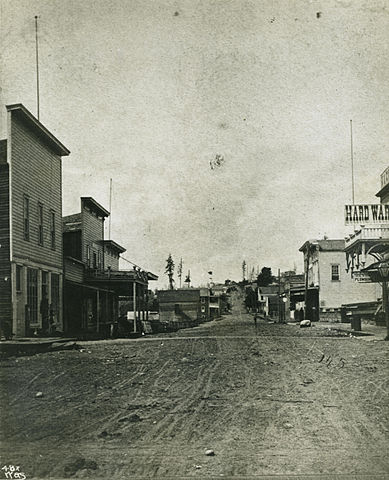
Arthur Denny read the telegram aloud from the city center to
an eager crowd expecting good news. When they heard the decision was for
Tacoma, cries echoed against the single-story buildings. The newspapers decried
such an unfair decision. Seattle had the better harbor. Seattle had the
Territorial University. How could the jewel of the Sound have been overlooked?
Right then and there, the city fathers vowed they would not suffer silently.
They’d build their own railroad.
The plan was ambitious. They would lay trestle across the
bay and out to the coal fields being developed on the other side of Lake
Washington. From there, they would push the tracks up into the mountains,
crossing what is now Snoqualmie Pass but what was then no more than sparsely
traveled trail, to wend across the eastern half of the territory to Walla
Walla. Think of it. The timber, salmon, and coal from Seattle heading to the burgeoning
agricultural depot of the state, a major supply center for the gold mines in
Idaho. Their fortunes were made.
It didn’t matter that they lacked any expertise in laying track
or building the structures needed to span bays, rivers, and mountains. Within a
week they had elected commissioners for the Seattle and Walla Walla Railroad
and filed articles of incorporation. It didn’t matter that they lacked funding.
They issued $10 million in stock. You could buy it for $100 a share, or you
could pay in-kind—by working, lending tools, or splitting wood for railroad. They
had vision, they had purpose. They had the will of the approximately 800 people
who called Seattle home.

For nearly a year, the papers kept the story alive. On May
1, 1874, canons boomed and the Seattle band played while every man, woman, and
child in Seattle marched out to a spot some 3 miles south of the city to begin
felling trees and clearing the way for the track that was to be laid. Everyone,
from Mayor Henry Yesler to the most common sawmill worker, helped for free. The
men did the heavy work; the women brought food and drink for a massive picnic
to keep their spirits and energy up. Together, they managed to clear and grade
1 mile that day, and 12 miles by the end of October, when weather made it more
difficult to work.
 The Seattle railroad never did make it over the mountain,
but it did arrive at the coal mines, bringing tons of the black gold to ships
waiting in the harbor. You might say it was a labor not of love but of
justification.
The Seattle railroad never did make it over the mountain,
but it did arrive at the coal mines, bringing tons of the black gold to ships
waiting in the harbor. You might say it was a labor not of love but of
justification.
And speaking of labor, Marissa and I will be off next week
and the week after for Labor Day, but come back September 5 to celebrate a new
release in the Frontier Bachelors series, in which the Seattle May Day picnic
looms large, Mail-Order Marriage Promise.


