

Showing posts with label Sir Reginald Scott. Show all posts

Friday, January 18, 2019

The Art of the Cravat


You’ve read the descriptions. A gentleman in the early nineteenth century sports a snowy cravat, and all the ladies go into raptures. I had to become more acquainted with the cravats when I began writing Regency romances. But I didn’t really appreciate them until I created and wore one myself.

A cravat in early nineteenth century England was a square or rectangle of material, most often linen but occasionally cotton. I have seen mentions of silk versions, but I do wonder how well they would survive the maintenance process (more on that below). Cravats were wrapped around a gentleman’s neck, usually outside the shirt, forcing the points of the collar upward. You may have seen mention of gentlemen who piled up the folds so high they endangered their ears or eyes with their shirt points.

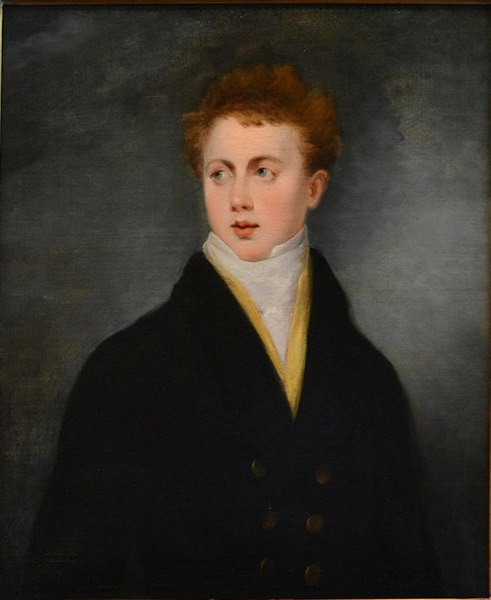
The color of your cravat was as important. This was an era of lye soap and hand-washing. Imagine trying to keep something snowy white. So, if you had a white cravat, it either meant you could afford a talented laundress or you were rich enough to simply throw the things away if they soiled. Then too, some gentlemen chose to wear colored cravats, particularly if they were a member of the sporting set. Famed boxer Jem Belcher preferred a patterned cravat, the print resembling peacock feathers. Everything I can find suggests his favorite was blue on navy, but the portrait of him in the National Portrait Gallery shows yellow on russet. Either way, he makes the case for colored cravats.

The laundry process is one of the reasons that I question the use of silk very often. The other reason is that cravats were heavily starched to hold up to the intricate folds some gentlemen preferred. You’ll see mention of valets who handled the cravats too roughly and made them limp, preventing the proper fold.

And you may well have needed a valet for assistance. Cravats are surprisingly long—up to five or six feet! Trying to fold, wrap, and tie it appropriately could not have been easy at first.

It certainly wasn’t for me. As I have mentioned, I decided to impersonate a Regency gentleman for a soiree of the Beau Monde, the Romance Writers of AmericaTM chapter for those who write Regency romances. [We never have enough gentleman for a dance set.] To prepare for the part, I made my own cravat. Mine, alas, isn’t as snowy white as that of Sir Carolus here (AKA the marvelous Cara King), but then neither is the shirt I found. I fold the cream-colored rectangle in half, wind it around my neck, then tie it so that a piece cascades down the front and is affixed in place with a cravat pin. I am invariably asked what my fold is called.

The graphic above was an 1818 satire on cravats, but the particular folds did appear to have names. I call mine the Incomparable, although I nearly called it the Incompetent because it’s so hard to tie!

For more information on how to tie a cravat, see the Historical Designs website or this tutorial by my friend and accomplished author, Kristen Koster

Thursday, July 23, 2015

Live from RWA National 2015, Part 1

Dateline: Times Square, New York

At the risk of deeply offending some of our readers, I must confess that Times Square is not my favorite place on the map. Too much light, too much noise, too much too much. But you know what? I’m pretty happy nonetheless, because I get to hang out here with one of the nicest people I know.

Regina and I made it into our hotel for the RWA National Conference on Tuesday, with poor Regina enduring a slightly more hectic journey than mine. It’s amazing and wonderful and a cause for great happiness that though we hadn’t seen each other in person for almost two years, nothing had changed—we hugged and were right there, as if we’d just seen each other last week. I hope all of you reading this are fortunate enough to have at least one such friend in your life. After a pleasant dinner at a charming (and deliciously authentic) Italian restaurant a short walk away (and after a lot of talking!!) we turned in, because Wednesday would be a busy day.

The Beau Monde Conference First up was the annual one-day conference held by the Regency chapter of RWA, The Beau Monde. The workshops were all uniformly excellent, presenters including Jackie Horne, who has blogged with us before, presenting on the material culture (a.k.a. “Stuff”) of 18th and 19th century childhood. And there was clotted cream and scones in the breakfast buffet—perfect for a room full of Anglophiles!

In the afternoon, Regina and I both participated in the big booksigning held every year at the National Conference, the proceeds of which are donated to literacy projects in the host city. Picture a room full of over 450 romance writers autographing books for romance readers...yes, I felt like I needed a nap afterward, too!

But no nap was forthcoming, because we had the Beau Monde Soiree to attend. I was most delighted that Regina’s slightly disreputable cousin, Sir Reginald, was in attendance this year, flirting outrageously and on the lookout for heiresses with more hair than wit...not that he found one (author Susan Gee Heino definitely doesn't meet that definition!)! There was early 19th century dancing, and a Silent Auction (Marissa happily bidding on more research materials!) and a very pleasant time had by all.

Friday, October 3, 2014

Costuming the Author, and the Reader

Fall is in the air, and Halloween is coming!  Already I'm seeing advertisements for masquerades and costume contests.  Marissa has posted in the past about the types of costumes our nineteenth century lads and lasses might have worn.  They enjoyed playing dress up.  Today’s author of nineteenth century romance is not immune, and, I'm betting, neither is her readers.  So, to get you thinking about how you might design your own outfit, here are some examples from my sister romance authors.

You can, of course, pay a seamstress to design you a costume.  I am so envious of these amazing gowns worn by the talented Collette Cameron and the wonderful Ella Quinn.  Looking good, ladies!


Or, you might be handy with a sewing machine yourself.  Several patterns are available these days.  Immediately below is acclaimed Regency author April Kihlstrom in a fetching red gown. And farther down is Golden Heart Award winner Kristi Ann Hunter in one she and her mother made together.

Then again, you might find a costume awaiting you in your favorite thrift store.  Doesn’t the delightful Georgie Lee look festive in her frugal find? 


Finally, some fashions from earlier years can be readily adapted to “faux Regency.”  When I wear this one with the flocked orange roses next to Marissa in her seamstress’s creation, I always say I must be the poor relation.  J


But then again, I have another costume I much prefer.  That's Sir Reginald with the regal Marjorie Allen.  


What do you think?  Any of these approaches appeal to you?

Many thanks to my models, most of whom are members of my beloved Beau Monde Chapter of Romance Writers of America.TM


Friday, October 19, 2012

Four Things on a Friday

It’s one of those weeks when I must beg your indulgence. A plethora of items has come to my attention, and I simply have to share them with you. So I give you four things on a Friday:

  1. Real Nineteenth Century Dancing. We often see in movies perfectly executed dance scenes depicting balls in the nineteenth century. I have often wondered whether every young lady could possibly keep all those steps in her head, and what would happen if she missed a step or, heaven forbid, improvised! I saw this clip on YouTube recently, and it strikes me as far more realistic for how early nineteenth century young ladies and gentlemen would have danced. Notice the fellow with the flair at twirling, the older lady chivvying the others along. That’s the kind of scene I like to write about.


  2. Jane Austen as Brain Food. Recent research at Stanford University has shown that reading Jane Austen’s materials actually stimulates your brain. Now you know why you’re all so clever, don’t you?
  3. Pictures from the Beau Monde. Leah Nash, a talented photographer who has had her pieces published by the New York Times, attended the Romance Writers of America conference this summer and took a number of pictures at the Beau Monde Soiree. Here are a few, used with her permission. You may recognize some of the, er, gentlemen. The darling lady in turquoise is author Delilah Marvelle. See Leah's website at LeahNash.com for more.


  4. The Young Bluestockings Attend the Cinema. Yes, that’s right! Join us next Tuesday, October 23, for a discussion of Pride and Prejudice staring Keira Knightly, with our own Cara King. Whatever you think of this new-fangled cinema or this interpretation of the beloved classic, it’s sure to be interesting!

Have a great Friday!

Friday, July 9, 2010

Summer Fashion

It’s two and a half weeks until the big event of the year for many romance authors: the Romance Writers of America annual conference. We’ll be in Orlando, this year. Already I’m combing my wardrobe for the right outfits to wear to meet my editor for the first time, to attend a literary tea, to dance at the nineteenth century soiree hosted by the Beau Monde Chapter (for those who write in the Regency period). Everything seems too tight, too loose, too warm, too cold, or wrong color, and nothing matches. Arg! An entire closet full of clothes and nothing to wear!

So, like many ladies in nineteenth century England, I turned to that trusted source, La Belle Assemblée, for advice. I mean, it’s going to be warm and probably humid in Orlando, but the hotel will probably be freezing in comparison. What’s a lady to do?
“The continued warmth of the weather renders yet the muslin pelisses and spensers to be almost universally adopted: some of the latter are of clear book muslin, trimmed with very full trimmings of muslin, richly embroidered at the edge. Scarf-shawls, mantles, and sarsnet wraps are only seen on evenings, when returning from the rooms or from crowded parties.”

Okay, so I need to find a wrap to wear in air conditioned hotel rooms or returning from my publisher’s party at the Waldorf. What about when I need to go outside into the Florida sun?
“Never were caps so universal; and in this the English ladies do wisely; an ardent sun, particularly when accompanied by breezes from the sea, has often a sudden effect in changing the color of the hair. Among the new cornettes is the fan cornette à-la-Contesse, so called from the front being spread out like a fan; youth and loveliness are certainly requisite to render this head-dress becoming. The breakfast cornette, of fine thread net and Brussels lace, simply finished by rouleaux of lilac satin, is a very becoming dishabille to every face.”

So wear a hat when venturing out of doors. Gotcha. I probably need to choose my neutral color to build the wardrobe around. I only have so much space in my suitcase, and I’d rather fill it with books coming home. What’s in this year?
“The favorite colors are Clarence blue, rose color, and lilac.”

Really? I think I look better in basic black.

Any advice on how a nineteenth century writer can look professional, yet fashionable and comfortable, in Florida in the summer?

Friday, April 23, 2010

The Young Bluestockings Book Club Reads Bloody Jack

Today I have the honor of calling our esteemed club to order. I hope you’ve all had a chance to read Bloody Jack by L.A. Meyer. I noticed that the publisher recently issued a new paperback edition, so if you haven’t read it, perhaps this will be your chance!

As before, I’ll start off the discussion with my thoughts, and then you get to jump in with comments. I’ll be monitoring the blog today and through the weekend and will try to respond whenever appropriate. Marissa will close the discussion on Tuesday. We really love to hear your thoughts! You suggested the book club—please join in!

I enjoyed reading Bloody Jack several years ago, but I found it all the more interesting to read this time around because, since then, I’d been sailing on a tall ship. The descriptions of the ship and activities seemed even more real now that I had an experience to align with them. I love the attention to detail, the wonderful explanations of Jacky’s daily life. I’ve always wanted to run away to sea in search of pirates; Jacky allowed me to run away with her!

Those of you who read our first club book, Mairelon the Magician, probably also noticed several common themes. One was that, if you want upward mobility and adventure, it’s easier being a boy than a girl in the nineteenth century. The Navy in particular provided opportunities. Many of the “middies” were there because their families paid for that position with the idea that their sons would advance. Though Jaimy’s parents couldn’t afford to pay for a position, it’s expected that the lad, with courage and hard work, will advance to an officer’s post. Even Jacky, by showing sufficient courage and ingenuity, is promoted to a midshipman position.

The Navy represented a dangerous, difficult life, but one with a chance for something better. While a sailor’s salary wasn’t much (and as you saw was just as likely to have been spent before the poor fellow even reached home!), there was the chance for prize money, which could amount to thousands of dollars. In a society based heavily on wealth and family privilege, no other position could legally offer such riches for those at the bottom of the heap.

Another common theme was that language, dress, and manners make the person. I particularly loved Jacky’s thoughts on why people don’t notice The Deception. Having acted the part of a nineteenth century dandy for many years as an ongoing joke among my sister authors of nineteenth-century fiction, I completely agree with Jacky! If you dress the part, if you take on the mannerisms, if you use the right language, and if nature has blessed you with the right shaped-face and short hair (and, ahem, a less than ample upper half or at least one you can keep concealed), you too can be mistaken for a bloke!

So, what did you think? Did you cheer for Jacky along the way? Did you cringe over some of the more beastly things that happened to her? Do you believe she’ll be happy in a girls’ finishing school? (I haven’t read book 2, so don’t spoil it for me!) Do you want to run away to sea with me? Come on, fess up! Do you have a little pirate or pirate-catcher in your blood?

Friday, January 30, 2009

Not the Usual Line Up

So, I’m going to talk about dancing, but I truly think nineteenth century dancing is something you have to see, and, preferably, do! So, some sleuthing on YouTube revealed the following wonderful video, from our friends at the Oregon Regency Society (waves wildly!):


You’ll notice several things here. Many of the dances in the early nineteenth century were line dances, meaning that partners stood across from each other in long lines, women on one side and men on the other. In addition, many tunes had specific dances that went with them, and as a young lady you would be expected to know those steps. In the video, you’ll hear someone calling the steps, but that wasn’t actually done at balls. Instead, if you were unsure, you watched the lead dancers in the set.

You’ll also notice that the dancers move around a lot. It may look simple and stately, but, believe me, at the end of the dance, you’re winded! The partners are together a lot in this dance, but often you exchanged partners or danced with others near you for part of each dance, so conversation came in little snippets and couldn’t be lengthy, contrary to the dance scene between Elizabeth and Darcy in the most recent Pride and Prejudice adaptation.

The one exception is when a couple “stood out.” You’ll notice that too in the video. At one point the couple closest to the camera does nothing while others are dancing. Sometimes the figure of the dance and the number of dancers made for poor combination, and a couple at the top of the room (closest to the musicians) or the bottom of the room (farthest away from the musicians) wouldn’t have a role for a short while. Then, you could make conversation, and have a reasonable assurance that those dancing closest to you might not overhear. Perfect time to pass on gossip, arrange an assignation for later, or merely comment on the weather.

The dances may look sedate, but they were fraught with opportunities for young couples. Perhaps your partner holds your hand a microsecond longer than he’s supposed to. Heavens, could he like you more than you thought? Perhaps his thumb caresses the back of your fingers as you turn. My word, but you’re blushing now! And then there is “the look.”

Those of you who have been following this blog know that I dress up once a year as a Regency dandy for a soiree held by my colleagues in the Beau Monde, Romance Writers of America’s (RWA)special interest chapter for those who write early nineteenth century books. It started as a joke, but Sir Reginald has quickly become more popular than I ever was. I do get a kick out of teasing my friends by flirting outrageously. So, I’ve had my fair share of dances. I thought I’d mastered the manner of intensely gazing at a lady across the line until her cheeks heat and her eyes lower and you can tell her heart is beating faster.

And then I met Baronda Bradley.

Baronda is a member of the Jane Austen Society of America, North Texas Chapter. She kindly shared her knowledge of nineteenth-century costuming at the 2007 RWA national conference. Here she’s in a day dress she designed. However, for the Soiree, she came in a lovely ball gown, hair in ringlets, and she very kindly consented to honor Sir Reginald with a dance.

Baronda knows the early nineteenth century. Every movement, every smile said confidence and composure. She was graceful, she was demure, she was everything a well-bred young lady of nineteenth century England should be. But when she gazed at me across the line, eyes sultry and deep. . . well, I had to remind myself that I’m a happily married WOMAN and not the Regency buck I was pretending to be.

Now, where are my smelling salts?