Showing posts with label weather. Show all posts

Tuesday, May 4, 2021

It’s Always Sunny in Regency England

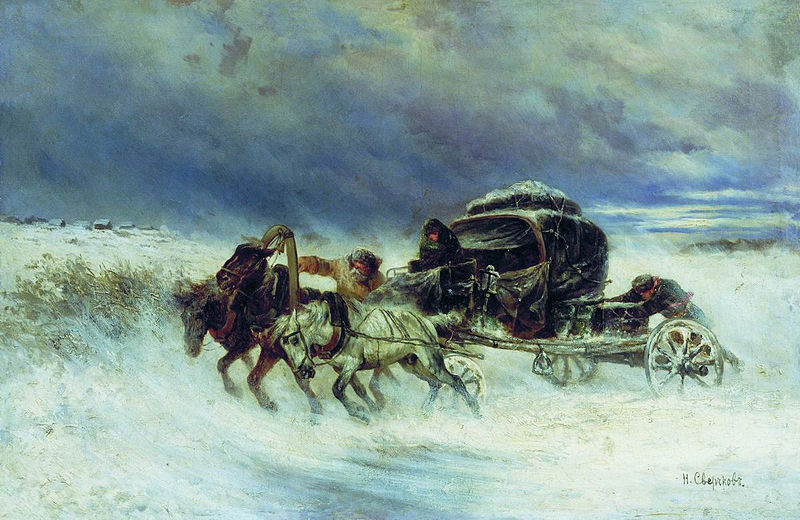
Well, no, no it isn’t, any more than it’s always sunny anywhere. Even the driest places on Earth occasionally experience a rain shower (except for the Dry Valleys in Antarctica, which haven’t seen rain in millions of years, apparently, but I don’t intend to set a story there 😊). But I recently caught myself slipping into the habit where every day in my books is a perfect sunny day, and my characters take strolls and sit in open carriages wearing nothing more than a muslin dress and a spencer. It seemed appropriate when I was talking about the Dorset seashore in August, but November?

Ahem. No.

Fortunately, there’s an intriguing site now parked under Weather Web. Researched meticulously by Martin Rowley of Dorset, it pulls together reports of weather in England for centuries, including 1800 to 1849. For example, based on recorded observations, we know that 1805 was a dry summer in London but 1807 was a wet one. January 1810 saw 10 days of fog in London. And January 1820, when George III died and Prinny became king (though he wasn’t officially crowned until later), the weather was terribly cold. Tunbridge Wells, in Kent, recorded 10 degrees below zero at one point.

One of the most intriguing events is recorded on December 14, 1810. On that day, at Old Portsmouth in Hampshire, what is believed to be the strongest tornado ever reported in England touched down. It barreled through Old Portsmouth and on to Southsea Common, blowing down chimneys, peeling back roofs, and levelling houses. Meteorologists believe it was a T8 on the TORRO scale, with winds exceeding 213 miles per hour. Miraculously, no deaths were associated with it.  

Now, I may not be able to pinpoint the weather in Dorset in November 1804, but I can be reasonably sure it rained, a lot, and the weather hovered between 40 and 55 degrees Fahrenheit, requiring me to study lots of lovely shawls, pelisses, cloaks, and redingotes in which to wrap my heroine.

Writing historical novels is such a difficult thing. 😊

Tuesday, February 5, 2019

Keeping Warm...With a Good Book


The discovery of polar vortices may be a modern event, but cold weather has always been a matter to contend with. I will contend, however, that cold weather has seldom been braved as stylishly as here:


This stunning number is “The Polish Robe and Hat. An entirely new design for the Kensington Garden Walking Dress in March 1807.”  The description reads:

No. 1 – Walking Dress. A Polish Robe of purple velvet, flowing open in front, rounded gradually from the bottom towards the lapels, which are continued across the back. A chemisette of the same, with high full collar; the whole trimmed entirely round with the red fox, mole, leopard spot, or grey squirrel. A rich cord and tassel fastened in the center of the back, which occasionally confines the robe. The back and skirt cut in one; and the sleeve nearly to fit the arm. Polish cap of the same material, trimmed round the edge, and across the crown, with correspondent skin; a cord and tassels suspended in irregular lengths from the right side of the crown. York tan gloves; and primrose, or purple shoes.

Wow! The hat—the swinging cords—the purple—what’s not to love about this ensemble? It just looks sooooo cozy in an over-the-top sort of way; I’m sure this outfit would turn heads when worn on a stroll in Kensington Garden.

But since wearing a cozy purple velvet pelisse in Kensington Garden is not something most of us can do this winter, I’ve got another idea that might keep you warm—because there’s nothing better to do on a cold, blustery day than curl up and read!

Barnes and Noble is running their first #NOOKBOOKBASH--a special offer of over two hundred books, many of them first-in-series, ranging from romance to science fiction to mysteries and thrillers—all FREE with a special coupon code...and if you like what you read, there’s another coupon for getting the next-in-series books for 25% off.  You don’t need to own a NOOK device to read—you can download the free NOOK app to your computer, phone, or tablet and read 'em there.

Here’s how it works:

1: Visit  https://www.barnesandnoble.com/b/nook-book-bash/_/N-2s47 on your desktop or device (coupons cannot be redeemed on a NOOK device or inside the NOOK app) and snap up your next favorite reads.
2: Add featured ebook(s) to the cart
3: When you’re done shopping, view your shopping cart
4: Apply Coupon Code NOOKBASHFREE below the Order Summary.
5. Complete check out. Your new books will automatically appear in your NOOK library.
6. And hey presto! You’ve got books! There are no limits—you can get as many of the offered books as you want!

To get the next-in-series book, check out the Second Book list on the same page, and at checkout, use coupon NOOKBASH25 to get 25% off those titles. The only tricky bit is that you can’t use both coupons in one transaction, so get your free books first and check out for any sequels separately.

Feel free to pass this on to your friends—and the offer is good through February 28, 2019, so you have plenty of time to browse. My own Skin Deep is on offer there—go have a look, and stay warm with a good book!

Friday, June 3, 2016

1816: The Year Without a Summer

Whatever side you land on the climate change debate, there’s no question recent summers have been different, with higher than normal heat one place and greater than usual rainfall another. But two hundred years ago, people had reason to question the weather as well.

1816 was known as the year without a summer. Temperatures around the globe were much cooler than usual. Each day dawned dark and stormy. Buffalo, New York, saw frost through July. New England saw snowfall in early June. It rained so long in Ireland, the potato crop failed. Drought spread. More crops died. People across Europe rioted. The New Hampshire Patriot reported that things were so bad the poor were eating nettles, wild turnips, and hedgehogs!

People everywhere scratched their heads. How had this happened? Some newspapers blamed “sunspots”—vapors from Earth that had been transported to the sun and blocked part of its rays for a time. One joked that the War of 1812 had made Canada so mad it was blowing cold wind south.


Scientists today point the finger at Mt. Tambora in Indonesia. The eruption in April 1815 was one of the largest ever recorded. More than 10,000 people died immediately; 80,000 more died of starvation afterward. The eruption threw dust and ash 25,000 feet into the atmosphere, where it spread around globe.

But the dreadful weather had unexpected consequences beyond the crop failure and drop. One expert suggested that the bicycle was invented in part because horses had become too expensive to feed. Another pointed to the fact that New England farmers began moving West in droves. Congress was voted out of office because the members had raised their own salaries in times of distress rather than somehow “fixing” the problem. And on a dreary sojourn in Switzerland, Mary Shelley entertained herself by writing Frankenstein and Lord Byron penned the poem “Darkness.”

At least the world received something from all that wretchedness!


Friday, March 22, 2013

Wonder Weather

I’ll admit it.  I tailor the weather in my stories to suit the situation.  I wanted my heroine’s first sight of the coal mine my hero owns in my August 2013 book, The Courting Campaign, to be bleak, so I set it on a gray, misty day.  I wanted the hero and heroine in my December 2013 book, The Wife Campaign, to search for creative ways to survive an enforced house party, so I made it rain, and rain, and rain. 

But did you ever wonder what the weather was like in certain seasons in the nineteenth century in England?  Several sources on the web offer tidbits.  From them and from historical documentation, we know the following:

  • January 1811, it was cold enough in London, for long enough, that the Thames froze over.
  • May 1811, London saw thunderstorms nine different times in one month.
  • Spring and summer 1812 were unusually cold and wet.
  • The winter of 1813/1814 was extremely cold, and the last of the famous Thames frost fairs was held in February 1814.
  • 1816 was the “Year without a summer,” which has been blamed on a volcanic eruption in 1815 that sent up a cloud of ash into the atmosphere.  London reported snow on Easter Sunday (April 14) and more snow on May 12!
  • Early March 1818 saw strong gales across England that damaged structures and crops.
Makes our late dreary spring look absolutely cheerful!

If you’re stuck indoors today or next week because of inclement weather, and you wonder what to do with yourself, you might wander on over to the blog of Regency authorLesley-Anne McLeod, where yours truly will be sharing information about Easter customs in the early nineteenth century.  You can also join the Love Inspired authors at Goodreads from now through March 28 for an Easter egg hunt with fun prizes.  My day is Wednesday, March 27, but you’re welcome any time.

Regardless of the weather.

Friday, April 11, 2008

What Really Brings May Flowers

“April showers bring May flowers.” I don’t know how many times I’ve heard that old saying. My part of Washington State is actually fairly dry (only 6.5 inches of rain a year and most of it November through February), so, while there are showers in April, we actually have a lot of flowers up already. So did London and Bath when I visited in late February/early March, as you can see by this picture from Regent’s Park.

Nineteenth century teens would have heard their share of weather wisdom, passed down through the ages. For example, the Ladies Monthly Museum magazine in May 1816 reports these dire signs as predictions of “old Irish women”:

--When the raven croaks three or four times, extending his wings and shaking the leaves, look for serene weather.

--When the porpoises sport and take frequent leaps, the sea being tranquil and calm, the wind will blow from the quarter from which they proceed.

--If the dogs roll on the ground or lie on their right side, rain is on the way.

However, I cannot help wondering at the advice from the same magazine 2 years earlier (January 1814):

“From a curious and valuable little volume, lately published by Mr. Joseph Taylor under the title of The Complete Weather-Guide, we present our fair readers with the following extract, which, besides furnishing them with a useful fore-knowledge of the coming weather, may lead their minds to a pleasing and grateful contemplation on the wisdom and goodness which the all-bountiful Creator has displayed even in the meanest of his works.

“Put a leech into a large phial three parts full of clear rainwater: regularly change the same thrice a week; and let it stand on a window frame fronting the north. In fair and frosty weather, it will be motionless and rolled up in a spiral form at the bottom of the glass; but, prior to rain or snow, it will creep to the top, where, if the rain be heavy and of some continuance, it will remain a considerable time; if trifling, it will descend. Should the rain or snow be accompanied with wind, it will dart about its habitation with an amazing celerity and seldom cease, until the wind begins to blow hard.

“If a storm of thunder or lightning be approaching, it will be exceedingly agitated and express its feelings with violent convulsive starts at the top of the glass.”

Gosh, there’s a Spring Break project for you: make a leech barometer.

I think I’ll stick to the Weather Channel. What about you? Do you have some family weather predictors?