Tuesday, August 22, 2023

Save a Bundle, This Week Only

Okay, so I run sales once in a while. Maybe more than once in a while. I love to see books flying off the virtual shelves! So, this week only, August 21 through 25, 2023, I am putting an entire series bundle on sale for 99 cents.

Gasp!

Shock!

If you haven’t tried the Spy Matchmaker series, this is your chance. The three-book ebook bundle generally costs $9.99, so this is 90% off cover price. What’s included in the series?

The Husband Mission (formerly published as Lord Borin’s Secret Love). Lord Borin cannot understand why he’s under surveillance, but it seems to be connected to the intriguing Katherine Collins. He’s been encouraged by England’s spymaster to marry, but what wife can compare to espionage? Unless, of course, she’s up for a little espionage too. “I highly recommend this book to all romance readers who like heart-warming, unique love stories with delightfully original characters.” Romance Fiction Forum

The June Bride Conspiracy (once a novella, now a full-length book). England’s top intelligence agent Allister Fenwick, Lord Trevithan, is shocked when a mysterious stranger attempts to stop his marriage to the sweet Joanna Lindby. Though he promised to leave espionage behind, he must take this case. Can a little espionage unmask hidden hearts in time for a June wedding? A Top Pick from RT Book Reviews.

The Heiress Objective (formerly published as The Bluestocking on His Knee). Heiress Eugennia Welch is stunned when charming Corinthian Kevin Whattling proposes marriage. Once a spy, Kevin is deep in debt. But as he tries to convince Jenny he is besotted, he falls for her. When danger threatens, can they trust each other to win a love greater than any fortune? “A very entertaining story with a fresh approach.” Rendezvous

You can get the ebook bundle

Directly from me 

Smashwords  

Amazon (affiliate link) 

Barnes and Noble 

Kobo 

Apple Books 

Enjoy!

Tuesday, August 15, 2023

Show and Tell Again

 
As I’ve done in past posts, I have a couple of new additions to my dance card/aide memoire collection that I had to share with you, because they’re such delightful confections…
 

Aren’t they?

The silver one on the left is a dainty two and a half inches long, with the chain and ring for wearing adding another six inches. The ring and chain indicate that this was intended to be a dance card and not just a note pad. There is a tubular holder for a pencil, now missing, and six thin leaves made of what looks like bone.
 

And the filigree! I’m not sure if it’s sterling or not—there does seem to be a tiny hallmark on one edge—but the intricate looping is marvelous.
 
The one on the right is four inches long and made of bone or ivory with silver edging (also hallmarked) all around on both covers and elaborate silver ornamentation with room for a monogram.
 

This one still has its tiny pencil for writing on the six bone leaves, which are held together by a silk ribbon woven through them. A delightful confection to carry to a ball…but what is even more delightful is the pencil inscription it still contains.
Reading across the leaves, from the leftmost leaf to right, it says
14th August 1897
Wishing you many many
returns of the day
HEPL

So some lucky young woman received this as a birthday present exactly 126 years ago yesterday. This inspires so many thoughts—who was she? Had she just made her entrance into society? Was it a gift from a family member, or a suitor? Did she treasure it so much that she refused to erase the message (there are signs that the other sides of the pages have been used and erased)?
 
What do you think?


Tuesday, August 8, 2023

The Pleasures of Devices

Devices and conveniences of various sorts are on my mind at the moment. My washing machine of 33 years finally died, and I am told by our mechanic that our car is terminal. My daughter-in-law is breaking in a new laptop. My husband had to replace his cell phone. We live in a world of conveniences. Our nineteenth century counterparts might be jealous.

Or not.

The Regency era saw the birth of the Industrial Revolution, but it would be some years before the new technological wonders appeared in the homes of the middle and lower class. Here are a few things we might take for granted today that they didn’t have:

Ovens. It is amazing to think, but ovens in homes were very high end in Regency England. Only a few wealthy houses had them. For the rest of us, you baked in the hearth or had a baker cook everything from bread to your Christmas turkey. You picked up the food from the baker and brought it home (and I can only wonder how warm it was by then!).

Sewing machines. I can sew basic patterns, well enough to make myself pillow shams and clothing. Marissa is more skilled. But while the first sewing machine was patented in England around 1790, it was never built, and the first widely available sewing machines wouldn’t arrive until the 1870s. Generally, a Regency lady sewed what she wanted by hand herself or employed someone to do it for her.

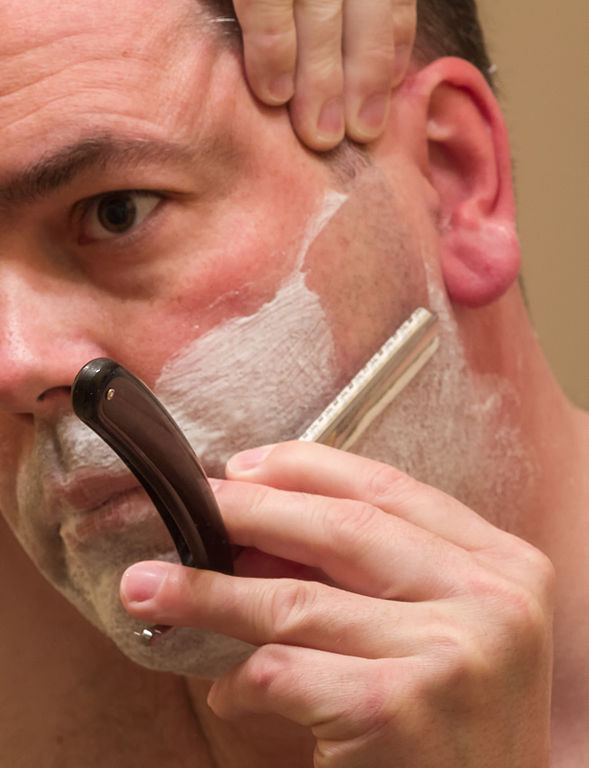
Shavers. My husband uses a disposable razor, and my father used an electric one. Our Regency gentlemen had only a strap and a long wicked blade. Small wonder so many wore beards!

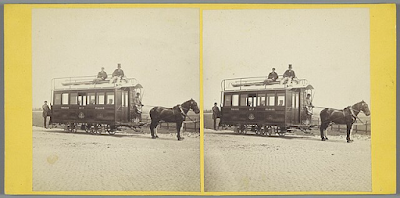
Public transportation. The more my car grumbles, the more I eye our local bus. I’ve also used busses, trams, and trains to get around my neck of the world. Londoners didn’t have the option of public transportation until 1829, when horse-drawn omnibuses began trundling through the streets.


So, despite my current woes, I’m very thankful indeed! May all your devices be well behaved and useful!

Tuesday, August 1, 2023

Summer Cape-r


Another delightful offering from La Belle Assemblée…may I present a most delightful Morning Walking Dress, from the June 1810 edition?


No. 2.— Morning Walking Dress

A round dress of thick fine India muslin, made high in the neck, with long sleeves, which are trimmed at the wrists with a narrow edging of lace; a lace let in round the bottom of the dress between four rows of small tucks. A light sky-blue mantle, lined with pale buff, with elastic collar, which is formed with letting-in lace, and has the appearance of a full collar, but will, if required, by drawing over the head, form a very pretty and becoming bonnet; a cape of the same materials crosses the back, which is confined at the bottom of the waist, on the inside, with a pale blue or buff ribband, tied with a bow in the front; it is entirely trimmed round with [a] narrow edging of lace. A bonnet of straw, and pale-blue ribband, with plaiting of lace, worn underneath, tied under the chin; with a yellow rose in the front, and hair in ringlet curls, completes the dress. Gloves of pale-buff. Boots of the same colour, calashed and laced with pale blue.

Hmm, there’s a lot going on here. The dress itself seems straight-forward; it’s the mantle that is so noteworthy. I’m intrigued by the “elastic collar” that can be drawn up in a sort of hood: it sounds almost like an 18th century calash or calèche, a type of head covering with stiff ribs that could be folded down or drawn up over the fashionable high coiffures of the era. The crossed-over flaps of the cape are an unusual touch, I think—lending visual interest to the back rather than the front.

The bonnet is appro-priately light and airy, a not-too-extreme poke style (though a bit more of a brim might have been welcome to prevent freckles when out walking…) 


Also of interest are the boots, described as “calashed.” I’m not sure how that term applies to boots—as we’ve seen, a calash describes millinery, not shoemaking. Any guesses out there? The blue shoelaces on the buff boots are a lot of fun, though.

I know that all faithful NineteenTeen readers will rush right out to their modistes to have this ensemble made for their own morning walks…right?

Well, maybe not this summer.


Tuesday, July 25, 2023

Time for an Adventure!

Never Admire an Adventurer, the second book in my Fortune’s Brides: Guarding Her Heart series, launched on July 17. It was fun imagining all the ways a gentleman set on adventure would respond to a fake engagement with a spirited heiress!

Kristof Tanner grew up dreaming of glorious adventures far beyond the little kingdom of Batavaria. He’s followed his king and crown prince across Europe to England, but he never expected his first position there to be guarding the daughter of a wealthy businessman, who doesn’t seem to have a care in the world. Still, it’s hard not to see adventure calling in Julia Hewett’s warm brown eyes.

Julia has been fretting under her father’s demands for years. She won’t allow him to dictate a husband, especially when he insists no less than a duke will do. So, when her father refuses to listen to her pleas, she concocts the most unsuitable engagement she can imagine—to her bodyguard. If the charming Tanner plays along, they might both get what they want.

But it soon becomes apparent that someone is stalking Julia, intent on her downfall. Tanner and Julia must work together to uncover the culprit and save her reputation and his. In doing so, they may discover that the greatest adventure of all is falling in love.

The Huntress Reviews said, “Regina Scott pens some of the best Historical Romance that I have read in recent years. BRAVA!”

I hope you agree! You can find the book at fine online retailers or order it from your favorite local bookstore, including mine:

Directly from me (ebook only) 

Smashwords 

Amazon (affiliate link) 

Barnes and Noble 

Apple Books 

Kobo  

Bookshop.org, benefitting local bookstores 

Books-A-Million 

Tuesday, July 18, 2023

Retro Blast: The Royal Waterloo Bath


As much of the US is gasping through a heat wave, I hope those affected have access to somewhere cooling, though not perhaps this particular one, which originally appeared here in December 2009.

* * * * *
 
From the June 1819 edition of Ackermann's Repository, may I present to you, with mingled delight and horror...


THE ROYAL WATERLOO BATH


"This very elegant floating bath is stationed near the north end of the Waterloo-bridge, and has recently been built and completed with entirely new and substantial materials, in a style of superior accommodation, at a very considerable expense: it contains a plunging bath, 24 feet long by 8 feet wide, and two private baths, 10 feet long by 8 feet wide. The depth may be regulated at pleasure by machinery, which raises or depresses the bottom as required, secured by cross timbers, and bound with iron. To each of the baths are attached small dressing rooms, commodiously fitted up, with proper persons to attend upon visitors. These baths are so constructed, that the water, being a running stream, is changed every two minutes. The advantage of bathing in a flowing stream is obvious, and gives a decided preference over a cold still bath, which is frequently dangerous from the violence of the shock. The terms of bathing, as our readers will see, are extremely moderate:--they are--
 
In the plunging-bath. . £0 1s. 0d.
For the season. . . £1 11s. 6p.
In the private baths . £0 1s. 6p.
For the season. . . £2 2s. 0p.
 
Constant attendance at Waterloo-bridge to convey visitors to and from the bath.
 
Bathing is so essentially connected with health, that we cannot but congratulate the public on this new establishment. It is singular that so few of the kind should be known in London, while there is scarcely a street in the French metropolis that has not its cold, warm, vapour, Chinese, and Tuscan baths, with a variety of others, suiting the capricious tastes of the inhabitants. Yet how deficient they are in the most important article connected with bathing every body knows, while we have a noble river filled with the purest and most wholesome waters in the world. The want of baths in London has led to the incommodious and indecorous practice of public exposure in the Thames.
 
All I can say is, eek! Or maybe just ick. Though the waters of the Thames might indeed have been pure and wholesome upriver, at this point it served as drainage for all the city...gulp! I applaud the recognition that bathing was associated with good health and understand the desire for cleanliness (and for getting the nudists off the banks of the river!) but do have to wonder if the writer of this article visited the baths in person. Unfortunately, no interior views were provided--it would have been interesting to see how the water depth controls worked.
 
I don't think any young ladies of fashion would come here; I expect it was for the working class population of London who didn't have hip baths before the fireplaces in their bedrooms and legions of servants to carry up cans of hot water to fill them.

Tuesday, July 11, 2023

The Ups and Downs of Ballooning

Balloon ascensions were an exciting part of the nineteenth century. Some daring individual would set up a balloon in a public space like Hyde Park, and crowds would gather to watch the intrepid adventurer take off and ascend into the skies. In most cases, the balloon would fly a short distance and come down in some field. In a few cases, the event was an attempt to set a record. For example, in 1785, Jean-Pierre Blanchard and John Jeffries left Dover in the first successful attempt to cross the Channel by balloon.

But sometimes, things did not go as planned.

I discovered the following 1895 graphic not too long ago. It was originally an uncut set of 10 cards showing the early history of ballooning. As you can see, the emphasis appears to be on disasters!

Starting from top left, we have Joseph Louis Gay-Lussac and Jean-Baptise Biot, who ascended to 4,000 meters to conduct scientific experiments on gas. They lived. So did the second fellow, André-Jacques Garnerin, who, despite the illustration, made the first successful parachute jump from a balloon in 1797. He owed much to the third fellow, Louis-Sebastien Lenormand, who had conceived the idea of a parachute and jumped from a building with his umbrella-like contraption in 1783.

The fourth card on the top row has ideas for every steampunk author! These are purportedly utopian dreams of flight from the “last century.” Some very interesting flights of fancy! Next to it we have Commander Jean-Marie Coutelle at the Siege of Mainz in 1795, where he used a balloon for reconnaissance (and seems to have earned the wrath of the enemy in the process!).

The first card on the bottom row is a balloon commemorating Napoleon’s achievements. Interesting that he is still revered nearly 80 years after his ultimate defeat. I was both delighted and saddened to see my beloved Sophie Blanchard featured on the next card. Of course the artist had to include the queen of aeronauts. But perhaps they might have shown something besides her fiery death!

Next to her is Count Franceso Zambeccari, who flew the first unoccupied balloon in England in 1783, but instead of commemorating that achievement, the artist decided to cover his crash in the Adriatic in 1804. A number of balloons took off from the Vauxhall Pleasure Gardens, but the artist chose to depict the one from which Thomas Harris fell in 1824. Finally, we have the rescue of Francois Arban by Italian fishers in 1846, after he too had crashed into the Adriatic Sea.

Doesn’t exactly make you want to jump into the next balloon, doesn’t it?