Showing posts with label Regency. Show all posts

Tuesday, August 8, 2023

The Pleasures of Devices

Devices and conveniences of various sorts are on my mind at the moment. My washing machine of 33 years finally died, and I am told by our mechanic that our car is terminal. My daughter-in-law is breaking in a new laptop. My husband had to replace his cell phone. We live in a world of conveniences. Our nineteenth century counterparts might be jealous.

Or not.

The Regency era saw the birth of the Industrial Revolution, but it would be some years before the new technological wonders appeared in the homes of the middle and lower class. Here are a few things we might take for granted today that they didn’t have:

Ovens. It is amazing to think, but ovens in homes were very high end in Regency England. Only a few wealthy houses had them. For the rest of us, you baked in the hearth or had a baker cook everything from bread to your Christmas turkey. You picked up the food from the baker and brought it home (and I can only wonder how warm it was by then!).

Sewing machines. I can sew basic patterns, well enough to make myself pillow shams and clothing. Marissa is more skilled. But while the first sewing machine was patented in England around 1790, it was never built, and the first widely available sewing machines wouldn’t arrive until the 1870s. Generally, a Regency lady sewed what she wanted by hand herself or employed someone to do it for her.

Shavers. My husband uses a disposable razor, and my father used an electric one. Our Regency gentlemen had only a strap and a long wicked blade. Small wonder so many wore beards!

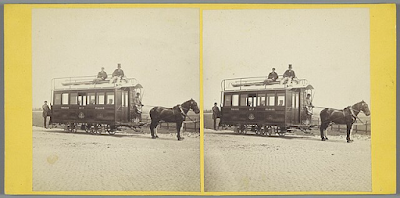
Public transportation. The more my car grumbles, the more I eye our local bus. I’ve also used busses, trams, and trains to get around my neck of the world. Londoners didn’t have the option of public transportation until 1829, when horse-drawn omnibuses began trundling through the streets.


So, despite my current woes, I’m very thankful indeed! May all your devices be well behaved and useful!

Tuesday, May 30, 2023

The Regency Fiction Writers 2023 Virtual Conference is coming!


Regina and I thought you might like to know about this. Early Bird pricing ends on June 1st, so if you're interested, now's the time to sign up!

* * * * *

The RFW Board of Directors is pleased to announce our 3rd annual Regency Fiction Writers conference, June 13-15, 2023. Our three-day conference will be held live via Zoom.

Keynote Speakers

We have two amazing keynote speakers lined up for the conference, ladies who are legends in the Regency storytelling world: Julia Quinn, the NY Times bestselling author and creator of the Bridgerton series, and RFW member Cathy Maxwell, a multi-award winner and NY Times and USA Today bestselling author.

Schedule

Day 1, Thursday, July 13: Industry Workshops and the Business of Writing, with presenters Kathryn Leveque, Cathy Maxwell, Eloise James and Erica Ridley, and Sabrina Jeffries.

Day 2, Friday, July 14:  Historical, Marketing, and Writing Craft Workshops, with presenters Cecelia Melton, Serita Stephens, Kate Bateman, T. Taylor, and keynote by Cathy Maxwell

Day 3, Saturday, July 15: More Historical, Marketing, and Writing Craft Workshops, with presenters Katie Stein, Jessica Hale, Merry Farmer, Anabelle Anders and Tammy Andresen, and keynote by Julia Quinn, followed by the RFW annual soiree with a presentation on Regency Dress and a Silent Auction.

Registration

Registration is as follows:
• Early Bird – Saturday, April 1st through Thursday, June 1st
• Regular – Friday, June 2nd through Friday, July 7th
There will be no late registrations.

Early Bird Registrants only: Do you have a question you’ve been dying to ask Julia Quinn? Maybe you’ve wondered how she came up with her character names? Or who her favorite actor was in the Bridgerton series on Netflix? Or how her story process has changed over time? Well, here’s your chance to ask! Register before the Early Bird deadline and you can submit your questions for the Julia Quinn Keynote Q&A!

Of course, we can’t guarantee to ask her every question that gets submitted, but we will do our best to give you a shout-out if we select your question for the Q&A. Just be sure to register before the Early Bird deadline, because we won’t be taking any questions after that

* * * * *

Want to know more? Then go to https://thebeaumonde.com/main/events/conference/ for details and sign-up instructions. Regina and I will see you there!


Tuesday, January 18, 2022

The Looooong Regency

Every so often, I have a reader ask me when the Regency period was. When I tell them February 5, 1811, to January 29, 1820, I frequently get wide eyes and the response, “That’s it?”

Yes, technically, the Regency period encompasses the time when Prince George was Regent for his father, King George III. He was made Regency by an Act of Parliament in 1811, and he ascended to the throne on his father’s death in 1820 (although he would not be crowned until a year and a half later). It is one of the most popular periods for setting historical romances and historical mysteries. But the same aspects of the beloved Regency lasted longer than that short 9-year period.


The high-waisted women’s fashions and dapper men’s fashions that typify the Regency came into style around 1794, following the French Revolution, and women’s waistlines didn’t start to fall until the 1820s and then only gradually. The Gothic Revival movement in architecture started in the 1740s. The ideas of freedom for all from tyranny flourished from the 1750s onward.

Regency Fiction Writers, the professional organization for those who write books set in the Regency period, recognizes the years 1780 to 1840 as the extended Regency period. The organization celebrates the publication of new works set during those years through its monthly Regency Reader newsletter. If you love the Regency, you can subscribe here.

Because who doesn’t want a little more Regency?

Tuesday, July 20, 2021

Launching the Captain

Captain Quillan St. Claire, that is. He is the Lord of the Smugglers in 1804 Dorset, England. Okay, so I have a soft spot in my heart for witty, dashing, slightly dangerous heroes, particularly when they're humbled by the love of a strong-willed woman. That’s one of the reasons I’ve been eagerly waiting to write the sixth, and final-for-now, story in my Grace-by-the-Sea series. The Siren’s Captain officially released July 19 and has been getting lovely reviews.

“FIVE STARS! A fantastic conclusion to the series! Long have I waited to read Quill’s story and I am in no way disappointed. It was definitely worth the wait.” – Huntress Reviews

“Regina Scott is a dab hand at a Regency tale, and these stories are super good. Well done!” – Simply Susan Review Blog 

Here’s the story in a nutshell:

French singer and spy Marie-Louise Fortier has spent her life protecting idealistic men like her father, who died trying to wrest France back from Napoleon. So when the British War Office asks her to safeguard a former naval captain in the little spa village of Grace-by-the-Sea from the emperor’s threats, she doesn’t hesitate, even if it means pretending to be engaged to the legendary Captain St. Claire to remain at his side.

Quillan St. Claire has been taking care of himself since he was a foundling. He’s fought Napoleon in battle and now smuggles the tyrant’s secrets from France to aid England’s cause. He’s certainly not willing to trust the pretty soprano with his life, yet her siren’s voice seems to call to him. As danger draws closer, these two must work together to protect the friendly little village that welcomed them, only to discover that protecting each other may mean risking their hearts for a real chance at love.

Those of you who have been following the series may also enjoy the courtship of another resident of Grace-by-the-Sea, Maudie Tully. I couldn’t resist giving our whimsical wise woman a happily ever after.

You can find The Siren’s Captain at fine online retailers in ebook format and print on Amazon:

Smashwords 

Amazon (Affiliate Link) 

Barnes and Noble 

Apple Books 

Kobo 

Set your sails for Grace-by-the-Sea today.

Tuesday, December 17, 2019

History Geek Christmas Wishlist, 2019


My goodness. By some fortuitous stroke, the publishing world has released a slew of books this fall that are setting the heart of this history geek to going pitter-pat. If you too happen to proudly claim the history geek moniker, it might not be too late to ask Santa to make some of these appear under your tree.

Dress in the Age of Jane Austen by Hilary Davidson

Just released in November from Yale University Press, this is a look at the clothes worn by all classes, male and female, during the “long Regency”, 1795-1825. It’s lavishly illustrated with formal portraits, fashion plates, amateur sketches and drawings of the era, and photos of extant examples. Awesome book; I already got a copy (yay for Barnes and Noble coupons!) and I’m making myself wait till the day after Christmas to dive in, because I know I will be totally engrossed.

The Regency Years: During Which Jane Austen Writes, Napoleon Fights, Byron Makes Love, and Britain Becomes Modern by Robert Morrison

Published in April, here’s another broad overview of the history and culture of the Regency in England (covering the actual Regency years, 1811-1820). There have been a few of these published in the last five years or so; reviews are generally good, but I haven’t yet had a look at it. Anyone?

Gentlemen of Uncertain Fortune: How Younger Sons Made Their Way in Jane Austen’s England by Rory Muir

I’m very much looking forward to reading this one. Fiction is full of dashing young noblemen who will one day (or already have) inherited their family titles, wealth, and properties...but what happened to their younger brothers who might receive a small inheritance (perhaps from their mothers) but who, overall, usually had to make their own ways in the world? From the book’s description: “If they were to remain ‘gentlemen’, only a few options, such as joining the Church or the army, were available to them. Each of these careers had its own attractions, drawbacks and peculiarities, and Gentlemen of Uncertain Fortune is the first exploration of the lifestyle and prospects afforded by these different professions.”

Bloodlust and Bonnets by Emily McGovern


I love me a good graphic novel...and even more, I love me a good, funny, Regency-set graphic novel featuring a vampire-hunting Lord Byron and a motley fellowship including an adventure-hungry young debutante and a mysterious bounty hunter and their increasingly outlandish escapades. This one I may crack on Christmas night, after the dishes are in the dishwasher and the leftovers tucked away in the fridge.

How about you? Any good history geekish books you’ve got on your wishlist?

Have the happiest of holidays, dear readers!

Friday, January 19, 2018

We Interrupt This Program...

For illness, alas. I won’t go into the details but a) I am slowly recovering, and b) I should be much better tomorrow (I’ve been telling myself that for nearly 2 weeks, but it has to be true sometime!).

So, being unable to sit at the computer for more than a few moments, I could not publish a post for you this week. Instead, I bring you Regency theater! This video shows how to dress a Regency lady. 

Hoping you are well, warm, and well dressed as well. 

Friday, May 12, 2017

Spying Out a Spy: The Husband Mission

The elegance and charm of early nineteenth century England seems to cry out for the daring espionage agents embodied by the works of Ian Flemming. It was one of the few disappointments of my research into the Regency period of England to find that espionage wasn’t nearly as glamorous as the movies make out. Oh, there were code breakers, determined men who cracked the secret messages being employed by the French. There were even code makers, who created similar languages for the British to pass critical information without fear of the enemy learning the truth.

However, actually carrying those messages, or, worse, prying into people’s lives to uncover their darkest deeds, was seen as a dirty business by the British. That sort of spy was generally considered a  dishonorable creature. Certainly no gentleman would serve in such a function.

Or would he?

Enter Lord Hastings, a fine, upstanding gentleman, father to Lord Leslie Petersborough from The Unflappable Miss Fairchild and The Irredeemable Miss Renfield. Affable, charming even, with big brown eyes, a walrus mustache, and a nose for trouble. He recognized early in the war effort that French spies found it terribly easy to pry secrets out of the aristocracy. Therefore, hee recruits among the aristocracy, to keep watch over the aristocracy, and few know which men and women are truly his. He is loyal, determined, practical. He is England’s spymaster.

And he is a hopeless romantic.

I have several books in which his lordship and his cadre play a part. I’ve now revised the three key books and am reissuing them under the series title, Spy Matchmaker. The first, The Husband Mission, is out now. Formerly titled Lord Borin’s Secret Love, it is one of the books of which I’m most fond, and one that tends to get overlooked. Here’s a little about the book:

Katherine Collins is on a mission. With no means and few prospects, the spirited spinster is financially beholden to her stepsister Constance, who stands to inherit a large fortune--if she marries in the next six weeks. What better than to present Constance with the perfect husband, Alexander Wescott, Lord Borin? After all, Katherine has been spying on the handsome, wealthy viscount, just to make sure he’s the man she hopes.

Alex cannot understand why he’s under surveillance, but it seems to have something to do with the intriguing Katherine. Rejected for service by England’s spymaster and encouraged to set up his nursery instead, he ought to be searching for a wife. But what wife can compare to the excitement of international espionage? Unless, of course, she’s up for a little espionage herself.

The Spy Matchmaker: all the intrigue of love.

Smashwords    
Amazon   
Kobo  

Friday, April 21, 2017

My Mother's Book

I inherited my love of reading from my mother. A schoolteacher by trade, she encouraged me to read from an early age, recommended books, and ultimately read the same books and exchanged thoughts with me. She’s the one who first introduced me to Regency romances, which became my passion. I had published several before she came to me, piece of scratch paper in hand.

“I have an idea for a Regency romance,” she explained. “It’s about a widow with three young sons who enters into a marriage of convenience with a man, then sets about improving his life and realizes she’s just might have married a gem.”

Now, people have approached me in the past, wanting me to write a story they’ve envisioned. Let me state plainly: I don’t do that. There are already so many stories running around in my head that adding another non-organic one could quite possibly make my brain explode. And it is very, very hard to do justice to a story that isn’t your own. So, knowing she was not only a huge fan of the genre but a well-educated, well-read woman, I suggested she write it herself.

She lowered her gaze. “Oh, I couldn’t.”

I encouraged her, but it was plain the idea of writing a book was simply daunting. I took the slip of paper from her, promising to think about it, and went on with my writing. A few months later, my editor called.

“We’d like you to write a novella for a collection,” he said. (I love it when editors call with that sort of suggestion.)

“Sure!” I said. “When do you need it?”

He named a date, which was very tight, but doable, if I could find the right idea. Then he said, “But it’s for a Mother’s Day-themed anthology [even though Mother’s Day was unknown in the Regency], and the heroine has to be a widow with children. Can you come up with an idea like that?”

“Yes,” I said with a smile. “I can.”

So, I wrote my mother’s story. It wasn’t easy. Every characterization, every scene, I kept wondering whether it would live up to her hopes. The book was published the following May, and I presented it to her on Mother’s Day. She cried.

And she loved the story.

I’m very happy to report that the novella I wrote for my mother, Sweeter Than Candy, has been released as part of The Marvelous Munroes series and is now available at fine online retailers. This is the first time it's been available outside an anthology.

Widowed Cynthia Jacobs will do anything to support her three young sons, left impoverished by their father’s sudden demise. Anything, that is, but marry one-time suitor Daniel Lewiston. Cynthia’s family and Daniel’s conspired to match them up years ago, but Cynthia struggled to see the shy boy next door as the dashing husband of her dreams.

Wealthy Daniel Lewiston always admired the beautiful Cynthia, even knowing she’d never settle for him. But when her sons beg him to court her so he can be their father, his heart melts and Cynthia reconsiders. Perhaps what starts as a marriage of convenience for the boys can turn into something more, something that is far sweeter than candy.

Smashwords
Amazon
Barnes and Noble
Kobo

I hope you enjoy it as much as she did.

Friday, May 17, 2013

Patrice Kindl: Why the Regency Romance?

We're delighted to welcome Patrice Kindl back today as she contemplates the eternal lure of the Regency.

What is it about the English Regency era that writers and readers find so compelling? The period only lasted from 1811 to 1820 – nine years, an even shorter period than the one enshrined in countless cowboy movies and novels, the twenty year time-span of cattle drives and the open range in the United States.

Both eras have a lasting aura of romance: the cowboy hero offers a masculine archetype and the Regency heroine a feminine archetype. These are largely mutually exclusive worlds; it is difficult to imagine what Hopalong Cassidy and Lizzy Bennett would have to say to one another. One genre celebrates civilization, the other strips civilization away.

It is easy to understand that modern men might like an escape from mortgage payments and committee meetings, imagining living out under the open sky with only a faithful horse for company. It is not so easy to understand why modern women, who have achieved a great deal of freedom and power in comparison with their Regency counterparts, would look back on this time with such nostalgia. So, what gives?

I can tell you, at least, some of the things that appeal to me as a writer. For one thing, there’s Jane Austen. I fell in love with this incomparable writer as a teen when I realized that the books were very funny, and were at least as much about money as about love. Then, romance is a durable genre not simply because it involves important human needs and desires, but because it has a shape, a natural story arc. Marriage is a beginning, but it is also the ending of a courtship. Having spent the novel exploring the characters of the two parties involved, it is possible to believe that one can predict their future together.

A romance novel can take place in any age; human beings have bonded and formed families since before they were even human, and presumably will go on doing so in space colonies on alien worlds. However, the Regency Era is, to my mind, precisely balanced on the fulcrum of women’s history. Before this period women had very little choice in marital matters, being disposed of as chattel; after it they eventually came to have so much choice that the decision of whom to marry lost some of its power for good or evil. An unhappily married woman of 2013 can cut her losses and try again. A woman of 1813 was literally taking her life into her hands when she said, “Yes, sir, I will marry you.”

And then this was such a stylish time! The attire for both men and women was classic. Frankly, a hoop-skirted woman negotiating a narrow hallway, or the bearded and mustachioed Victorians who resembled Yetis more than gentlemen, or Marie Antoinette advancing beneath one of those three-foot-tall hairstyles: any of these inspire more derision in moderns than admiration, but the modish Regency couple is all simple elegance. The styles looked better on the young and slender, but what fashion has ever favored the elderly and stout?

Romance is best when the stakes are high, the lovers are drop-dead gorgeous and the path to happiness perilous. The endless rules of behavior and class distinctions are an absolute gift to writers. Pity the poor author who tries to come up with a barrier to romance for a modern couple! Different class, different religion, different race, same sex? No problem! Whereas in the early 1800s there were so many hurdles to leap it was a wonder anybody managed to reproduce at all.


I am working on a sequel to Keeping the Castle, set in a Female Academy in Lesser Hoo, called A School for Brides. The research only reinforces my recognition of how little power these women had. For instance, the backboard, a device nominally intended to improve posture (shown above in the satirical illustration of a school for young ladies), was actually a way to train a girl for a life of subservience and obedience, physically restraining her for many hours a day. Marriage would either be her salvation or her doom, and for the first time in history, she had the ability to choose.

Thank you, Patrice! It's been a pleasure to have you visit this week (I'm still giggling at Victorian yetis). For more info on Patrice and her books, including Keeping the Castle and the upcoming A School for Brides, please visit her website at www.patricekindl.com

Tuesday, May 14, 2013

NineteenTeen Welcomes Patrice Kindl

This week at NineteenTeen we're delighted to welcome Patrice Kindl, author of a number of award-winning novels for young adults. Patrice has shared her home in upstate New York with monkeys, parrots, cats, dogs, reptiles and small mammals, as well as the occasional bird of prey, one son and a very indulgent husband. Her books include Owl in Love, The Woman in the Wall, Goose Chase, Lost in the Labyrinth, and the 19th century set Keeping the Castle and A School for Brides (forthcoming).


NineteenTeen: Welcome to NineteenTeen, Patrice! Keeping the Castle is not your first work of historical fiction…what inspired you to write a Regency-set story?

Patrice: I was reading yet another historical novel in which the spunky heroine scorned marriage for the opportunity to pursue some fascinating and perilous career. Yes, I like those books too, but very few seem to me to have to do with being female in any age but our own. For most of history women had precious few career options, and marriage was by far the best.

Although I definitely consider myself a feminist, I felt like we were rewriting history with a feminist slant that misrepresented reality. Being the sort of writer I am, I also thought that a more accurate assessment might be kind of funny. The Regency period is excellent for this sort of thing because it was a time when women were just beginning to have some slight amount of autonomy and power of choice, particularly as to their choice of spouse.

I have long felt that, “I love you – you are so beautiful!” is morally equivalent to, “I love you – you are so rich!” It is assumed that women will be flattered at being valued primarily for their physical attributes, even though few men would enjoy being seen almost exclusively as a source of income. Sure, men show off their net worth with expensive cars just as women dress to emphasize their best features, but both also long to be known and appreciated for other, less superficial qualities. From the opening pages of Keeping the Castle I wanted to make it clear that, to me at least, marrying for money alone is no worse than marrying for physical attractiveness alone. Actually, marrying for money makes more sense: it may reflect intelligence and ability, while beauty is simply the result of genetic roulette.

NineteenTeen: There are strong Jane Austenish overtones in the plot of Keeping the Castle—a poor but proud young woman trying to find a husband who also likes to dabble in matchmaking—Emma Bennett, if you will. :) Is Jane Austen a favorite of yours?

Patrice: First of all, of course I adore Jane Austen! I know the novels practically word for word. However, I am not sure I entirely agree with the first sentence above. I wouldn’t call Althea proud, exactly. We first see her as quite willing to marry anybody at all who can offer her a respectable family and a sizeable income. It is only as the novel progresses that she finds she does care about more than money and position. I consider her a practical and unsentimental young woman who is doing the best she can with the resources available. Miss Austen’s heroines were considerably more nice-minded than mine; they had been trained to hide their baser emotions and desires behind a screen of manners. My Althea is not a true Regency lady; she forgets to pretend.

NineteenTeen: Who was your favorite character to write in Keeping the Castle?

Patrice: Oh, Mr. Fredericks, definitely! I missed him so when I had to send him off to London. On the other hand, I am terribly fond of Miss Charity Winthrop, now Baroness Boring in the book I am working on now. And, of course, Althea. And I really like Miss Vincy. Hmm. Hard to say.

NineteenTeen: Being that we're history geeks, we have to talk about research. What was your best research moment--the one that made you smile and rub your hands together (metaphorically, of course)? What is the most interesting thing you learned as you wrote Keeping the Castle?

Patrice: Don’t you absolutely love the Internet? It used to be that I had to save up research questions and make special trips to large libraries in order to find out this stuff, and then I never got every question answered.

Okay, shall I choose the lead paint with which ladies used to coat their faces? I had fun with that. Or the discovery that Sir Arthur Conan Doyle had mislead me about quicksand (remember the bogs sucking people and moor ponies right up, never to be seen again, in “The Hound of the Baskervilles”)? I had planned to use a pool of quicksand to swallow up poor little Alexander Crawley instead of a tin mine, but it turns out that it is quite easy to get out of quicksand if you keep your head. Look it up on You Tube. Oh, and while reading War and Peace (same time period), I realized that young ladies who kept collections of morbid and depressing quotations were quite common at the time, so I gave this hobby to Prudence Winthrop.

I also found my characters on eBay. I love the miniature portraits that were exchanged between spouses and betrothed couples at the time. I was thinking of treating myself to one, when I suddenly saw one of my characters and just started screaming with laughter. It was Miss Charity Winthrop, and I own her likeness today. You can see them at: http://mybookthemovie.blogspot.com/2012/06/patrice-kindls-keeping-castle.html

NineteenTeen: What were your favorite books as a teen reader? Are there any more recent YA books that you wish you could have read when you were a teen?

I loved Jane Austen, as already mentioned. The Once and Future King (T.H. White) was very important to me. I was a bit of an Anglophile. Oh, of course there are so many wonderful YA books I’d love to have read back then – I grew up in the era of Nurse Cherry Ames and Nancy Drew, Girl Detective. There weren’t a tenth of the great books for teens that we have now. Diana Wynne Jones and Margaret Mahy are two favorites (both gone now, alas!).

NineteenTeen: I do wish Margaret Mahy were better known in the US.  So what’s next for you? Will you be writing more 19th century set work, or exploring other times and places?

Patrice: As foreshadowed above in the question about my favorite Castle character, I am about half-way through a manuscript titled, A School for Brides. This begins about eight or nine months after where we left off in Keeping the Castle. Miss Winthrop and Miss Hopkins have formed a finishing school for young ladies in Lesser Hoo, and we follow the various trials and tribulations of the students there.

NineteenTeen: Hurrah for sequels! Where can our readers learn more about you and your books?

Patrice: Please do visit my website: www.patricekindl.com. Also, Keeping the Castle has a Facebook page: http://www.facebook.com/KeepingTheCastle

Friday, June 24, 2011

How a Prince Parties

Marissa’s written several posts on George the IV, who became Prince Regent two hundred years ago, in 1811. This week marked the anniversary of his first official party, a Grand Fete to celebrate the exiled French royal family.

Wait, what?

Yes, celebrating the French does seem like an odd way to began your march toward ruling Britain. After all, in June 1811 Napoleon’s army was still madly fighting away, and British troops were dying on foreign battlefields. Then too, June was traditionally when the King, George’s father, held his birthday party, and he was too ill to attend. So partying, for any reason, seemed a bit crass.

But that didn’t stop Prinny. He invited 2,000 of England’s elite as well as the younger brothers and family of the executed King Louis XVI to join him at nine in the evening on June 19 at his Carlton House address in London. More than 60 servants in blue livery with gold lace served hot and cold soups, roast beef, and exotic fruits, and champagne and fine wine flowed. The supper table was so long it crossed the dining room and ran down the center of the conservatory beyond, the entire length groaning under the weight of all the silver serving dishes and place settings. To top things off, a stream meandered down the center of the table, bubbling from a fountain in front of the Prince. Little bridges spanned the stream, flowers and moss decorated its banks, and live goldfish wove through the waters.

Well, live for awhile. The poor things quickly asphyxiated and lay there dying, causing more than one guest to lose his appetite. But that wasn’t the only thing that gave the rest of the Prince’s subjects pause. The entire affair cost 120,000 pounds, an amount equivalent to more than 4 million pounds (or 6 million dollars) today.

Well, that’s one way to start your summer. Here’s another. If you can be in New York City on Tuesday, June 28, stop by the Marriott Marquis Times Square. More than 500 (yes, you read that right—five hundred!) authors of romantic fiction will be signing books for charity from 5:30pm to 7:30pm. Marissa and I will be among that number. We’d love to have you say hi! More on our New York travels next week.

And even if you can’t get to New York, don’t forget to comment on any post between now and July 12 for a chance to win an Irresistible Earl tote and goodies!

Tuesday, January 4, 2011

Happy 200th, Prinny!

Happy New Year, dear readers! Regina and I hope your end-of-year holidays were full of fun and light, and that you’re ready for a new year full of history geekiness, new books, and general merriment.

Speaking of new years, 2011 marks an important anniversary to those of us with an obsession with interest in early 19th century history—tomorrow, January 5, is the 200th anniversary of the start of the Regency.

When we hear the word Regency most of us think of graceful, high-waisted dresses and exquisitely tied cravats and coats (preferably worn by a Colin Firth look-alike), classically-inspired furniture, brilliant and witty society, and Jane Austen. The Regency period is synonymous with a certain elegance and grace in the decorative arts, in manners, in fashion, and in literature--more sophisticated and somehow more modern-feeling than the Victorian period that followed it.

It is all those things...but most importantly, the Regency was the period from 1811 to 1820 when King George III still sat on the British throne but due to insanity and ill health was unable to rule. Instead, his eldest son the Prince of Wales (later King George IV) reigned in his name as Prince Regent.

So how did the Regency happen, anyway? Hmm…I think I feel a history lesson coming on…

King George III came to the throne in 1760 at the age of 22, succeeding his grandfather, George II (his father, Prince Frederick, was already dead). Young George was nothing if not dutiful, and one of his first duties as king, as he saw it, was to marry and provide for the succession. So within a year of becoming king, he married Princess Charlotte of Mecklenburg-Strelitz (a German province north of Berlin), and within a year of marrying, was the proud papa of a bouncing boy. So dutiful was King George, in fact, that fourteen more children followed (and oh my goodness, don’t you feel sorry for poor Queen Charlotte?)

George’s reign was, of course, not a quiet one: the 1770s and early 1780s saw the American Revolution and the start of years of war with France which would run, on and off, until 1815. And despite his fondness for his large family, he was not the most effective parent: his sons ran wild and were incredibly spendthrift, while his daughters were forced to live an almost nun-like existence (the first of them allowed to marry didn’t do so till her late thirties). But 1788 saw an event unprecedented in English history: the King went mad.

It’s now thought that George III was not insane but suffered from a (possibly) inherited metabolic disease called porphyria, a disorder of the body’s ability to regulate hemoglobin levels (it’s also suspected that mercury poisoning—mercury was commonly used in everyday remedies—may have exacerbated the condition). But what his family and ministers saw was increasingly erratic and manic behavior from him in the late summer and fall of 1788; despite a visit to the resort town of Cheltenham to drink its waters, he grew worse. When by November the poor man had to be forcibly restrained, a political crisis ensued: Parliament could not officially begin its business until the King formally opened it, which meant that virtually nothing could happen. The possibility of appointing a regent to rule for him was discussed, but the King’s recovery early the following spring made a regency unnecessary.

Unfortunately, this wasn't the last episode of madness the poor King suffered. Other brief periods of illness occurred, especially in 1804; in addition, encroaching old age and cataracts troubled George’s health and comfort. But he managed to hold on until November 1810, when tragedy struck: his youngest and favorite daughter, the Princess Amelia, died of consumption after a lingering and painful final illness. For the poor old King, it was the last straw: all his old symptoms returned with a vengeance and this time, did not subside. He remained ill until his death in January of 1820, at which time the Prince Regent ("Prinny" to his friends) became king in name as well as fact.

So who is this Prinny guy, anyway? Next week we'll begin a multi-part series on the man whom his tutor once predicted would be "either the most polished gentleman, or the most accomplished blackguard in Europe--possibly an admixture of both."

Tuesday, September 2, 2008

What I Read Over Summer Vacation

Hello! It’s great to be back to regular twice-weekly posts after our summer schedule. It’s also great to note that this is our 100th post! Thank you so much for reading and commenting and sharing our history geekism—your input has kept us going.

Did you have summer reading that you had to do, either for school or for a book club? I did: I set myself to remedy a huge gap in my education, and read Georgette Heyer. Does that name sound familiar? It just might, because Ms. Heyer was more or less the inventor of the Regency romance novel.

The Regency is that period between 1811 and 1820 during which George, the Prince of Wales, served as regent for his insane father, King George III. When King George died in early 1820, the Prince Regent became king and reigned another ten years as King George IV. These years are best remembered for their style: the Prince Regent was known for his interest in the arts, and British culture reflected this. Prinny was also known for his love of fun; after years of boring, drab formality under George III, high society blossomed under his son. It’s a fascinating period, and Georgette Heyer’s books offer a delightful fictionalized view of it.

Ms. Heyer (she published under her maiden name) wrote over fifty books, mostly historicals though she also wrote twelve mysteries. The majority of her historical fiction has a Regency setting, usually involving courtship and marriage among aristocrats and wealthy members of the gentry (the so-called ton). The heroes are world-weary, rakish, fabulously rich earls or viscounts whose jaded hearts are captivated by charming, sprightly country girls or elegant, intelligent bluestockings who’ve sworn never to marry. Don’t expect reality from the plot-lines, but do expect to be entertained when a strong-minded young heroine decide to rescue the hero from marriage to a painfully prim stick-in-the mud and falls in love with him herself, or a poor but spirited young woman fabricates a family tie to a reprobate Marquis in order to get his help in introducing her beautiful young sister into society, or a girl decides to save her older sister from marriage to a known rake by proposing to him herself. The tone of the books is generally light-hearted and amusing (if not downright humorous), but surprisingly touching bits creep in when you don’t expect them.

But the best part of a Georgette Heyer book is (of course!) the look at Regency period life and customs. Ms. Heyer was an enormous stickler for detail, down to giving the names of real coaching inns and men's tailors. She tends to go a little heavy on period slang, which can take getting used to—and some think that her use does not necessarily reflect actual speech—but it’s all part of the fun…the dialogue is wonderful, sparkling, and often laugh-out-loud funny.

Intrigued? Here’s a link to a list of her work: http://www.fantasticfiction.co.uk/h/georgette-heyer . Until recently her books were out of print; I lucked out and found a huge lot of them on eBay, but they’re easily found in used bookstores, and several titles have been re-released with handsome new covers by Sourcebooks and can be found in bookstores and on-line. My favorites so far (I’m only about a third of the way through the list) are The Grand Sophy (wonderful fun!), Frederica, Arabella, and The Spanish Bride (based on actual people and events.)

So if La Petite Four and Bewitching Season have whetted your appetite for fun historical fiction, you just might give Ms. Heyer a try.