

Showing posts with label Asa Mercer. Show all posts

Friday, January 8, 2016

Could You Have Been a Mercer Belle?

We’ve talked a bit about how back at the end of the Civil War, an enterprising young man named Asa Mercer decided to bring widows and orphans from the East Coast to marry lonely bachelors on the West Coast. The heroines of my Frontier Bachelors series have so far all been fictional members of Mercer’s party. They left everything—family, friends, vocations—to travel around the continent to pioneer Seattle. One of the questions readers often ask me is whether I would have been willing to be a Mercer Belle.

The answer took some thought. Could I have been as brave and bold as those ladies?

Widow Allegra Howard, heroine of The Bride Ship, boarded the Continental to sail with Mercer because she was fleeing oppression. In her case, it was in-laws determined to run her life down to the last moment, including telling her how her daughter should be raised. Many of the real-life Mercer Belles were fleeing economic oppression. During the war, they had worked in factories and mills, bringing much-needed income to their families. But the returning soldiers would take their places, leaving them out of work. They hoped to find opportunities on the frontier.

Catherine Stanway, heroine of Would-Be Wilderness Wife, came to Seattle hoping to start anew. Her father and brother were killed in the war, leaving her alone in the world. The real-life Mercer Belles had also seen loved ones—sweethearts, fathers, brothers—die, and the men who returned in some cases came back hollow shells with no interest in marrying. They hoped for a brighter future in the West.
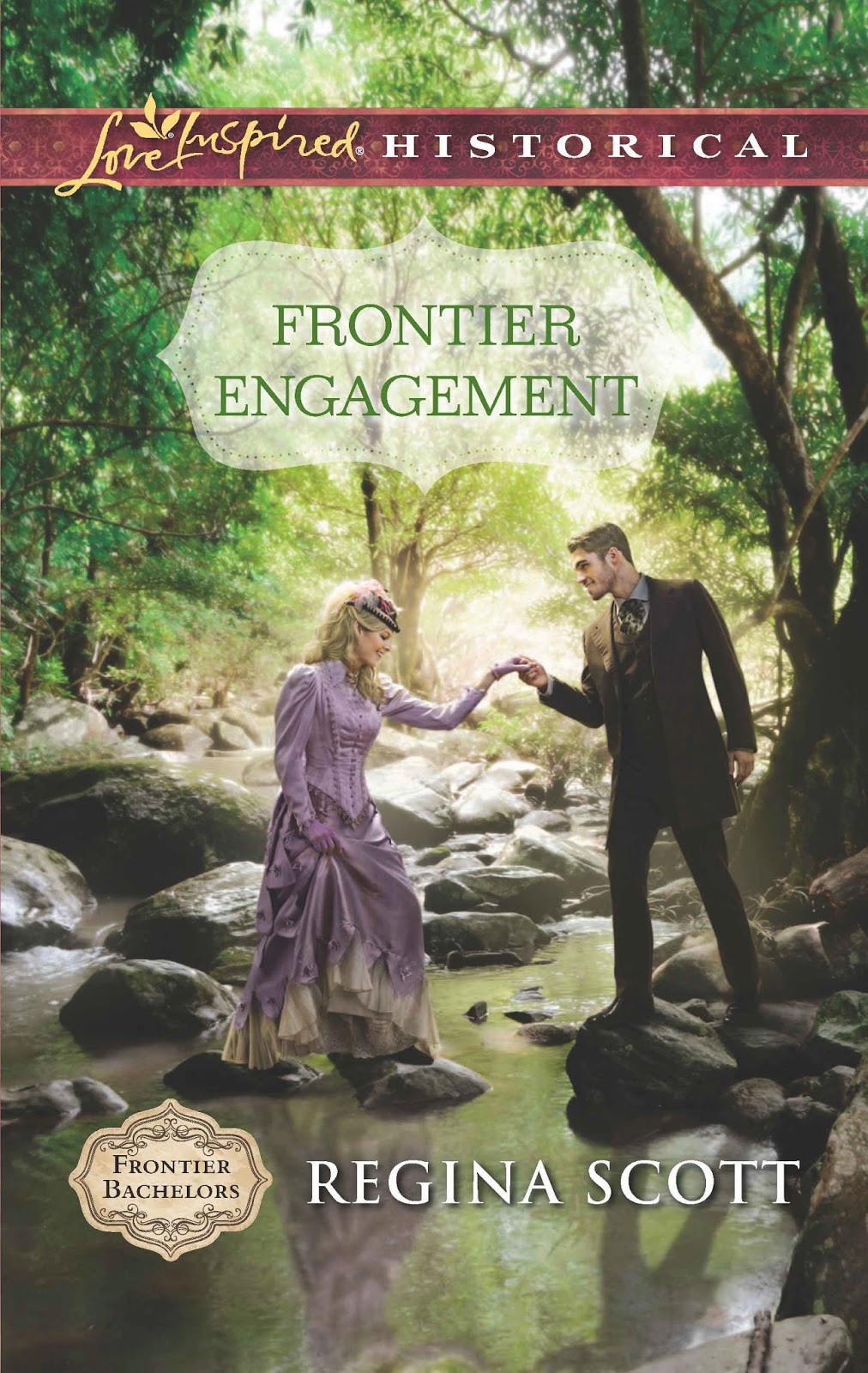
Rina Fosgrave, heroine of Frontier Engagement, came to Seattle to become her own person. Raised by charlatans who made her believe she was someone special, she wanted to contribute something to society. The real-life Mercer Belles also felt strongly about giving back. Many saw it as their mission to be a civilizing force on the new frontier.


Maddie O’Rourke, heroine of January’s Instant Frontier Family, wanted more than what she had. An Irish lass with a skill for baking, she’d served as a laundress in New York, lugging heavy loads up and down three flights of stairs and laboring in the heat and harsh chemicals. She dreamed of a nice house rather than a tenement, leisure time with her family instead of endless, back-breaking work. The real-life Mercer Belles also looked beyond what was expected of them. Asa Mercer may have accepted bride money from a number of men, but that didn’t mean the ladies had to marry them! They went on to be lighthouse keepers, teachers, and yes, wives and mothers of the next generation in the Northwest.

I like to think I look for opportunities to make the most of my skills, that I see the possibilities in the future, that I give back to society, and that I’m willing to work for what I want. Maybe that makes me good material for a Mercer Belle.

What about you? 

Friday, August 14, 2015

Pioneer Legends: Daniel Bagley

[The winner of a signed copy of Frontier Engagement is Daisy! E-mail me at reginascott@owt.com, Daisy, and I’ll send it right out to you. Congratulations, and thanks for commenting!]

In middle school and high school, I had two dear friends, sisters who shared a certain last name. Though we lost track of each other for a while, we recently reconnected as a result of the efforts of another friend. One of them told me that she was delighted to find their last name gracing a “character” in my Frontier Bachelors series. But I didn’t make up minister Daniel Bagley, who has a key scene in Frontier Engagement. He was one of those real-life characters who made Seattle great.

Daniel Bagley was born into a farming family in 1818 Pennsylvania, but he must have had an urge to wander from an early age, for he married when he was only 22 and promptly whisked his wife Susannah off to settle an Illinois prairie. He was ordained a Methodist minister in 1842 and took on the role of circuit preacher, riding all over the state. Ten years later, he was on a wagon train heading west to settle near Salem, Oregon. There he served as a missionary establishing churches.

The legend goes that his wife’s health drove him north to seek the “clean air” of Puget Sound. I’m not entirely sure how Puget Sound is any cleaner than Salem at that point in history. Supposedly they came by horse-drawn buggy, but I’m finding that one difficult to believe since it appears there were no roads leading north from the Portland area to Seattle until much later than 1860, when Daniel and his wife and 17-year-old son Clarence arrived. However, he reached Seattle, and whatever encouraged him to come, he started out as an agent of the American Tract society, passing out pamphlets to those who needed to repent, until he oversaw the building of what would become known as the Brown Church (as opposed to the only other church in town, which was painted white). Daniel was its first minister, preaching on Sundays and performing marriages, christenings, and baptisms for many of Seattle’s founding families.

But Daniel wasn’t content to minister only to their souls. He wanted to minister to their minds as well. He was one of the driving forces behind locating the territorial university in Seattle (what would become the University of Washington). When the legislature was persuaded to make the offer, he encouraged local landowners to donate sufficient land to make the dream a reality. He also served as president on the university board of commissioners and appointed Asa Mercer as the first university president.

And it seems he supported young Asa in other ways. He had known Asa through Asa’s brother Thomas, who originally journeyed west in the same group as Daniel. Asa worked as a laborer to craft the first building for the fledgling university. But Asa too had a dream: bringing brides to wilderness bachelors.

As we’ve seen, there are two schools of thought on Mr. Mercer’s attempts to bring young ladies from the East to “civilize” Seattle. Some thought him a visionary; others a cunning confidence man. Either way, his second voyage was plagued with rumors of financial improprieties. When a number of the women refused to marry gentlemen who claimed to have paid for their passage, Seattle erupted in controversy.

Mercer hired the use of Yesler Hall (also known as the sawmill’s cookhouse) to make his case to the good citizens of Seattle. Daniel oversaw the meeting. Supposedly Mercer’s persuasive arguments and the backing of several of his lovely charges swayed Seattle to see things his way. Daniel later married Asa Mercer to Anne Stephens, one of the women he’d brought with him. Very likely Daniel officiated at more than one marriage of Mercer’s Belles.

But he didn’t stop his wanderings. He managed the Newcastle coal mines on the east side of Lake Washington for a time, then went back to circuit riding, preaching at a number of churches in the area. He died at age 87 and is buried beside his wife in Seattle. Their son Clarence went on to become one of the area’s earliest historians, penning multivolume histories of Seattle and King County, histories to which I owe much of the information in my Frontier Bachelors stories.

So you see, I owe a lot to the name of Bagley, in fiction and in real life. As Rina likes to say, no one ever replaces a true friend. But if we are very fortunate, we may add to their number. Here's hoping you are very fortunate indeed!

Friday, March 13, 2015

Asa Mercer and Mea Culpa

No, those aren't the names of Hollywood’s latest It couple.  As I've written  before, Asa Mercer was the first president of the University of Washington, then the Washington Territorial University.  He figured large in the first book of my Frontier Bachelor series, The Bride Ship, as the real-life “Emigration Agent” who persuaded dozens of women to travel from the East Coast to civilize pioneer Seattle.  I tried to depict Mr. Mercer as a shrewd fellow who was focused on a goal:  bringing brides for bachelors.  I read any number of biographies on him.  And they all confirmed his claim to be the first president of the Territorial University. 

What they didn't mention was when he stopped being president.

Perhaps it was the dizzying delight of finally getting to write about the Mercer Belles, a dream I've had since I was a girl. Perhaps it was the many things I wanted to research in these, my first books set outside early nineteenth century England.  Either way, it never dawned on me that Mr. Mercer might have moved on in his profession before he made his fateful second voyage around which my stories are set.

This week, while trying to determine the school year at the Territorial University for a plot point in the fourth book, I delved more deeply into University of Washington history. It seems Mr. Mercer was only president from 1861 to 1863.  In 1866, when the first four stories are set, William Edward Barnard was president of the university for the first part of the year and George Fred Whitworth (who founded Whitworth College in Spokane, Washington) was president the second half of the year.

Oh, but I hate to get things wrong!  The mistake, unfortunately, affects three books. Mr. Mercer’s role as current president is mentioned not only in The Bride Ship, but in this month’s Would-Be Wilderness Wife and August’s Frontier Engagement.  My deepest apologies, dear readers.

And I must apologize to another.  You see, I am a graduate of the University of Washington.  Mea culpa, alma mater, mea culpa.


Friday, October 24, 2014

Go West, Young . . . Woman, Part III

We left the lucky ladies of the Mercer expedition ready to set sail into what were soon to be troubled waters.  The good ship Continental left New York on January 16, 1866, with a complement of 100 passengers.  Approximately 50 were ladies under the escort of Asa Mercer, Seattle’s Emigration Agent Extraordinaire.  Most of the others were married couples, children of the couples or widowed mothers, or single men who had paid Mercer for the privilege of sailing to Seattle.  One was none other than a reporter associated with the New York Times.

Roger Conant had come from a well-to-do family.  He’d studied law and fought for the Union before becoming a reporter for the Times.  But the reports he sent back from the Continent are not the unbiased, analytical commentary one might expect.  Conant delighted in looking for the salacious, the remarkable.  He didn't have much use for Mercer and tended to poke fun of the ladies, calling them Fair Virgins and teasing them about their love life.  Thanks to Conant's journal, published as Mercer’s Belles, and the journals of several of the ladies (such as Flora Pearson Engle), we know quite a bit about what befell Mercer’s maidens on that fateful journey.

And what an amazing journey it must have been!  Remember that these were women who had rarely set foot outside their little villages.  Now they were making call at exotic ports like festive Rio de Janeiro, the forlorn Straits of Magellan, and the wild Galapagos Islands. To make matters even more exciting,
everywhere they went, men begged them to stay!  The ship’s officers set up a round of flirtations, so determined to win the hands of their fair passengers that Mercer had to set up rules against dallying aboard ship.  No one paid him the least mind.  The military officers of Chile tried to appropriate them to teach there instead.  And the good citizens of San Francisco offered them lucrative jobs and marriages to remain behind in the City by the Bay.

Mercer’s hands were full trying to keep his charges contained.  Unfortunately, he had other problems, as his financial troubles hadn't ended in New York. Some would-be passengers were left behind, and they claimed he had bilked them out of their savings to finance his bride ship.  One woman even sued him for selling her furniture to pay his bills.  At one point, he asked several of the women to sign promissory notes, according to Conant, saying that their husbands would pay the price for them once they reached Seattle.  And just when he must have thought he was nearly home free, Holladay pulled a fast one when they reached San Francisco, refusing to allow the Continental to continue on to Seattle. 

Faced with the need to ferry his dwindling set of ladies north, Mercer wired to the Governor of Washington for funds.  What came back was a telegram congratulating him on his accomplishments, but lamenting that the state coffers were empty.  Mercer had to pay his last pennies just to read the refusal.  The story goes that he sold some of the women’s goods to pay for their hotel bills before finding some lumber schooners whose captains were willing to carry the ladies to Seattle for the pleasure of their company.

Only when they reached Seattle did some of the women learn that Mercer had bartered for their lives.  Conant claims that such stellar characters as men named Humbolt Jack, Lame Duck Bill, Whiskey Jim, White Pine Joe, Bob Tailed, and Yeke showed up demanding someone’s hand in marriage.  When the ladies refused to so much as speak to them, they vowed vengeance on Mercer.  Other fellows were more practical about the matter.  Conant tells of a stranger who arrived in town, claiming to have a farm far outside the city.  He asked Mercer to provide him with two or three women to take back with him, so he could see which would be more suitable for his wife.  None of the women agreed to accompany him. Imagine that!

Mercer went so far as to hire the cookhouse at Henry Yesler’s Sawmill to address the citizens of Seattle.  The Reverend Daniel Bagley officiated.  While many a cry was raised against the young man, a sufficient number of the ladies under his escort attested to his character.  In fact, one of those ladies went and married him. 

Whether Mercer was a courageous fellow out to civilize the wilderness or a cunning charlatan out to gather his fortune, the legend of the Mercer belles has fascinated the people of the Northwest for generations.  Some of you may remember a television program back in the late 60s--Here Come the Brides.  That was loosely based on Mercer’s expeditions, although, as you can see, Asa Mercer was no Bolt brother. I fell in love with the story as a child, and I’ve been waiting all my life to tell it.  Look for the first book in my Frontier Bachelor series, The Bride Ship, to be out in November.  We’ll be sure to whoop it up here on Nineteenteen when it’s out.

Because there really is nothing better than going West, young woman. 

Friday, October 17, 2014

Go West, Young . . . Woman? Part II

We left young Asa Mercer prepared to travel back East to bring home more brides for frontier Seattle.  But he had a few wrinkles to iron out first.  Traveling took money, and the young professor had little.  But dozens of bachelors in Seattle were willing to invest in his scheme so long as he brought them each back a bride of good repute.  Some stories have it that Mercer accepted as much as $300 per bride, a goodly price in those days.  Whatever the amount, he left Seattle with money in his pocket and the cheers of his comrades ringing in his ears.  But his good fortune quickly evaporated.

As a child, Mercer had supposedly met Abraham Lincoln, and he was counting on his connection with the president to win him a decommissioned troop carrier left over from the Civil War as an inexpensive way to transport his bevvy of belles.  He arrived in the capital to find it wreathed in black:  Lincoln had been assassinated.  The story goes that after being shunted from one government official to another, he ended up meeting with Ulysses S. Grant, who agreed that Mercer might have a ship, if he could purchase it.

The price requested was pennies on the dollar for the worth of the ship, but still far beyond Mercer’s means.  Enter transportation magnate Ben Holladay, whose stage coaches had helped fuel the California Gold Rush.  He offered to start a shipping company, buy the ship for Mercer and carry the party of 700 women back to Seattle for a pittance.  Overjoyed, Mercer signed the offered contract and went back to recruiting among the towns between Boston and New York, which had lost not only men but manufacturing jobs because of the war.

He must have sung a good song, for ladies lined up to join his expedition.  That is, until several prominent newspapers began questioning not only Mercer’s motives, but the motives of the women interested in going with him.  Mercer, they insisted, was only gathering bits of muslin that would end up in dens of ill repute or married to brutish husbands who would all but enslave them if they weren’t scalped first.  They called the women Sewing Machines, Petticoat Brigade, and a Cargo of Heifers. One editor firmly stated that any woman willing to go all the way across the country to find a husband didn’t deserve one.  The flood of recruits dwindled to a trickle.

Days turned into weeks and then months, and still the S.S. Continental wasn’t ready to sail. Then Holladay asked Mercer for more money.  It seemed the contract he’d signed stated that if the full complement of ladies was not ready to sail on time, the price for passage went up.  Desperate, Mercer turned to families and then bachelors to try to fill out his order of passengers.  While some women, it appears, had been promised free passage (paid for by Seattle’s bachelors), he demanded that others pay full fare and more. The money he’d been given in Seattle was spent to pay for hotel fees as everyone waited for the ship to set sail.

Only when she did sail did Mercer, and the ladies, begin to realize what lay ahead.

Next week, a gentleman finds the need for a long sea voyage.


Friday, October 10, 2014

Go West, Young . . . Woman? Part I

I’m about to take a major departure, crossing continents and time periods.  Instead of my beloved Regency England, the setting for my November book, The Bride Ship, will ultimately be frontier Seattle, just after the Civil War.  I guess you could say I heeded the call to “Go West, young woman.”

Newspaper editor Horace Greeley has been credited with at least popularizing the phrase, “Go West, young man,” a mantra that led a generation of gentlemen to cross the mountains to the other side of the country. But it was an enterprising young man from Seattle who first conceived of the idea of bringing young women west in large numbers to marry bachelors and help settle the frontier.

Asa Shinn Mercer was a young college graduate Illinois.  He had traveled west to join his brother, Thomas, in the fledgling Seattle.  He helped build the territorial university (now the University of Washington), then stayed on at its first president and only instructor.  It would have been a fine, respectable position for a young man, but for two things:  he had only one student old enough to actually graduate any time soon, and too few prospects for more.

You see, following the Civil War, men outnumbered women in Washington Territory by nearly nine to one.  There are stories about men paying young fathers for the rights to marry a baby daughter, once she reached marriageable age.  And the concept of marriageable age was questionable in some people’s minds.  One story goes that a young couple appeared before the Reverend Daniel Bagley, one of Seattle’s first ministers, begging to be wed.  Suspecting the young lady to be too young, he demanded to know her age. 

“I’m over 18,” she proudly proclaimed. 

Unwilling to call her a liar, he married them.  A short while later, her parents came pounding at his door, looking for their runaway daughter.  It seems the couple had stopped first at the home of the irrepressible Doc Maynard, one of Seattle’s most colorful founding fathers.  Maynard had advised the girl to write the number 18 on two pieces of paper, then stick them inside her shoes.  The thirteen-year-old was indeed standing “over 18” when she was married.

With women at such a premium, Mercer could see his vision of a prosperous future dimming.  So, he conceived of another vision.  The Civil War had left widows and orphans back East, young ladies with good educations, superior morals, and plenty of backbone.  All they needed was the knowledge of the need to come West.  He could provide that knowledge.  He could serve as Seattle’s Emigration Agent and bring home the brides.

Now, I will tell you, there are two schools of thought on Asa Mercer.  There is no doubt the citizens of Seattle applauded his initiative.  And after his first foray netted him about a dozen women, he was voted into the Washington State senate.  But other contemporary sources are less kind, particularly when Mercer decided to take his adventure to a grand scale.  He vowed to return to the East Coast and request a troop carrier from none other than President Lincoln, planning to bringing as many as 700 women to Seattle’s shores.  And what happened then, is beyond legend.

Next week:  Everything that can go wrong, does go wrong.