
Showing posts with label Frontier Engagement. Show all posts

Friday, January 8, 2016

Could You Have Been a Mercer Belle?

We’ve talked a bit about how back at the end of the Civil War, an enterprising young man named Asa Mercer decided to bring widows and orphans from the East Coast to marry lonely bachelors on the West Coast. The heroines of my Frontier Bachelors series have so far all been fictional members of Mercer’s party. They left everything—family, friends, vocations—to travel around the continent to pioneer Seattle. One of the questions readers often ask me is whether I would have been willing to be a Mercer Belle.

The answer took some thought. Could I have been as brave and bold as those ladies?

Widow Allegra Howard, heroine of The Bride Ship, boarded the Continental to sail with Mercer because she was fleeing oppression. In her case, it was in-laws determined to run her life down to the last moment, including telling her how her daughter should be raised. Many of the real-life Mercer Belles were fleeing economic oppression. During the war, they had worked in factories and mills, bringing much-needed income to their families. But the returning soldiers would take their places, leaving them out of work. They hoped to find opportunities on the frontier.

Catherine Stanway, heroine of Would-Be Wilderness Wife, came to Seattle hoping to start anew. Her father and brother were killed in the war, leaving her alone in the world. The real-life Mercer Belles had also seen loved ones—sweethearts, fathers, brothers—die, and the men who returned in some cases came back hollow shells with no interest in marrying. They hoped for a brighter future in the West.
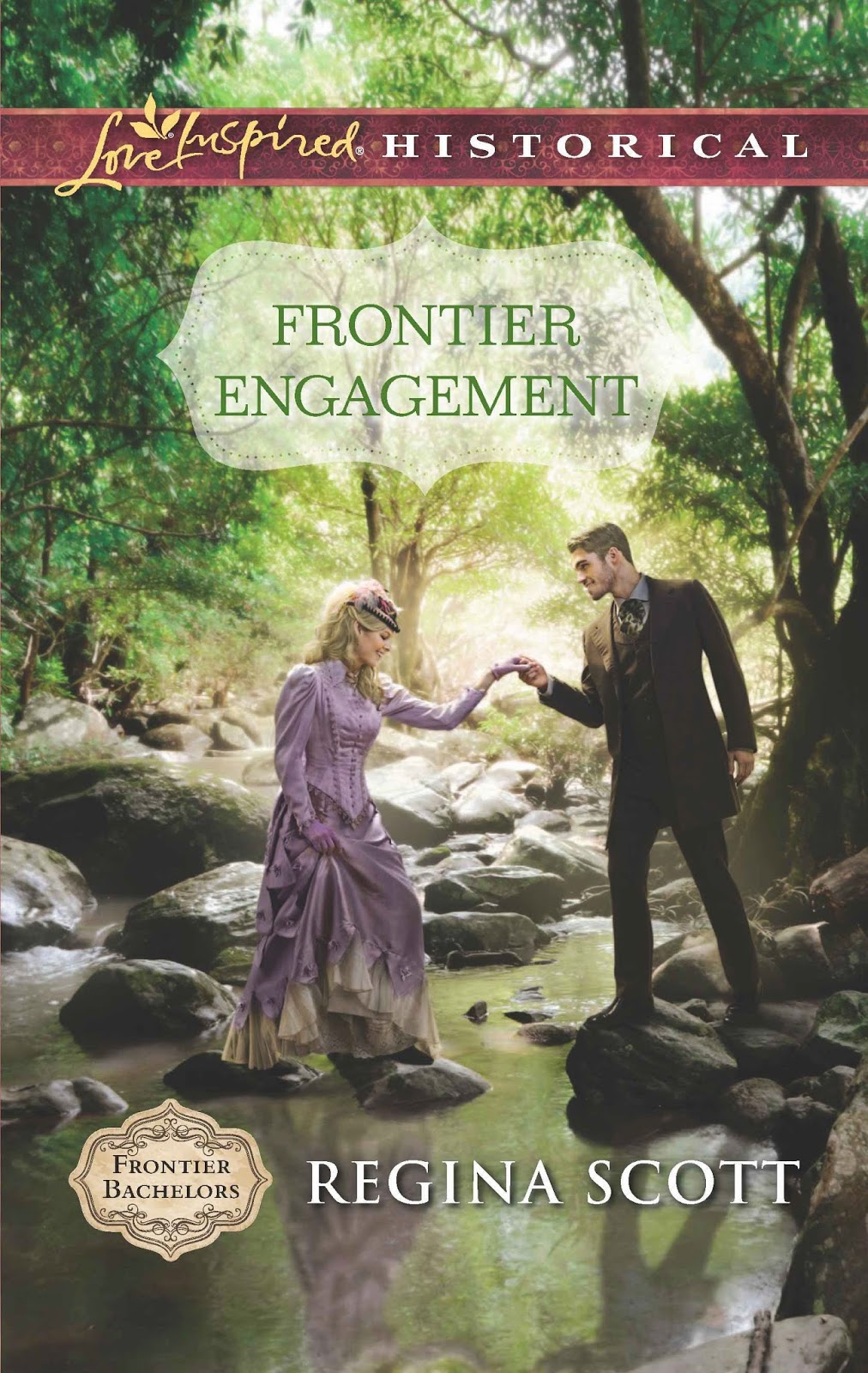
Rina Fosgrave, heroine of Frontier Engagement, came to Seattle to become her own person. Raised by charlatans who made her believe she was someone special, she wanted to contribute something to society. The real-life Mercer Belles also felt strongly about giving back. Many saw it as their mission to be a civilizing force on the new frontier.


Maddie O’Rourke, heroine of January’s Instant Frontier Family, wanted more than what she had. An Irish lass with a skill for baking, she’d served as a laundress in New York, lugging heavy loads up and down three flights of stairs and laboring in the heat and harsh chemicals. She dreamed of a nice house rather than a tenement, leisure time with her family instead of endless, back-breaking work. The real-life Mercer Belles also looked beyond what was expected of them. Asa Mercer may have accepted bride money from a number of men, but that didn’t mean the ladies had to marry them! They went on to be lighthouse keepers, teachers, and yes, wives and mothers of the next generation in the Northwest.

I like to think I look for opportunities to make the most of my skills, that I see the possibilities in the future, that I give back to society, and that I’m willing to work for what I want. Maybe that makes me good material for a Mercer Belle.

What about you? 

Friday, August 14, 2015

Pioneer Legends: Daniel Bagley

[The winner of a signed copy of Frontier Engagement is Daisy! E-mail me at reginascott@owt.com, Daisy, and I’ll send it right out to you. Congratulations, and thanks for commenting!]

In middle school and high school, I had two dear friends, sisters who shared a certain last name. Though we lost track of each other for a while, we recently reconnected as a result of the efforts of another friend. One of them told me that she was delighted to find their last name gracing a “character” in my Frontier Bachelors series. But I didn’t make up minister Daniel Bagley, who has a key scene in Frontier Engagement. He was one of those real-life characters who made Seattle great.

Daniel Bagley was born into a farming family in 1818 Pennsylvania, but he must have had an urge to wander from an early age, for he married when he was only 22 and promptly whisked his wife Susannah off to settle an Illinois prairie. He was ordained a Methodist minister in 1842 and took on the role of circuit preacher, riding all over the state. Ten years later, he was on a wagon train heading west to settle near Salem, Oregon. There he served as a missionary establishing churches.

The legend goes that his wife’s health drove him north to seek the “clean air” of Puget Sound. I’m not entirely sure how Puget Sound is any cleaner than Salem at that point in history. Supposedly they came by horse-drawn buggy, but I’m finding that one difficult to believe since it appears there were no roads leading north from the Portland area to Seattle until much later than 1860, when Daniel and his wife and 17-year-old son Clarence arrived. However, he reached Seattle, and whatever encouraged him to come, he started out as an agent of the American Tract society, passing out pamphlets to those who needed to repent, until he oversaw the building of what would become known as the Brown Church (as opposed to the only other church in town, which was painted white). Daniel was its first minister, preaching on Sundays and performing marriages, christenings, and baptisms for many of Seattle’s founding families.

But Daniel wasn’t content to minister only to their souls. He wanted to minister to their minds as well. He was one of the driving forces behind locating the territorial university in Seattle (what would become the University of Washington). When the legislature was persuaded to make the offer, he encouraged local landowners to donate sufficient land to make the dream a reality. He also served as president on the university board of commissioners and appointed Asa Mercer as the first university president.

And it seems he supported young Asa in other ways. He had known Asa through Asa’s brother Thomas, who originally journeyed west in the same group as Daniel. Asa worked as a laborer to craft the first building for the fledgling university. But Asa too had a dream: bringing brides to wilderness bachelors.

As we’ve seen, there are two schools of thought on Mr. Mercer’s attempts to bring young ladies from the East to “civilize” Seattle. Some thought him a visionary; others a cunning confidence man. Either way, his second voyage was plagued with rumors of financial improprieties. When a number of the women refused to marry gentlemen who claimed to have paid for their passage, Seattle erupted in controversy.

Mercer hired the use of Yesler Hall (also known as the sawmill’s cookhouse) to make his case to the good citizens of Seattle. Daniel oversaw the meeting. Supposedly Mercer’s persuasive arguments and the backing of several of his lovely charges swayed Seattle to see things his way. Daniel later married Asa Mercer to Anne Stephens, one of the women he’d brought with him. Very likely Daniel officiated at more than one marriage of Mercer’s Belles.

But he didn’t stop his wanderings. He managed the Newcastle coal mines on the east side of Lake Washington for a time, then went back to circuit riding, preaching at a number of churches in the area. He died at age 87 and is buried beside his wife in Seattle. Their son Clarence went on to become one of the area’s earliest historians, penning multivolume histories of Seattle and King County, histories to which I owe much of the information in my Frontier Bachelors stories.

So you see, I owe a lot to the name of Bagley, in fiction and in real life. As Rina likes to say, no one ever replaces a true friend. But if we are very fortunate, we may add to their number. Here's hoping you are very fortunate indeed!

Friday, August 7, 2015

What Would You Be if You Could? Comment to Win

My heroine in Frontier Engagement has a secret she must keep for fear of reprisal. But there comes a time when she feels she should begin to confess to my hero James Wallin, when they’re stranded together in the wilderness. She starts by telling him that she never set out to be a teacher, for all that’s her profession now.

James: So what did you intend to do if not teach?  Marry some wealthy society fellow?

Rina: No.  I thought I’d rule a nation.

James: Really? Which one?  Because I personally have always felt Canada should be conquered.

So, what would you be if you could be anything you wanted? Astronaut? Baker? Circus performer? Something no one else would dream?

Tell me in the comments, and you will be entered in a drawing for a free, autographed copy of Frontier Engagement (or one of the other books in my author stash if you’ve already purchased it).  I will announce the winner next Friday.

And me? Why, I’ve always wanted to be a writer!

Tuesday, August 4, 2015

An Engagement on the Frontier

I’m tickled pink to announce the release of the third book in my Frontier Bachelors series for Love Inspired Historical, Frontier Engagement. Library Journal called it absorbing, touching, and heartwarming, and Huntress Reviews gave it five stars. But I love the story because I had so much fun writing it.

You see, James Wallin is a bit of a card--witty, charming, with a smile that could coax the birds from the trees. He prides himself on his team of fast horses, his style, his clever response to any situation. Until he meets lady who distrusts charm above all things. Here’s the blurb:

James Wallin's family is depending on him to find a schoolteacher for their frontier town. Alexandrina Fosgrave seems to be exactly what he needs to help fulfill his father's dream of building a new community. If only James could convince her to accept the position. 

Rina has traveled west to seek a fresh start, not to find a groom. But after she's stranded in the wilderness with James, he offers her his hand in marriage to protect her reputation. Both are afraid to fall in love, but maybe an engagement of convenience could make them reconsider… 

Here’s a sneak peek of how James and Rina get along together (or not!):

The crossing denied them, he managed to turn the wagon and team and go back the way they had come. Sure enough, a tiny trail, little more than the width of the wagon, led off the existing track. He clucked to the horses, who eased the wagon onto the trail. At least it had stopped raining. He could see the way clearly, past rocky hillsides and thick forest.

The lady beside him was stonier, face set and arms crossed over her chest. Surely he could make her smile again.

“Fine day for a drive,” he ventured.

“Not from where I sit,” she replied.

He leaned closer, gave her his best smile. “Not too late to turn back.”

“I fail to see how you can even turn!” she protested.

“Oh, I’d figure something out,” he said, straightening. “I always do. Just say the word.”

“The word, Mr. Wallin,” she grit out, “is onward.”

So they were back to being prickly again. He sighed. “Is that one of the rules for a teacher—excessive formality? Otherwise I’m certain I’d be James by now.”

“You didn’t give me permission,” she pointed out.

“I didn’t ask it either, Rina,” he replied.

Her lips tightened. “No, you did not, but I doubt my new employers would approve.”

“A shame they aren’t here, or to see you cavorting through the forest with an eligible bachelor.” He wiggled his brows at her.

She regarded him coolly. “We are not cavorting,” she informed him. “We are driving on a public road in full view of anyone who might drive by.”

He glanced around at the trees, then back at her. “Very proper, unless you consider the fact that this is more a trail than a road, and we aren’t likely to see another human being for miles.”

“But we could,” she insisted. “That is the point, Mr. Wallin.”

“James,” he corrected her.

“Fine,” she said. “James. But I think it is clear by our actions that we are not attempting to be clandestine. Therefore, our behavior is completely aboveboard.”

She had the cutest little nose. At the moment, it was high in the air, as if she had no doubt of her convictions.

“So, as long as it’s done in the open, it’s proper?” he asked her.

“Precisely.”

“Good.” He pulled on the reins to halt the horses.

Rina put a hand to the sideboard as the wagon jerked to a stop. “What are you doing?”

“Attempting to persuade you to come home with me,” he said, and he bent and kissed her.

Interested? You can find Frontier Engagement for a limited time at fine stores like Barnes and Noble and Wal-Mart. You can also order online at

Indiebound (a bookstore near you)
The Book Depository (free shipping worldwide)  

Friday, July 17, 2015

Frontier Learning: Rules for the Teacher

My mother was a teacher. I dabbled with the idea of becoming one, until I realized the incredible dedication and discipline involved. I have nothing but respect for the men and women who instruct and guide the next generations. But when I was researching for my August book, Frontier Engagement, I was surprised to find that expectations for teachers have changed dramatically since the late 1800s. Then as now, schoolboards wanted the best for the community’s children. But what they considered “best” was rather interesting.

Teachers were expected to fill the lamps, make the fire in time for the children to be warm when they arrived, bring in water, scrub the floors, clean the blackboard, and wash the windows. After finishing their grueling days (as long as 10 hours), the teacher might return to quarters that could amount to no more than a single room. Rules generally frowned upon going out in the evenings, particularly to pool halls and ice cream parlors. Teachers could not smoke, dress in bright colors, or dye their hair.

Rules for men and women teachers also varied. While the Fort Worth pioneer school rules dating from the 1880s allow a man to take one evening a week for courting (two evenings if he attends church regularly), rules posted at the Pioneer Farm Museum’s school state that a female teacher is not allowed to spend time with men. Period. And if you married during the school term, you were summarily dismissed. On the other hand, Fort Worth warned a male teacher against getting shaved in a barber shop or he would “give good reason to suspect his worth, intention, integrity, and honesty.” They also advised that every teacher should save up from the miserly salary paid so that the teacher would not become a burden on society when retired.

Rather unconducive to a pleasant learning experience.

And speaking of learning, I can hardly wait to learn new things myself in the next couple weeks. Marissa and I will be heading to New York for the annual Romance Writers of America® conference. We’ll talk with editors and agents, catch up with old friends and meet new ones, and generally celebrate this crazy career we call writing. Look for posts from us when we can sneak away from all the fun er I mean business. And I’ll be sure to catch you up on July 31, when I return from spending a few days with Marissa and her family post-conference.

If you happen to be in New York City on July 22, stop by the Marriott Marquis in Times Square, where nearly 500 romance writers will be signing books. The event is open to the public, and all proceeds go to support literacy. Marissa and I will both be signing—come and say hi!

You might learn something.

Friday, May 8, 2015

Four Things on a Friday: Excerpts!

So many cool items have come to my attention, I had to share them with you.  So, here are four nineteenth century- or reading-related things you need to know:
  1. Looking for other nineteenth-century romances to read?  The Bluestocking League, a group of sweet Regency romance authors (sweet as in the books feature nothing more than kisses, although the authors are pretty sweet gals themselves!), is featuring themed excerpts from their books online.  The first two up are “Do let us have a little music,” on the website of inspirational Regency author Camille Elliot and “So you think you can dance,” on my own website.  Check them out--you just might discover a book you have to read.
  2. Wondering what else might be out there in the wide wide world of romance books?  Romance Writers of America has a free reader app called Novel Engagement that will help you discover even more authors.  You can browse by keyword, author, title, and more.   
  3. Ever wonder who popularized the Regency time period after Jane Austen?  This year marks the 80th anniversary of the modern Regency, as first published by the incomparable Georgette Heyer.  The Beau Monde Chapter of Romance Writers of America is celebrating with a series of discussions about her books.  The most recent is The Grand Sophy.
  4. Want to know what was really happening in Washington Territory during the pioneer years?  The Washington Secretary of State has made available digitized copies of newspapers from all along Puget Sound and across Eastern Washington, some dating as early as 1852. I found it was fascinating to read not only the stories, but the advertisements of various businesses and products.  In fact, reading one legal notice gave me an idea for Simon Wallin’s book, which will be out in November or December 2016, after Frontier Engagement (James Wallin) in August 2015 and Instant Frontier Family (Maddie O’Rourke) in January 2016.
May you find many more things to delight you this Friday, my dears!

Friday, April 17, 2015

Cover Reveal! Frontier Engagement

I mentioned a few weeks ago how interesting I found the fashion plates compared to what would have been practical for my frontier ladies to be wearing in 1866 Seattle.  The same goes for gentlemen.  The tall beaver hats, tailcoats for evening wear, and elegant waistcoats weren't exactly useful when mining for gold, chopping down towering fir and cedar, or harrowing a field for planting.  Here’s how those gentlemen tended to dress:


Rugged.  Easy to move in.  Durable.  Unless of course, you happen to be James Wallin.

As those of you who have read Would-Be Wilderness Wife know, James, the third Wallin brother, is a character.  He’s always teasing anyone he likes, he has a team of horses rather than the practical oxen of the period, and he favors fancy clothes, so much so that he occasionally wears his waistcoat logging.  So when I was asked for cover ideas for James’s story, Frontier Engagement (due out August 1), I advised my publisher to dress him up nicely, even if he is in the wilderness.  In fact, he needed to be dressed as nicely as the heroine, Rina Fosgrave, who has a rather, ahem, aristocratic background for a lady sailing on the Mercer Expedition.

I am pleased to reveal the cover for Frontier Engagement:


James Wallin's family is depending on him to find a schoolteacher for their frontier town. Alexandrina Fosgrave seems to be exactly what he needs to help fulfill his father's dream of building a new community. If only James could convince her to accept the position.

Alexandrina has traveled west to seek a fresh start, not to find a groom. But after she's stranded in the wilderness with James, he offers her his hand in marriage to protect her reputation. Both are afraid to fall in love, but maybe an engagement of convenience could make them reconsider… 

Want to guess the actor/actress I had in my mind for the physical characteristics of James and Rina?  The hero has a drive about him, and he’s been known to advise people about crazy, stupid love.  Though he’s starred in a period flick, he was a bit of a gangster.  The heroine, on the other hand, may be a little tougher to identify.  A Brit, she shares a first name with a certain popular boy wizard with a lightning bolt-shaped scar on his forehead. She’s a triple threat as a writer, actress, and comedienne, working in theatre as well as in film.

Who do you think I used?  Guess right and I’ll enter you in a drawing to win a free copy of a book from my author stash (which currently includes copies of The Bride Ship, The Wife Campaign, The Captain’s Courtship, and the hard-to-find earlier novel, Starstruck). 

Friday, March 13, 2015

Asa Mercer and Mea Culpa

No, those aren't the names of Hollywood’s latest It couple.  As I've written  before, Asa Mercer was the first president of the University of Washington, then the Washington Territorial University.  He figured large in the first book of my Frontier Bachelor series, The Bride Ship, as the real-life “Emigration Agent” who persuaded dozens of women to travel from the East Coast to civilize pioneer Seattle.  I tried to depict Mr. Mercer as a shrewd fellow who was focused on a goal:  bringing brides for bachelors.  I read any number of biographies on him.  And they all confirmed his claim to be the first president of the Territorial University. 

What they didn't mention was when he stopped being president.

Perhaps it was the dizzying delight of finally getting to write about the Mercer Belles, a dream I've had since I was a girl. Perhaps it was the many things I wanted to research in these, my first books set outside early nineteenth century England.  Either way, it never dawned on me that Mr. Mercer might have moved on in his profession before he made his fateful second voyage around which my stories are set.

This week, while trying to determine the school year at the Territorial University for a plot point in the fourth book, I delved more deeply into University of Washington history. It seems Mr. Mercer was only president from 1861 to 1863.  In 1866, when the first four stories are set, William Edward Barnard was president of the university for the first part of the year and George Fred Whitworth (who founded Whitworth College in Spokane, Washington) was president the second half of the year.

Oh, but I hate to get things wrong!  The mistake, unfortunately, affects three books. Mr. Mercer’s role as current president is mentioned not only in The Bride Ship, but in this month’s Would-Be Wilderness Wife and August’s Frontier Engagement.  My deepest apologies, dear readers.

And I must apologize to another.  You see, I am a graduate of the University of Washington.  Mea culpa, alma mater, mea culpa.