Oh my goodness, it’s that time again!
Here at NineteenTeen Regina and I are celebrating our bloggy birthday this week and embarking on our eighth year of telling you about all the fun bits of history that don’t make it into textbooks (or even into our own books.) Yes, that's right, our eighth year--you've been reading us since 2007.
Eight years...if we were a boy in 19th century England, we'd be getting shipped off to Eton about now.
Like, wow.
So first of all, thank you for subscribing to our feed, stopping by occasionally, or whatever you do as a NineteenTeen reader. Because...well, you're why we post every week. It wouldn't be much fun if we didn't have someone to talk to.
We plan to bring you more of the same (well, not exactly the same, but you know what I mean.) I’ll be posting a few more Fashion Forecasts from 1917 over the next months in addition to other WWI-centric posts...as well as introducing a new Ackermann’s Repository series (quelle surprise...but I think you’ll like this one a lot.) I’m not sure what Regina has up her sleeve because we like to surprise each other sometimes, so I’ll let her tell you about that on Friday. In short, look for more of what you expect from us.
However, it doesn't have to be that way. As we always do at this time, we’re requesting feedback from our readers. Are there any topics you’d like to see us cover that we haven’t already? Any types of posts you’d like to see more of? Do you want to try a group reading again? More guest posts (and if so, whom would you like us to invite)? Please, let us know how we’re doing...and if you do, I hereby give you permission to eat cake at least once this week. Maybe more.
Because hey, it's our birthday, right?
Tuesday, September 9, 2014
Friday, September 5, 2014
On Being the Toast of London
You may have heard the phrases in stories set in the early
nineteenth century--the toast of London, the belle of the ball, an
Incomparable, a diamond of the first water.
What sort of young lady do those phrases describe? Well, real-life examples vary, but here are
some characteristics to consider:- She is invited to all major social events and may indeed be the first person on the hostess’s guest list.
- Her drawing room is constantly filled with fawning gentlemen and giggling lady friends because how could they possibly pass the day without a moment of her company?
- She receives the coveted vouchers for Almack’s, London’s famous ladies’ club, without any manipulation or begging on her part.
- She garners more than one offer from an eligible bachelor for her hand in marriage within a short time frame.
- Her very name is synonymous with good taste, elegance, and sophistication.
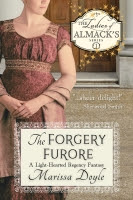
But the toast of London is about to get burned.
Priscilla is well on her way to wringing a proposal out of
the Season’s most eligible bachelor, the Duke of Rottenford, when blackmail
notes start arriving, threatening to expose a dark secret unless she ceases her
pursuit. It’s up to Emily and her dear friends Ariadne and Daphne Courdebas to
help her uncover the mastermind before disaster strikes. But more than one
secret is waiting to be revealed, not the least of which is Priscilla’s growing
attraction for a most unlikely ally, Nathan Kent, the duke’s personal
secretary. But will Nathan, no, no, the duke, understand if her secret comes
out?
Here’s an excerpt:
Nathan Kent set his top hat on his head and descended the
steps of the town house with an unwelcome feeling of defeat. He glanced back
with a frown. Lady Emily, the youngest daughter of the Duke of Emerson, seemed
such a levelheaded young woman. He had been quite impressed by the way she’d
regained her composure after the contretemps at her debut ball a week ago. Between
her personality and her place in Society, Lady Emily would have made an
exceptional liaison for His Grace the Duke of Rottenford. A shame her interests
obviously lay elsewhere.
He allowed himself a sigh. He was running out of suitable
matches, which meant Miss Priscilla Tate was going to be a problem. Oh, there
was no doubt she had the presence to make an excellent duchess. And no man
alive could complain of her looks.
He supposed if he searched in Belgium or Flanders he might
find a woman whose hair was as golden or possessed of such luster and vitality
that it begged to be touched. It was possible some Irish lass might have eyes a
more vibrant shade of green and capable of exuding the warmth that beckoned a
man like a fire on a cold winter night. The women who had modeled for the classic
Greek sculptors could have had figures that rivaled the one Miss Tate showed to
advantage in her stylish gowns.
But somehow he doubted any other woman in England combined
those traits with such cunning and will as he had seen in her. She had thrown
her considerable armament against the wall of His Grace’s bachelorhood,
determined to capture the duke’s affections. Nathan could not allow her to
succeed.
He turned to the front again, his duty stiffening his spine,
and found the very woman he’d been contemplating standing in his way. Nathan
blinked.
Miss Tate blinked.
For a moment, he almost thought he was mistaken in her
identity. Stripped away were the polished airs, the coy smiles. The color in
her cheeks came from high emotion or exertion, not rouge. The downturn of those
rosy lips spoke of dismay.
He put his hand to her elbow before he thought better of it.
“Miss Tate. Is everything all right?”
He watched as the woman withdrew behind the mask. Her gaze
brightened, her lips lifted, her lashes fluttered.
“Why, Mr. Kent, how nice to see you.” She glanced pointedly
around him as if he could have hidden his tall employer behind him. “Is His
Grace with you?”
“Alas, no,” Nathan replied, trying to recapture her gaze
even as he dropped his hold of her. “Uneasy lies the head that wears that
coronet.”
Her smile was no more than polite. “Of course. I admire a
man who takes his duty seriously.”
Did she? Somehow, he doubted she would admire him for doing
his duty, especially when that duty meant keeping His Grace away from fortune
hunters like her.
He tipped his hat. “Then you will not mind if I return to mine.
Good-day, Miss Tate.”
She inclined her head. Had he been the duke, she would have
dipped a curtsey with effortless grace and humility. As a mere personal secretary,
he had not warrant such a response. Indeed, she turned from him so quickly it
seemed he did not even warrant her attention. Given the tasks he needed to
complete before returning to His Grace, Priscilla Tate did not warrant Nathan’s
attention either.
But as he reached the street, he could not help glancing
back one last time. She had reached the door to the town house and lifted her
hand to the brass knocker. Her back was straight, her head high. The pink satin
pelisse was a mastery designed to outline her curves. She was the epitome of a
fine London lady.
Yet the hand that reached for the knocker was trembling.
What had happened to so discompose the redoubtable Miss Tate?
And why, when he was certain she was a clever fraud, did he feel compelled to
help her?
Buy now from
Tuesday, August 19, 2014
Such Language! 1917 Style
I used to have great fun with posts about early nineteenth century slang (and will probably have more of them). Imagine my delight, then, when in the course of research for my work-in-progress set in 1917, I ran across a list of words that first entered common usage (or at least were finally recorded in print) in this year. Entries are from the enormously fun and fascinating site Word Origins.
Ammo: It’s not surprising that a number of the words you’ll see here are related to the war, which the US had just entered in April...like this shortening of the word ‘ammunition.’
Blotto: Because another amusing term for being drunk is always useful.
Camouflage: a useful borrowing from our ally, the French.
Cootie: lice infestations being another by-product of trench warfare. Possibly arriving in English by borrowing from the Malaysian word for biting insect, kutu, by way of British soldiers serving in southeast Asia.
Bolshevik: The Russian Revolution in this year ushered a whole variety of words into English—not only this one, but also Leninist and Soviet as well.
Hokum: a borrowing from American theater slang, a blend of the words ‘hocus-pocus’ and ‘buncombe’ (or ‘bunkum’)
Spritz: to sprinkle or spray, borrowed from German.
Supersize: yes, really!
☺
Ammo: It’s not surprising that a number of the words you’ll see here are related to the war, which the US had just entered in April...like this shortening of the word ‘ammunition.’
Blotto: Because another amusing term for being drunk is always useful.
Camouflage: a useful borrowing from our ally, the French.
Cootie: lice infestations being another by-product of trench warfare. Possibly arriving in English by borrowing from the Malaysian word for biting insect, kutu, by way of British soldiers serving in southeast Asia.
Bolshevik: The Russian Revolution in this year ushered a whole variety of words into English—not only this one, but also Leninist and Soviet as well.
Hokum: a borrowing from American theater slang, a blend of the words ‘hocus-pocus’ and ‘buncombe’ (or ‘bunkum’)
Spritz: to sprinkle or spray, borrowed from German.
Supersize: yes, really!
☺
Tuesday, August 12, 2014
A Good Story Is Timeless
What’s your favorite historical period? Marissa and I started this blog because we
have a fascination for the nineteenth century, and England. But the nineteenth century is often called
the “long” century, because the attitudes in it could be seen as spanning the
late 1700s to the early 1900s. And
within that time, as you probably noticed from just in Marissa’s fashion
forecasts, everything from fashion to technology to religion made some drastic
changes.
Then there’s the difference between what was fashionable in
England and what was popular in America.
And Marissa has found plenty to love lately in the World War I era.
So what’s your favorite?
I have a soft spot for the Regency period, no doubt about that. But I've always loved stories about the way
west along the Oregon trail, and I enjoy a good medieval yarn about bold
knights and noble ladies. And who doesn't
love a cowboy?
The amazing variety of historical settings available to
authors is one of the reason I’m so pleased to be part of the new boxed set, Timeless:
Historical Romance Through the Ages.
Together, the stories range from Regency England to early 1900s Chicago,
from Minnesota during the Sioux Uprising to post-Civil War Missouri. And two stories are set in Montana, one in a
Civil War era mining camp and one on a 1890 ranch.
Give it a try, and tell me which you love most.
And where is Marissa, you might ask? She’s off this week. She’ll post next Tuesday, we’ll both be off the
last week of August, I’ll post September 5, and we’ll be back to our normal
posting schedule September 8. Happy
reading!
Friday, August 8, 2014
Sailing the Seas of Cover Creativity
Ah, the joys of book covers!
As we've discussed, authors often have very little control over what
comes out when they are traditionally published. I feel quite fortunate that my editor and
publisher at Love Inspired ask for a lot of input, and they generally listen
when I have concerns. That was exactly
the case for November’s The Bride Ship.
In early June, my editor’s wonderful assistant sent me an
early version, cautioning me that not much could be changed but to look for any
major errors that must be corrected. The
heroine’s look was spot on, and I loved the way she seemed to be gazing out
toward her future. But then I saw the
ship, and gulped. She looked a bit like
the one above.
The problem? That’s an artist's rendition of the Queen Mary from around the 1930s. My book is set post-Civil
War. The actual bride ship, the S.S. Continental, looked like this:
So I asked, nicely, hesitantly, whether that could be
fixed. And it could!
Here is the final cover for The Bride Ship. The hull is
still a bit metal-looking, but you can see the two masts rising above her, and
the forecastle is much closer to reality.
Phew!
But I would be remiss if I didn't point out another cover
recently created. The talented author
and artist Aileen Fish created this cover for our
upcoming boxed set, Timeless: Historical Romance Through the Ages,
which will release next Tuesday, August 12. From turn of the century Chicago to
1860’s Montana to the Civil War era and Regency times, there
is something for every historical romance reader. This sweet romance boxed
set features seven novels by bestselling authors,
starring unforgettable characters falling in love in the most captivating
settings.
This collection includes:
All the Blue of Heaven by Virginia Carmichael
Sky Tinted Water by Keta Diablo
The Incorrigible Mr. Lumley by Aileen Fish
Lasso My Heart by Linda Ford
A Mile Apart by Sarah Jae Foster
Through the Storm by Brenda B. Taylor
And my own Secrets and Sensibilities, Book One in
the Lady Emily Capers.
We’ll be pricing it at just 99 cents for the first month. I hope you’ll give it a try.
And happy sailing!
Tuesday, August 5, 2014
Fashion Forecast: August 1917
What was the well-dressed young woman wearing in August 1917?
The reality of war seems to have caught up with designers this month: overall, styles have fewer fussy details, and a definitely military flavor has begun to creep in, as can be seen in both The Delineator...
And in this month’s McCall’s:
Military style coats and dresses with less trimming, also from The Delineator:
The new military styling coming in this month will spell the eventual end of the barrel silhouette seen in the dress on the left, but for now, it's hanging on:
A few more military fashions from The Delineator (she looks like an army nanny, doesn't she?!):
And a daring outfit "for active service" from McCall's which includes bloomers and puttees:
The consciousness of the country's war status extended to learning how to "make do" as well and find new ways to use old garments. From a multi-page article from The Ladies' Home Journal, here are some tips on recycling chic:
Of interest are a section on lingerie from The Delineator:
And sports hats from McCall's--the sweaty headband and disheveled ponytail look for sports was definitely a thing of the future. I wonder if Columbia still has a Millinery Department? ;) :
And lastly, teen fashions weren't exempt from the military look either, as seen in The Delineator here:
And here:
And here in McCall's:
And let's not forget the kids...perhaps more than any other war in American history, World War I had an enormous effect on our popular culture (The Delineator):
What do you think of August 1917's fashions?
The reality of war seems to have caught up with designers this month: overall, styles have fewer fussy details, and a definitely military flavor has begun to creep in, as can be seen in both The Delineator...
And in this month’s McCall’s:
Military style coats and dresses with less trimming, also from The Delineator:
The new military styling coming in this month will spell the eventual end of the barrel silhouette seen in the dress on the left, but for now, it's hanging on:
A few more military fashions from The Delineator (she looks like an army nanny, doesn't she?!):
And a daring outfit "for active service" from McCall's which includes bloomers and puttees:
The consciousness of the country's war status extended to learning how to "make do" as well and find new ways to use old garments. From a multi-page article from The Ladies' Home Journal, here are some tips on recycling chic:
And sports hats from McCall's--the sweaty headband and disheveled ponytail look for sports was definitely a thing of the future. I wonder if Columbia still has a Millinery Department? ;) :
And lastly, teen fashions weren't exempt from the military look either, as seen in The Delineator here:
And here:
And here in McCall's:
And let's not forget the kids...perhaps more than any other war in American history, World War I had an enormous effect on our popular culture (The Delineator):
What do you think of August 1917's fashions?
Friday, August 1, 2014
The Surprising Game of Lawn Tennis
Lawn tennis sounds like such a genteel game. Can’t you see the ladies in long dresses and gentlemen in natty jackets lobbing balls back and forth across the net on a summer’s afternoon in the
nineteenth century? I fully intended to
write a post with the same languid feel to it.
But what I learned about lawn tennis, and its predecessor, “real
tennis,” surprised me.
For one thing, the game called real tennis was almost
exclusively relegated to royalty in the middle ages. Kings in Europe and England were rather
determined in their pursuit of the sport, building courts and challenging other
gentlemen to matches. And it turns out
to have been a rather deadly sport. King
Louis X of France died from a severe chill received while playing. Charles VIII of France died from striking his
head on the way to a game. When
assassins arrived to kill James I of Scotland, he attempted to flee through the
sewer, only to find that the drain had been blocked to prevent tennis balls
from going astray on the court above it.
Alas, the assassins did not go astray.
For another thing, the courtly sport of real tennis died out
with much of European royalty around the time of Napoleon, but lawn tennis, the
tennis we know today, began to take form.
Various versions were played around England, but more as an enjoyable
pasttime. However, around 1874, the
activity and its terminology became more codified with the publication of rules
and the creation of the first tennis club.
Popularity continued to increase, and tennis championships soon
followed. And the ladies soon joined the
gentlemen on the court.
That women played tennis competitively so early also
surprised me. The first women’s
championships were held in 1879, one in England and one in Ireland. In 1884, the All England Championships began including
events for women players. Held at
Wimbledon, the singles match was won by Miss Maud Watson, who played her sister
Lilian Watson for the title. She won a
silver flower basket valued at 20 guineas, while her sister won a silver-backed
mirror and brush. Miss Bingley
(grand-daughter or great-daughter of Mr. Bingley, perhaps J)
advanced to the quarter finals that year, but won in 1886. She won again in 1888, but by that time, she
had married and was billed as Mrs. G.W. Hillyard. Those are the lovely Watson sisters in the
picture, along with Ernest Renshaw and Herbert Fortescue Lawford, both
champions in their own right. Another important
player at the time was Lottie Dod, who won the ladies singles five times
between 1887 and 1893.
Ladies doubles were first played at Buxton in 1885, with
Mrs. Watts and Miss Bracewell taking the championship. Another surprise, however, was that ladies
and gentlemen played with each other.
For example, in 1888, Mrs. G.W. Hillyard won the mixed doubles
championship with her partner Ernest Renshaw.
One gentlemen reminiscing of the early days of tennis recounted how Lottie
Dod (at left there) had even bested Ernest in a singles match.
Ernest was the twin brother to William Renshaw, both tennis
professionals who played in England and France in the summers and hit the
Mediterranean in the winter. They had a
court build on their property to practice.
Ernest appears to have been the lesser light. He lost to William at Wimbledon three
times. William, on the other hand, won
twelve Wimbledon titles, seven for singles, five for doubles partnering Ernest. One commentary noted that that record for singles
has only been matched by Pete Sampras and Roger Federer.
Yeah, about that languid playing? I’m thinking not so much.
Subscribe to:
Posts (Atom)