Friday, January 4, 2019

Nice Way to Start the Year


I style myself as an award-winning author, but the number of awards is much smaller than that of some of my sister authors (cough, cough, Marissa). So, when I hear that my books have made some list, I get rather giddy. Allow me to share that giddiness with you.

For the third year in a row, I am honored to have one of my books on Kathy’s Review Corner’s Gems list, this time for Never Doubt a Duke, the first in my Fortune’s Brides series. Kathy is a voracious reader, and I appreciate how she works with authors to showcase great books. She chooses her favorite books of the year to include on the Gems list. You might drop by for a visit. 

Never Doubt a Duke also graced the Favorite 2018 Books list at Hope by the Book. My thanks to Alysha Worthen and her blog, For the Love of Christian Fiction, for the nomination.

If you’d like to catch up with the latest of my Fortune’s Brides series, Never Vie for a Viscount was launched on December 28. Lydia Villers wants to leave behind her life as a social butterfly and pursue a career in natural philosophy. A shame the only scientist available to assist her is the man she had once hoped to wed. Viscount Worthington has been betrayed once too often, including by the bubbly beauty who now wants to work at his side. How can he believe Lydia’s intentions are true this time? With the help of Miss Thorn and her beloved cat Fortune, an enthusiastic young lady and a wary lord might just discover that only together do they make the perfect chemistry.

Here’s a little taste:

As the rest of the team murmured their goodbyes, Lydia went to set the pincushion on the shelves. Irritating, impossible man. How was she to learn anything when Worth set her at meaningless tasks? Was he trying to force her to leave?

She gasped, whirling. “You are! You want me gone.”

His sister Charlotte frowned. “I’m sure I never said any such thing.”

Worth had his hands behind his back, as if intent on hiding something. “If the work displeases you, Miss Villers, we will not hold you to your agreement of employment.”

Charlotte stared at him. Lydia raised her chin and looked him in the eye. The grey seemed darker, as if his thoughts were as dismal.

“I came here to learn more about natural philosophy,” she told him. “Nothing you have done, nothing you can do, will change that, my lord.”

She thought he might look disappointed, perhaps chagrined that she had caught him at his game. Instead, he stepped forward and offered her his arm.

“In that case,” he said, “may I see you home, Miss Villers?”

She wanted to refuse. He had disappointed her too many times. But he obviously had a hypothesis about her. She should let him test it, offer him evidence that she was more capable than he knew. If he spent time with her, learned more about her, perhaps he would come to understand why she was here and be more inclined to let her help.

She put her arm on his. “Very well, my lord.”

He escorted her to where she’d left her things in her tiny room, then led her back through the house and out the front door.

“I apologize,” he said as they walked along the pavement at the edge of Clarendon Square.

“For humoring me or for failing to accept the results of my experiment?” Lydia asked, voice pleasant from long practice.

“For upsetting you,” he said. “I dislike seeing you unhappy.”

Lydia stopped, forcing him to stop as well. “How extraordinary. Do you dislike seeing Miss Pankhurst unhappy?”

He cocked his head as if considering the matter. “I would like to think so.”

“Then you would allow her to commandeer your time with useless experiments.”

“No.”

He had always seemed so open, so obvious in his thoughts, until he had sent that horrid note dismissing her. Could she believe him now? How could she continue to work in that house if she didn’t?

“Then why,” she asked, “did you do that for me?”

Again, his answer was swift. “Every natural philosopher has a right to test a theory. My approval, the application to my research, appeared immaterial in that moment. I wanted to know how you would go about testing it, your response to the testing.”

“So, you did have a hypothesis about me,” Lydia said, “and you were testing it too. What was your hypothesis, my lord?”

He colored. Truly, it was an amazing sight. The red climbed in his cheeks until it clashed with his auburn hair. “I’m not entirely sure. Perhaps I was merely curious.”

Curious, or wondering whether she’d behave logically? Of course, on hearing what he’d done, she’d all but stomped her feet and called him names, so there was that.

“Apology accepted,” she said, starting forward at a brisk pace.

He hurried to fall into step beside her. “Thank you.”

“However,” Lydia said, skirts sweeping the pavement, “I believe reparations are in order.”

“I see.” He nodded thoughtfully. “Flowers perhaps?”

Lydia clucked her tongue. “Nothing so common, sir. You wounded me deeply.”

“Should I apologize again?”

He sounded so perplexed, hands going behind his back once more. Was that what he did when he was uncertain? She could not doubt that she had disquieted him.

But she did not intend to encourage him.

“No,” she said. “But you could give me a greater part in the work.”

She glanced at him to find his head down, his gaze on the stone at their feet. “Alas, it would be unfair to Miss Janssen and Miss Pankhurst to take their work from them.”

Lydia stopped at the bottom of the stairs leading up to Meredith’s door. “Surely there must be something. Perhaps if you told me what we are working toward, I might be able to propose a role.”

His face closed, and he took a step back from her. “I’m afraid that must remain quiet for now. Good afternoon, Miss Villers.”

He turned and strode back the way they had come, for all the world as if she were chasing him.

You can find Never Vie for a Viscount in ebook at many fine online retailers and in print from Amazon:

Kobo 

Here’s to a great year, my dears. You know it will be amazing because, it’s 19!

Friday, December 21, 2018

Happy Christmas!


The day is fast approaching, my dears, which means Marissa and I will be taking time off the blog to celebrate with family and friends from today through January 3. That also means it’s time for presents! 

You will have seen Marissa’s lovely present a few weeks ago, but if you missed the announcement, go here to see how to read Marissa's free short story, “A Perfect Night for a Trip on the Lake.” 

For my own part, I have made available a short story I wrote for a dear friend of mine, the inspiration for Hannah Alexander in the Lady Emily Capers. “Hurry Santa” is one of the only contemporary romances I ever wrote (don’t hold that against me!). You can find it on a secret page on my website. 

And if you simply cannot wait for the next Fortune’s Brides story, you might want to know that the fourth book, Never Vie for a Viscount, is now available for preorder.

Lydia Villers wants to leave behind her life as a social butterfly and pursue a career in natural philosophy. A shame the only scientist available to assist her is the man she had once hoped to wed. Viscount Worthington has been betrayed once too often, including by the bubbly beauty who now wants to work at his side. How can he believe Lydia’s intentions are true this time? With the help of Miss Thorn and her beloved cat Fortune, an enthusiastic young lady and a wary lord might just discover that only together do they make the perfect chemistry.

You can preorder the e-book at the following online retailers. The print edition is available at Amazon.

Kobo 

May your Christmas be filled with wonder, and your New Year with hope. See you in January.

Tuesday, December 18, 2018

Popping in for Popovers

I’m drawing up my grocery shopping list for my family’s Christmas dinner (it’s just a week away—eek!) We always have a roast beef at Christmas, served with the traditional horseradish sauce. Queen Victoria evidently enjoyed a good piece of roast beef herself on December 25. But because I live in New England, not the old one, our roast beef is eaten with those lovely bubbles of bready goodness, popovers.

For those who haven’t had the good fortune to be acquainted with popovers, they are muffin-shaped, mostly hollow rolls made from a thin, eggy batter; they are baked in either muffin cups or in special high-sided popover pans. Cooked in a very hot oven, the thin, liquid batter releases lots of steam, which creates the hollow effect, rather like a soufflé. When done, you slather popovers with butter and enjoy...honestly, given the choice I’d rather skip dessert on Christmas and just eat more popovers.

The origin of the popover is in Yorkshire pudding, the traditional accompaniment to a beef roast, which follows a similar recipe but is cooked in a pan (originally set under the spit on which a roast was cooking, so that the dripping juices from the roast fell into the pan of batter, enriching it.) For some reason, cooks in the new world came up with the idea of cooking the batter in individual, small servings and using butter rather than meat drippings...and the rest is delicious culinary history.

Being huge popover fans in my family, we have the special popover pans, but 5 oz. Pyrex custard cups will work as well.

POPOVERS 😍

Set your oven rack to the middle of the oven, because these babies rise.

Ingredients:

1 ½ cups all-purpose flour
1 ½ cups milk
½ teaspoon salt
3 eggs
2 tablespoons melted butter

Generously butter a dozen or so small Pyrex custard cups; set them in a baking pan, which makes the whole thing easier to handle. Whisk together all the above ingredients, preferably in a mixing bowl with a spout. The batter should be thin—rather the consistency of heavy cream—and don’t worry if it’s a bit lumpy. Pour the batter into the prepared cups till they’re about half to two-thirds full—don’t fill them completely or they won’t puff. Put them in a cold oven and turn it on, setting the temperature to 425°. Set the timer for 45 minutes, and go do something else to take your mind off them, because you can’t peek—if you open the door, kittens will sob, puppies will turn their backs on you, flowers will fail to bloom...and your lovely popovers might collapse. Only after 45 minutes can you check on them, to make sure they’re deliciously golden brown; depending on your oven, a few more minutes might be necessary. When done, remove them immediately from their cups, and serve at once with butter.

If you feel like gilding the lily, finely grated Parmesan cheese and/or herbs can be added to the batter. Or you can serve them with herbed garlic butter—but I digress... 😋

Enjoy...and I hope your year-end celebrations are warm and wonderful. See you next year!

Friday, December 14, 2018

Another Christmas Tradition: Royal Institution Christmas Lectures


When you think of a nineteenth century Christmas, you might think about muffled carolers going door to door, couples meeting under the kissing bough, and Yule logs burning in massive stone fireplaces in country houses built ages ago. But chances are, you don’t think about sitting in a lecture hall listening to a natural philosopher extol the virtues of chemistry.

That happened.

The Royal Institution was founded in 1799 by members of the Royal Society who wanted to see their scientific advances be turned beyond the acquisition of knowledge to improve industry and medicine and to interest people outside their exalted sphere. From the beginning, they planned on giving lectures and demonstrations. Sir Humphry Davy, a noted chemist who is, sadly, most often associated with the discovery of laughing gas, insisted on the Royal Institution conducting scientific research as well. Good thing too—research there led to discoveries of new elements and the development of the electric motor.


But lecturing and demonstrating remained a key component of the Royal Institution. The founders built a large lecture theater in 1800, holding lectures for adults. By 1816, they were also holding lectures for medical students in the laboratories themselves. Davy was succeeded by William Thomas Brande in 1813, and he was succeeded by Michael Faraday in 1821. It was Faraday who conceived of the Christmas lectures, a special series of talks given during Christmas holidays, with “spectacular demonstrations,” for youngsters.

The first few years, the lectures were given during all school breaks, but eventually only the Christmas lectures remained. They have been given every year from 1825 until this year, with a break during World War II. Early lecturers shared general information on natural philosophy (all of science), astronomy, chemistry, architecture, electricity, geology, and zoology. Around 1839, however, topics began to narrow, with such intriguing titles as “First principles of Franklinic electricity,” “The chemistry of non-metallic elements,” “The properties of matter and the laws of motion,” and “The chemistry of coal.”

Many of these lectures were given by Faraday, but others were given by his contemporaries. Faraday gave his last lecture in 1860, “On the Chemical History of a Candle,” which later was published in book form. The book is still in print. Prince Albert and two of his sons attended. Queen Victoria did not attend, but if you look closely in the pictures, you will see women at the lectures.

Beginning in the 1870s, the topics once again narrowed. Titles now promised to explain “Burning and unburning,” “The motion and sensation of sound,” “Heat, visible and invisible,” and “A soap bubble.” The 1880 lecture focused on atoms.

Since the 1960s, the lectures have been televised. You can catch up on them at the Royal Institution website.

A new Christmas tradition, perhaps?

Tuesday, December 11, 2018

Merry Bookmas?


Christmas and books. They just sort of go together, don’t they?

Well, they do when it comes to my Christmas shopping list.  I don’t give as many as I used to within my immediate family because we all have Nook e-readers and share a Barnes and Noble account—you don’t want to know how many e-books we have! But I always save a few special selections for Christmas giving: daughter #1 is a manga fan (and loves wolves), so she’s getting Wolf Children: Ame and Yuki; daughter #2, who is studying jewelry making, gets the enormous new release Jewelry: The Body Transformed and Indian Jewelry Making, and the whole family is getting some of the newer Asterix books, continued by a new artist and writer team now that Uderzo and Goscinny are no more.

I also have other family that I always get books for at the holidays like my mother in law, to read on the plane as she makes her annual trip to warmer climes. This year it’s A Well Behaved Woman by Therese Ann Fowler, historical fiction about Alva Vanderbilt, and The Women in the Castle by Jessica Shattuck, set during and after World War II.  And my dear friend Liz is getting White Mughals by William Dalrymple, about 18th century East India Company agents who fell in love with India—and with Indian women.

And—ahem—I may have ordered one or two books for myself, too...The House at Lobster Cove by Jane Goodrich—about an extraordinary house that was destroyed and then rebuilt, each time by two extraordinary people, and The Shepherdess of Elk River Valley by Margaret Duncan Brown, who single-handedly ran her Colorado ranch for nearly fifty years, somehow found their way into my basket.

Are you a holiday book giver? What books are planning to give (or hoping to receive?)

Friday, December 7, 2018

Nineteenth Century Christmas Wish List, 2018 Edition


Almost done with my Christmas shopping (don’t hate me, and don’t tell me you finished in October). 😊 As we have in past years, I thought I’d alert you to presents that any aficionado of the nineteenth century and avid bookworm might enjoy.

Let’s start with books. Fabric a la Romantic Regency appears to be a lovely glossary of fabric terms from the early nineteenth century. Ever want to know the difference between sarsnet and lustring? This ought to tell you.  

There’s also an interesting tome, Jane Austen’s England, that promises to look closer at the places and situations depicted in Jane Austen’s novels.

And this one tickled my fancy: How Jane Austen Kept Cool, all about Georgian ice cream!

Perhaps your more in the mood to make sure your favorite books remain in the family. Check out this embosser, which will tastefully mark the books with your name.

Mugs always seem a popular gift. This one has a unique slant. 


Need something to put that new mug on? Try these coasters of Jane Austen books.


Or perhaps you’d like to step up your organization approach. Love these file folders from the Victorian Trading Company.

Finally, you can be reminded of all your favorite British authors, from Shakespeare to Tolkien, with this decorative plate. There’s only one, I’m afraid. 


Good luck, and Merry Christmas!

Tuesday, December 4, 2018

Some Good News, and a Thank You


Sometimes, good things happen when you least expect them.

I’ve been completely preoccupied with family issues this fall—preoccupied to the point that I haven’t written anything new since the summer or even thought much about writing. Life is finally calming down to the point that I was starting to think that maybe one of these days I could get back to writing again...but I’ve been afraid that I won’t be able to—that I’ve lost the knack of putting words on paper and telling stories...or worse, that I won’t have any stories to tell because they’ve dried up while I’ve been busy elsewhere. I know that sounds irrational...but writers are funny creatures. Look up “imposter syndrome” when you have a moment. 😟


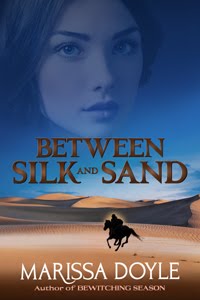
Then, a week or so ago, I received some unexpected good news: “Alea Iacta Est”, my story in the Book View Café Anthology Nevertheless, She Persisted, won second place in the Short Historical Fiction category of the International Digital Awards, which I’d completely forgotten I had entered last summer. It was a nice piece of news...as was the email that arrived a couple of hours later, informing me that Between Silk and Sand had won the Young Adult Novel category in the same contest. But more importantly, it reminded me that yes, I really am a writer...and while I’ve been temporarily unable to write anything new due to circumstances beyond my control, nothing can prevent me from getting back to work when time and mental space permits. 


And the “thank you” part? That’s simply because I’m grateful to all of you who visit NineteenTeen and who’ve read my work, bought my work, borrowed it from the library, lent it to friends...without you, this whole writing thing would be a lot less fun.  As a further thank you, I’ve posted a brand new short story, not available anywhere else, on my website for newsletter subscribers. It’s a romantic contemporary fantasy short titled “A Perfect Night for a Trip on the Lake”—to access it, go to http://eepurl.com/bVDwlf
 
Here’s to more words shared. Soon.