Tuesday, June 13, 2023

Three Things You Might Not Be Aware Of, and Maybe a Fourth

I am very thankful my eye issue turned out to be self-healing, no need for surgery! Phew! While I couldn’t write for a while, I could do some other things on the computer, which might amuse you.

First--I collected the rest of the Fortune’s Brides main series into duets. Engaging the Earl and the Viscount: Fortune’s Brides, the Middle, includes Never Envy an Earl, in which a spy in hiding dares to fall in love with the earl protecting her. Its partner is Never Vie for a Viscount, in which a perky socialite convinces her former love to take a chance on teaching her the ins and outs of ballooning.

Marrying the Knight and the Marquess: Fortune’s Brides, the End, features Never Kneel to a Knight, in which an etiquette teacher tries to hide her secret love for the boxer-turned-knight she is helping. Its partner is Never Marry a Marquess, in which a shy young lady joins a grieving marquess in a marriage of convenience to care for his frail baby daughter. 

You can find the links to these and all the Fortune’s Brides series on my website here

Second—I brought out as a standalone novella a story I had published some years ago but is still one on my favorites. (Shh! Don’t tell the others!) In An Engagement of Convenience, Chaperone Kitty Chapworth isn’t about to believe a gentleman’s silken promises, until charming rake Quentin Adair returns to her life. Ten years ago, Kitty was instrumental in causing the poor fellow to be exiled. When he requests her help to prevent his father’s ruin, she cannot refuse, even to pretending an engagement at a summer house party. Quentin has spent years becoming the man his father always hoped. He will protect him at all costs. But as danger threatens, Quentin finds that his priorities have changed. Can a reformed rake convince the perfect chaperone to overlook propriety for love?


Available for only 99 cents at

My Store 

Smashwords 

Amazon 

Barnes and Noble 

Apple Books 

Kobo 

Finally—I tried something different. For this summer, the complete Grace-by-the-Sea series is enrolled in Kindle Unlimited. Those of you who are subscribed can read them for free. The stories in this six-book series are set in a little spa town on the Dorset coast during the time when Napoleon was threatening to invade. The quiet little Regency village of Grace-by-the-Sea welcomes everyone to visit its spa, partake of the waters, bathe in the cove, shop among the unique stores, and dance the night away at the assembly rooms. Just be careful to keep an eye on the horizon for adventure, and love. Find the set here

And now, back to work on writing something new! Look for Never Admire an Adventurer in July. You can preorder at

Smashwords 

Amazon   

Barnes and Noble 

Apple Books 

Happy reading!

Tuesday, June 6, 2023

The Children of George III: Sophia

Princess Sophia Matilda, the twelfth child and fifth daughter of George III and Queen Charlotte, was born November 3, 1777 at Buckingham House in London, after a mere fifteen minutes of labor—after twelve children, the queen was clearly well-versed in childbirth! She entered the family at a fraught time; Britain was at war with its American colonies, and walking on eggshells waiting for word on whether the French were about to join the war on the American side (which they did a few months later, in March 1778.)

Flora Fraser, author of Princesses, the excellent group biography of the daughters of George III, (Amazon affiliate  link), posits that the three elder daughters (the Princess Royal, Augusta, and Elizabeth) and the three younger (Mary, Sophia, and Amelia) were almost more cousinly than sisterly. They generally lived in separate houses in Windsor, and the elder group received much more attention from the queen, who by the time of Sophia’s birth was simply overwhelmed by the demands of her large family. As a result the younger girls, mostly left to nurses and governesses to raise, received a much more haphazard and superficial education.

Sophia received even less attention from her parents when, around her eleventh birthday, the king suffered his first period of madness. But aside from that frightening time, she seems to have had a quiet, pleasant childhood. She was delicate and blonde, with her father’s somewhat protruding eyes (she remained child-like in appearance all her life) and despite her extreme nearsightedness was an avid reader and accomplished needlewoman, even if her handwriting was terrible.

In her teens, a bad case of chicken pox led to month of ill health, with frequent “fits”, difficulty swallowing, and low spirits. She was sent to the spa at Tunbridge Wells and seemed to eventually recover, but this would be only the first episode of poor health she would suffer, necessitating frequent visits to various spas and seaside towns for sea-bathing.

Like all of her sisters, Sophia suffered from her parents’ unwillingness to allow them to marry—a problem exacerbated by the Napoleonic Wars, which made finding appropriately royal husbands almost impossible, much to the princesses’ dismay. She did find a new friend, at age twenty, in the form of Miss Frances Garth, a sub-governess to Princess Charlotte and niece of the king’s favorite equerry, Colonel Thomas Garth…with whom Sophia had fallen in love. It was hardly surprising, considering the circumstances; nor was she the only one of the sisters to do so. What set Sophia’s experience apart was the fact that Colonel (his knighthood came later) was more than thirty years her senior…and that in late July or early August 1800 she bore him a son.

Colonel Garth eventually “adopted” the boy and was a fond parent—perhaps a little too fond, as Thomas Garth turned out to be a bit of a rotter, later on trying to blackmail the royal family and running away with a married woman. But the Colonel continued as the king’s favorite equerry, while for all intents, Sophia’s life was over. While her three of her sisters would eventually marry, she would remain a spinster all her life, condemned by her youthful mistake to live more or less retired (though she hints in her correspondence to having tender feelings for an unnamed man at court.) General Garth’s very public embrace of his child eventually drove them apart, and Sophia dedicated herself to being a companion to her father before his final descent into illness…when she herself was not ill. By 1812 she had become a semi-invalid, “nervous and weak”—the victim of psychosomatic illness, perhaps?

The king’s permanent illness left her to devote herself to other members of her family. She was a favorite of Princess Charlotte, and was devastated by her death in 1817; the death of the queen the following year was a further blow, though their relationship had generally been a chilly one. But it was the king’s death in 1820 that was the hardest…yet it also set her free. She moved to London, taking a house near Kensington Palace (and eventually moving into the palace itself), and actually began to venture out for walks and rides and invite a few friends to visit in the evenings. And she became the friend of her brother Edward’s widow, the Duchess of Kent, along with her tiny niece, Victoria…and of the Duchess’s comptroller, Sir John Conroy.

For several years, the extended family lived a mostly peaceful life at Kensington; Sophia doted upon her niece, who returned her affection. We’ve seen the extraordinary influence Sir John exerted over the Duchess; he exerted the same over Sophia, who was ever susceptible to a strong man—especially one who kept Thomas Garth, her now-grown illegitimate son, from importuning her for money. But Sir John’s machinations set Victoria against not only him and her mother, but Sophia as well. On becoming queen Victoria paid dutiful visits to her aunt, but the old affection was gone.

Almost totally blind by 1837 and forced to leave the dilapidated Kensington, Sophia still had two sisters left. After Augusta’s death in 1840, Mary devoted her still considerable energies to Sophia, and the children of her youngest brother, the Duke of Cambridge, also visited frequently. But the last years of her life were twilight ones, in all sense of the word: blind, mostly deaf, and crippled, she could do little but wind yarn and write illegible letters to her remaining family members. She passed away in May 1848.

Tuesday, May 30, 2023

The Regency Fiction Writers 2023 Virtual Conference is coming!


Regina and I thought you might like to know about this. Early Bird pricing ends on June 1st, so if you're interested, now's the time to sign up!

* * * * *

The RFW Board of Directors is pleased to announce our 3rd annual Regency Fiction Writers conference, June 13-15, 2023. Our three-day conference will be held live via Zoom.

Keynote Speakers

We have two amazing keynote speakers lined up for the conference, ladies who are legends in the Regency storytelling world: Julia Quinn, the NY Times bestselling author and creator of the Bridgerton series, and RFW member Cathy Maxwell, a multi-award winner and NY Times and USA Today bestselling author.

Schedule

Day 1, Thursday, July 13: Industry Workshops and the Business of Writing, with presenters Kathryn Leveque, Cathy Maxwell, Eloise James and Erica Ridley, and Sabrina Jeffries.

Day 2, Friday, July 14:  Historical, Marketing, and Writing Craft Workshops, with presenters Cecelia Melton, Serita Stephens, Kate Bateman, T. Taylor, and keynote by Cathy Maxwell

Day 3, Saturday, July 15: More Historical, Marketing, and Writing Craft Workshops, with presenters Katie Stein, Jessica Hale, Merry Farmer, Anabelle Anders and Tammy Andresen, and keynote by Julia Quinn, followed by the RFW annual soiree with a presentation on Regency Dress and a Silent Auction.

Registration

Registration is as follows:
• Early Bird – Saturday, April 1st through Thursday, June 1st
• Regular – Friday, June 2nd through Friday, July 7th
There will be no late registrations.

Early Bird Registrants only: Do you have a question you’ve been dying to ask Julia Quinn? Maybe you’ve wondered how she came up with her character names? Or who her favorite actor was in the Bridgerton series on Netflix? Or how her story process has changed over time? Well, here’s your chance to ask! Register before the Early Bird deadline and you can submit your questions for the Julia Quinn Keynote Q&A!

Of course, we can’t guarantee to ask her every question that gets submitted, but we will do our best to give you a shout-out if we select your question for the Q&A. Just be sure to register before the Early Bird deadline, because we won’t be taking any questions after that

* * * * *

Want to know more? Then go to https://thebeaumonde.com/main/events/conference/ for details and sign-up instructions. Regina and I will see you there!


Tuesday, May 23, 2023

Retro Blast: Updated: Lover’s Eyes

A version of this post was originally published in May 2011 as the second part of a series called Picture Makes Perfect. But, at the moment, eyes feature large in my life. Supposedly, my retina is detaching, but the surgeon can’t find the tear! So, my writing is severely restricted while we wait to see how things progress.

Eyes were also important in the nineteenth century if you couldn’t afford a formal portrait or wanted something to carry next to your heart to remind you of your one true love. Thus, the creation of Lover’s Eyes. This small portrait showed only a portion of a person’s face. I imagine it didn’t take too many settings with an artist, unlike a full-sized portrait. Much more economical!

But sometimes it wasn’t cost or size that made these attractive. Perhaps you couldn’t marry your love, or your dear husband had died young on the battlefield. With the Lover’s Eye hidden in a locket, no one would know about the painting but you. And even if someone accidentally saw the picture, they would be hard pressed to prove who it portrayed.

Legend has it when the Prince of Wales was in love with Maria Fitzherbert and forbidden from legally marrying her without forfeiting the crown, he commissioned a painting of his eye for her and her eye for him. This he could wear against his heart without anyone being the wiser. He must have shown it about sufficiently, however, for Lover’s Eyes became all the rage. Later people chose these tiny portraits to remember someone who had died. This one is supposedly of Princess Charlotte, who died in 1817, and includes hair bound into the locket.


Finally, here are a couple of eye miniatures of two writers you happen to know.  See if you can tell which is which. 


I guess you could say the eyes have it. :-)

Tuesday, May 16, 2023

Retro Blast: The Peace of Amiens, or All Major Credit Cards Accepted

Tomorrow marks the 220th anniversary of the end of the Peace of Amiens, that strange interlude in the nearly twenty-five years of war between England and France. So I thought it might be interesting to revisit this post from 2016 and see what it was all about...

* * *

It’s 1802. Great Britain and France have been at war since 1793, when the brand new French republic went on the warpath as surrounding European kingdoms, hoping to nip this republic idea in the bud, sent troops to help restore the Bourbon monarchy. They failed despite various alliances and coalitions and, to everyone’s surprise, France started expanding its borders, thanks in no small part to a certain up-and-coming young Corsican artillery officer.

By 1801 that artillery officer, one Napoleon Bonaparte, is First Consul of the French Republic. British Prime Minister William Pitt,  a resolute foe of Napoleon, is forced out of office in February and a less hawkish PM takes his place. Austria, Russia, and the Kingdom of Naples had all sued for peace a few years before.  And both France and England agree that some peace might be nice for a change.

After much negotiating, wheeling, dealing, and making of secret clauses over the summer and into the fall of 1801 the two countries reach a preliminary agreement at the end of September. In November the Marquis Cornwallis (yes, the same one who surrendered at Yorktown) is sent to the French town of Amiens to negotiate the final terms with Napoleon’s brother Joseph and Talleyrand. Though it takes months and is unsatisfactory in many ways to the British (they in particular are unhappy over the ambiguous disposition of Malta) a final agreement is signed on March 25, 1802 and in October King George officially declares peace.

And Britain goes shopping. 

Before you snort, "yeah, right," think about it: for much of the 18th century, France had been the center of European culture...and Paris had been its apotheosis. French fashions, French art, French food, French manners, all had been admired and imitated; an upper class young man’s education was not considered complete until he’d spent a year or so wandering the Continent—especially France. But for the last ten years, Britain and France had been at war, which meant no visiting most places on the continent.

Now the war was over thanks to the Peace of Amiens, and the English descended on France to satisfy their craving for all things French.They flocked to the Palais Royal for expensive souvenirs and to the modistes and milliners for Paris gowns. They ordered jewelry and sets of china, and went to the galleries to buy art. Artists arrived in droves, not only from England but from all over Europe to visit the Louvre and see not only the latest art but also the Roman and Egyptian sculpture brought back by Napoleon. They visited sidewalk cafes, strolled in the parcs (though Paris was, alas, looking rather shabby after the depredations of the Revolution and ten years of war.) Even scientists came, among them astronomer William Herschel to visit the Paris Observatoire. And politicians came, both for all of the above reasons and, if they could, to catch a glimpse of the First Consul. Napoleon very obligingly received several of them, most notably Charles James Fox (who took the occasion of this trip to France to formally present his heretofore secret wife, former courtesan Mrs. Armistead.) And expatriates took the opportunity to visit their homeland, from which they'd been cut off for so long.

Unfortunately, this amicable state of affairs did not last long. The tensions and discontents created in the Treaty of Amiens were its undoing, along with Napoleon's efforts in other arenas to exclude Britain as much as possible from European affairs. Britain again declared war in May 1803, rather to France's and everyone else's surprise--in fact, over a thousand British tourists ended up imprisoned in France until 1814, when Napoleon was sent to Elba. I hope the shopping had been worth it!

Tuesday, May 9, 2023

Sharing a Love for History, One Meme at a Time

You have seen some of Marissa’s wonderful graphics for her The Ladies of Almack’s Series. I am just not that talented. My skills are very focused in the realm of the written word. But my awesome author assistant, Isabella LaVey, had an idea (two of them, actually), and we’ve come up with something we hope is a little fun.

History is amazing.

Well, yes, of course it is. You knew that, or you probably wouldn’t have read our books or this blog. But there are so many fascinating tidbits to ooh and aah over. Like these.


And then, there is the marvelous language of the Regency period. Again, Marissa trumps me there with her Such Language! posts. But here are a couple of contributions of my and Isabella's.


Finally, I would be remiss if I didn’t include this Star Wars/Regency mash up, celebrating May the Fourth or Star Wars Day.


The words are mine, but the graphics are courtesy of Isabella. She rocks. I thought she deserved to know it. And now you do too. If you want to see more of her work, follow me on Instagram. There will be more this month and in the months to follow.

Tuesday, May 2, 2023

More Historical Comfort Reads

A few years ago I posted about my favorite historical comfort reads—you know, the books you go back and re-read when you’re tired or ill or otherwise not feeling quite up to par and need a soothing old friend to keep you company. Now seems like a good time to revisit the topic, so here are a few more of my favorites. I hope that readers will tell us about some of their historical comfort reads in the comments—I’m always looking for new old friends! Please note that any links may be affiliate links.


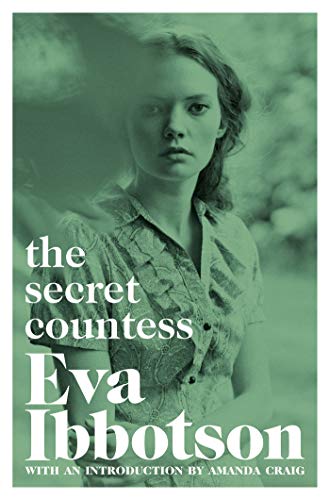
Eva Ibbotson
 

Yes, I know she’s an author, not a book—a much-loved and recognized author of many delightful stories for younger readers such as The Star of Kazan, Journey to the River Sea, The Secret of Platform 13, and many others. But did you know that she also wrote five adult romances? They’re all stand-alones, set at various points between shortly before WWI and around and during WWII. All share England as part of their settings, but several include substantial portions set in Austria (where the author grew up) and on the Amazon River. Written in the 1980s, they do possess that era’s regrettable tendency to Big Misunderstandings (you know, where conflicts could be cleared up if people just talked to each other for ten minutes), but the characters (including secondary ones) and settings and plots and just so wonderful that I forgive them for that. The Secret Countess may be my favorite because it has a denouement scene worthy of Georgette Heyer at her best; but Magic Flutes, A Company of Swans, A Song for Summer, and The Morning Gift are not far behind. Part of what makes these special, I think, is that they’re slightly autobiographical: as a girl, the author fled Austria before WWII with her family, so there’s a feeling of authenticity about the small details that is enthralling. Some people consider these young adult books; I disagree, but they can be read by older teens. 


Caroline Stevermer 

Okay, yeah, she’s an author too. You really aren’t going to make me choose just one of her books, are you? If I had to, though, I’d go with A College of Magics, a marvelous young adult historical fantasy about a young woman coming into her own as ruler of her countryand as a witchset in a fictionalized pre-WWI Europe, with a few extra eastern European countries along with the usual England, France, Spain, and so on. The era feels well-depicted, especially the women’s college the protagonist attends and the brief visits to Paris and on the Orient Express. One of my all-time favorite books, and with an almost as wonderful sequel, A Scholar of Magics.


Connie Willis  I’m an unashamed Connie Willis fangirl. She’s won more Hugo and Nebula Awards than just about anybody writing science fiction today…so why am I talking about her in a post about historical comfort reads? Because she’s written multiple time travel novels (the Oxford Historian series), and written them incredibly well. Doomsday Book may be her masterpiece (about a time-traveling history grad student mistakenly sent back to England on the verge of the arrival of the Black Death), but it’s To Say Nothing of the Dog that is indeed a comfort read: two historians sent back to study Coventry Cathedral before its destruction in the Blitz get entangled in problems and time paradoxes as they bounce between the 1940s, the 1860s, and beyond…and hilarity ensues. Just a delightful, funny book with a happy ending.


Do you have any historical comfort reads you’d like to talk about?